Climate Change’s New Diseases Lead to Death of Native Plants, Disturb Fish Populations
March 18, 2026
Share


PROVIDENCE — At Brown University, atop 85 Waterman St., research greenhouses loom quietly above campus life. Inside, greenhouse manager Nicholas Vasques oversees a living library of plants – some older than himself – which contributes in a variety of ways to understanding climate change.
Vasques says the biggest changes he sees aren’t just when plants bloom, but what survives alongside them. Diseases, pests, and invasive species that Rhode Island winters once kept at bay are appearing earlier and persisting for longer.
Increased temperatures essentially prevent what Vasques calls a “mass killing” that should happen over the winter. “When we have these mild winters, these pathogens actually survive,” Vasquez says. “Twenty years ago, the pathogen that’s killing my plants may have died off in the winter because it would have been just too cold.”
Vasques says many Rhode Islanders may see changes in their own backyards, for example on their native flower bushes. “I’m definitely noticing that specifically with my lilac and the powdery mildew outbreaks that are decimating them,” Vasques says. “Infections start earlier in the season and are more virulent.”
In addition to increased susceptibility to disease, plants are also being exposed to new diseases. Vasques explains that “as temperatures increase, we’re going to be getting these southern illnesses that we’ve never really seen before.” Two diseases Vasques has noticed showing up in Rhode Island are late blight and beech leaf disease.
Late blight, which caused the Irish potato famine in the 19th century, still affects gardeners today by infecting potatoes, tomatoes, and other related crops. The organism responsible for late blight is a species of fungi-like water mold –aptly named as it thrives in moist, humid conditions, commonly found in the Northeast’s autumn months.
However, in the last 20 years, it has begun to attack earlier into the year as climate change has led to wetter summer conditions, spotted as early as mid-June in a record-breaking case in Michigan. Late blight leads to inedible fruit and often the death of the affected plant, which is especially worrisome for local farmers.
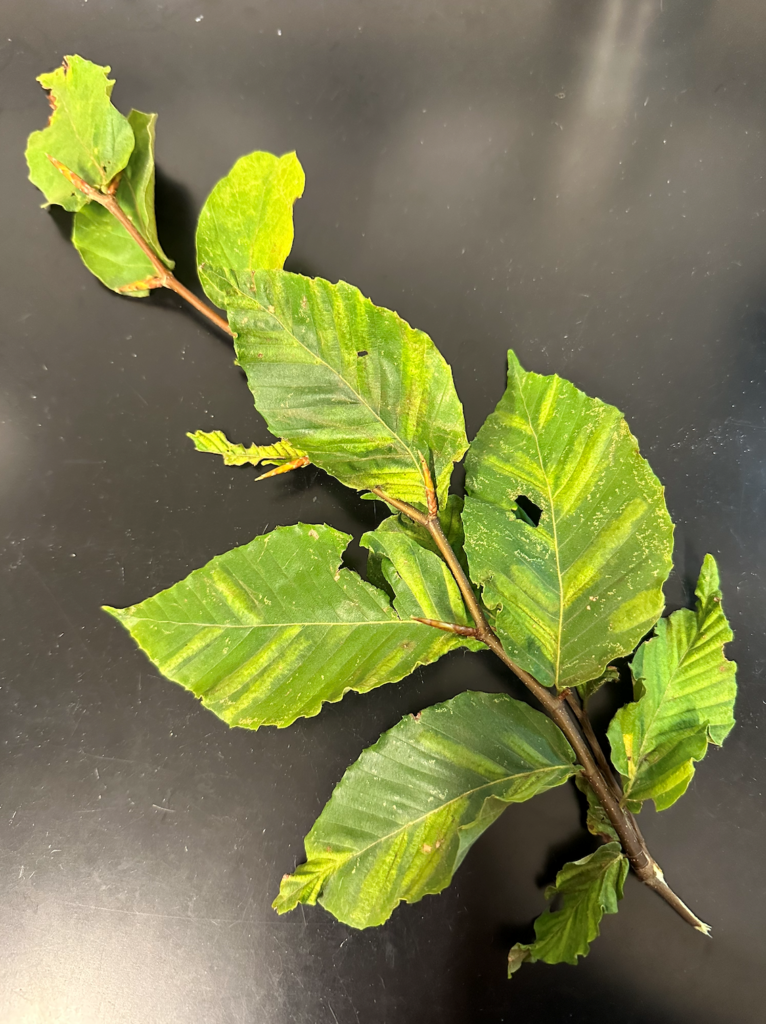
Beech leaf disease, caused by microscopic nematodes – a type of worm – is ravaging Providence’s native American beech trees and has no current known cure. First spotted in Ohio in 2012, it reached Rhode Island in 2020. The effects of climate change keep humidity higher, winters shorter, and have left beeches more stressed – prime conditions for the worm to spread. Beech leaf disease often leads to the death of tree.
“As the climate changes, I think the natural history and the plants that were at one point native could be lost forever,” Vasques says. “I think without plants, there are no humans. It’s as if they take care of us in ways we just take for granted.”
‘A lot of winter injury’
Felicia Millett works at Connecticut’s Plant Disease Information Office, where she spends her time navigating a variety of plant ailments. As a diagnostician, Millett helps run what she describes as a “full-service plant diagnostics lab,” offering expert advice to residents.
“We serve a pretty broad range of folks,” she says — growers, arborists, landscapers, golf course superintendents, homeowners, even students. The cases she sees span nearly every kind of vegetation in the state.
“We are seeing some issues with warmer winters,” Millett says. “After we went into drought in November of last year and then through the winter,” she explains, “there was a lot of winter injury on shrubs.”
Winter injury often occurs when the soil is both too dry and too cold, leading to stressful conditions for plants. Sun and wind exposure lead to dehydration, and drought conditions prevent roots from taking up water.
“We saw a lot of dieback on rhododendrons in March. And then in the months that followed, we started seeing damage on hollies, on arborvitaes, and a few other species,” Millett says. “You might see some recovery. But from far away, it looks like areas where the foliage is turning brown, or it’s dropping, or the flowers fail to open. It might look like the plant totally died.”
This deadly combination of new diseases being introduced and physical conditions that make plants more vulnerable threatens Rhode Island’s ecosystems as temperatures continue to warm.
In comparison to plants, insects, and other animals, fish species are especially vulnerable to climate change, says Aubree Jones, a visiting assistant teaching professor in biological sciences at Wesleyan University. Jones studied the impacts of climate change on brook trout for her doctoral thesis at the University of Rhode Island.
“I grew up fishing in freshwater lakes in Oklahoma where I’m originally from and fell in love with all things under the water,” Jones says.
She says that trout – and most fish – are ectotherms, which means that they are unable to regulate their body temperature. “The environment basically decides their body temperature,” Jones said.
“Fishes that have lived in these ecosystems for a very, very long time that have adapted to these environments and the temperatures that have persisted for centuries – suddenly changing those very rapidly means that their cells literally cannot function beyond a certain point,” Jones says. “Fish have what we call specific thermal tolerances, or the ranges of temperatures that they can comfortably live in.” As ectotherms, these ranges can be very precise – where the difference between living and dying can be as small as 2.5°F (1.4°C).
As rivers warm, Jones says species like Rhode Island’s native brook trout don’t have much of a choice other than relocating within their limited environment to find more survivable spots, like seeking refuge within cooler, lower parts of the river. But even this is becoming more difficult – drier summers can influence the shape and condition of streams, which Jones describes as “really changeable environments,” impacting what habitats are available to trout.
Jones also notes that this decrease in suitable habitats within the river also affects migratory fish species, like Atlantic salmon, whose spawning grounds are often inaccessible due to changes in water levels. Any spawning that does occur is still impacted by the effects of climate change because changes in plants and insects above the water’s surface lead to a mismatch between fish and insect larvae development.
Warmer climates cause ecosystem-wide phenological changes, or changes in the life cycles of organisms, leading to plants blooming earlier within the season compared to normal. Insects, which rely on certain plants for food and shelter, may not be ready for these new bloom dates. Many developing fish have a diet of mostly insect larvae.
“If those haven’t emerged yet, then they don’t have food and then they won’t be able to survive,” Jones says.
Rivers, aside from temperature changes, also undergo chemical changes that impact fish and the surrounding local ecosystems. “Warming waters means that molecules move faster: more interactions between the water and the atmosphere, [resulting] in the acidification of water under higher temperatures and a decreased ability to hold on to oxygen,” explains Jones.
“There’s this concept of ‘one health,’ where there’s this idea that the health of our ecosystems is directly tied to human health.” Jones says. “An investment in the environment, in preserving these ecosystems – freshwater, marine, preserving fisheries – is always going to reward in multitudes for those efforts in our own well-being.”
Finding ways to adapt
“I think the outlook, from my perspective, would be that we need to work with the change rather than try to control the change,” says Vasques. “I think the change is inevitable.”
Research in the Johnson lab at Brown has already begun finding ways to adapt to climate change.
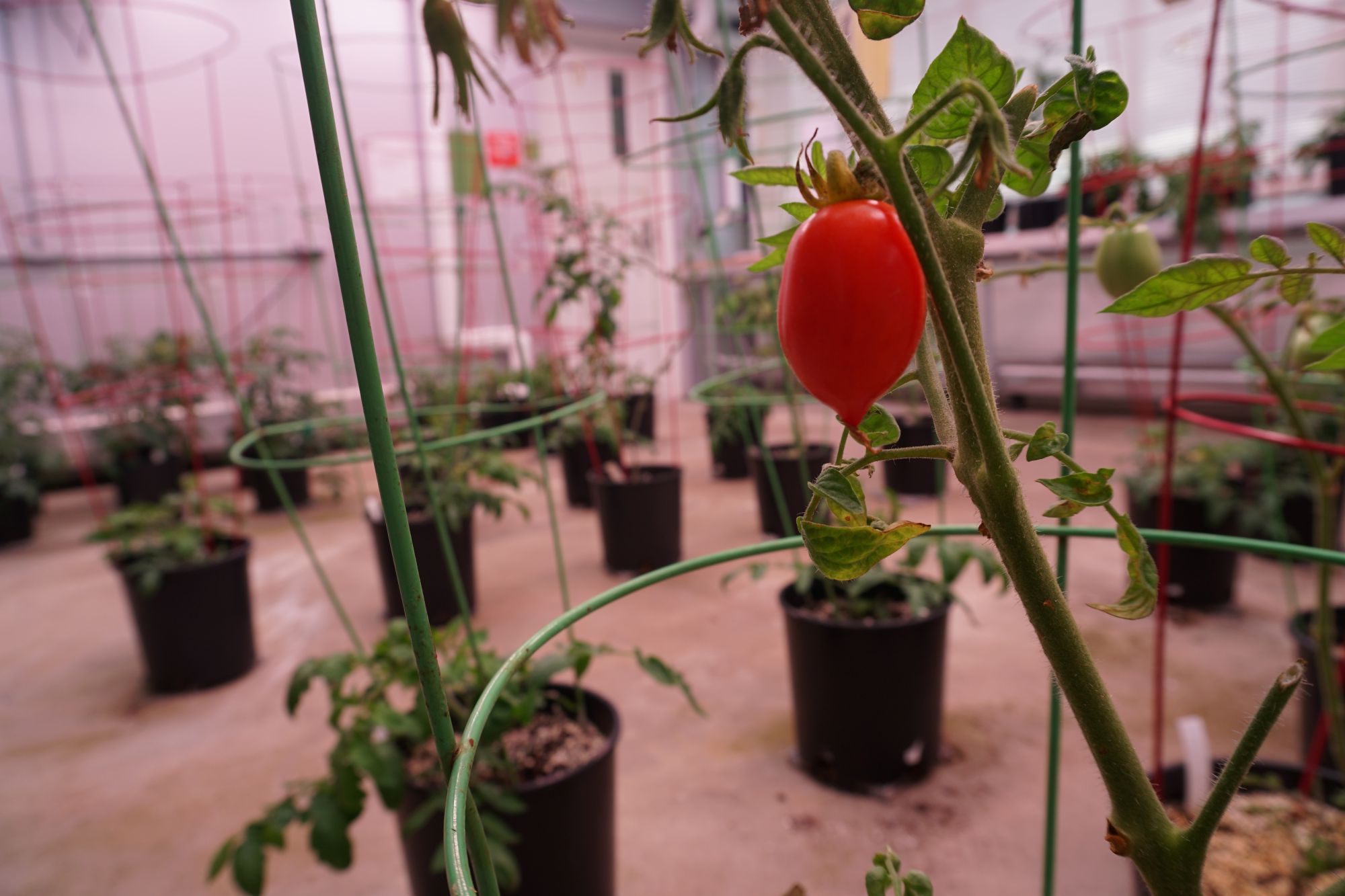
“The Johnson lab is using tomatoes as a model system to work on having proper fruit sets and proper fruit formation at high temperatures,” Vasques says.
Genetically modified tomato plants, designed to grow in temperatures above 100°F (37.7°C), have already been able to successfully produce crops.
“They have essentially isolated some genes, have built the scaffolding necessary to have these genes inserted back into the plants, and have had successful transformations of these plants,” says Vasques.
These successes may help guide how we adapt to a warming future, where heat-tolerant tomatoes could play an important role in maintaining food supplies.
Jones’s perspective complements Vasques’s. She notes how resilience is possible if humans take meaningful steps to reduce harm.
“If we understand the threats facing our environment and can take action to mitigate the consequences for those threats, then ecosystems and organisms are generally incredibly resilient,” she says. “If we’re going to do the damage, we have the responsibility to ensure that the species continue to be able to exist and persist in these environments despite the damage that has been done. Maybe I’m an optimist, but there’s lots of situations where there’s still work to be done.”
This story was published as part of a collaboration between ecoRI News and students in Brown University’s Science Journalism class. The stories examine the science, history, and human experiences connected to the Ocean State’s rivers — from water quality and wildlife restoration to flooding, pollution, social justice, and the communities working to protect them. To read more of these stories, click here.