When Sewage Spills Into Waterways, There’s No State Requirement to Alert Public
June 18, 2026
Share


EAST PROVIDENCE, R.I. — The first full week of May really felt like spring.
It was the first time temperatures rose comfortably to 70 degrees for two consecutive days, and residents began using the Providence River for water activities, a telltale sign that warmer weather had arrived in Rhode Island.
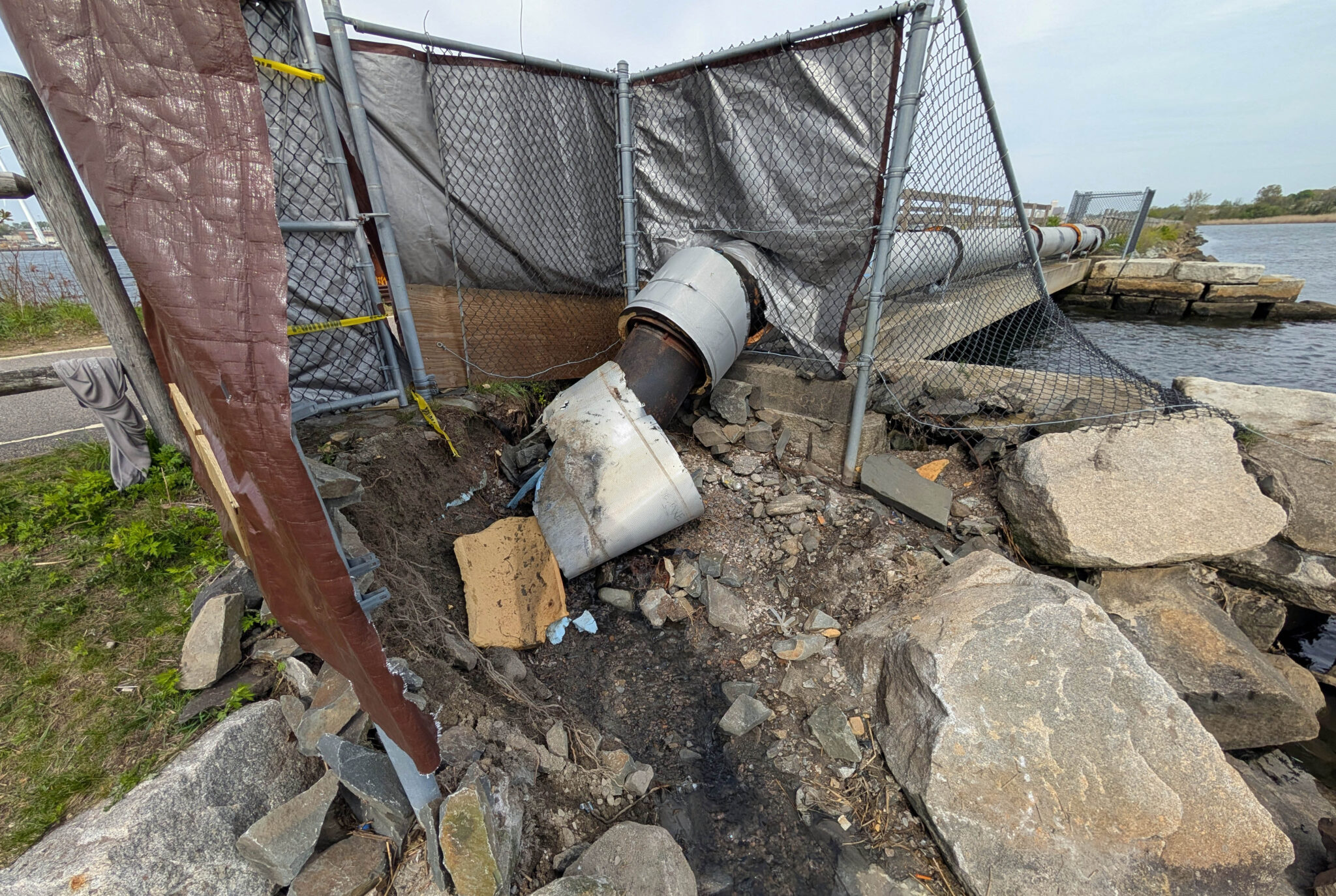
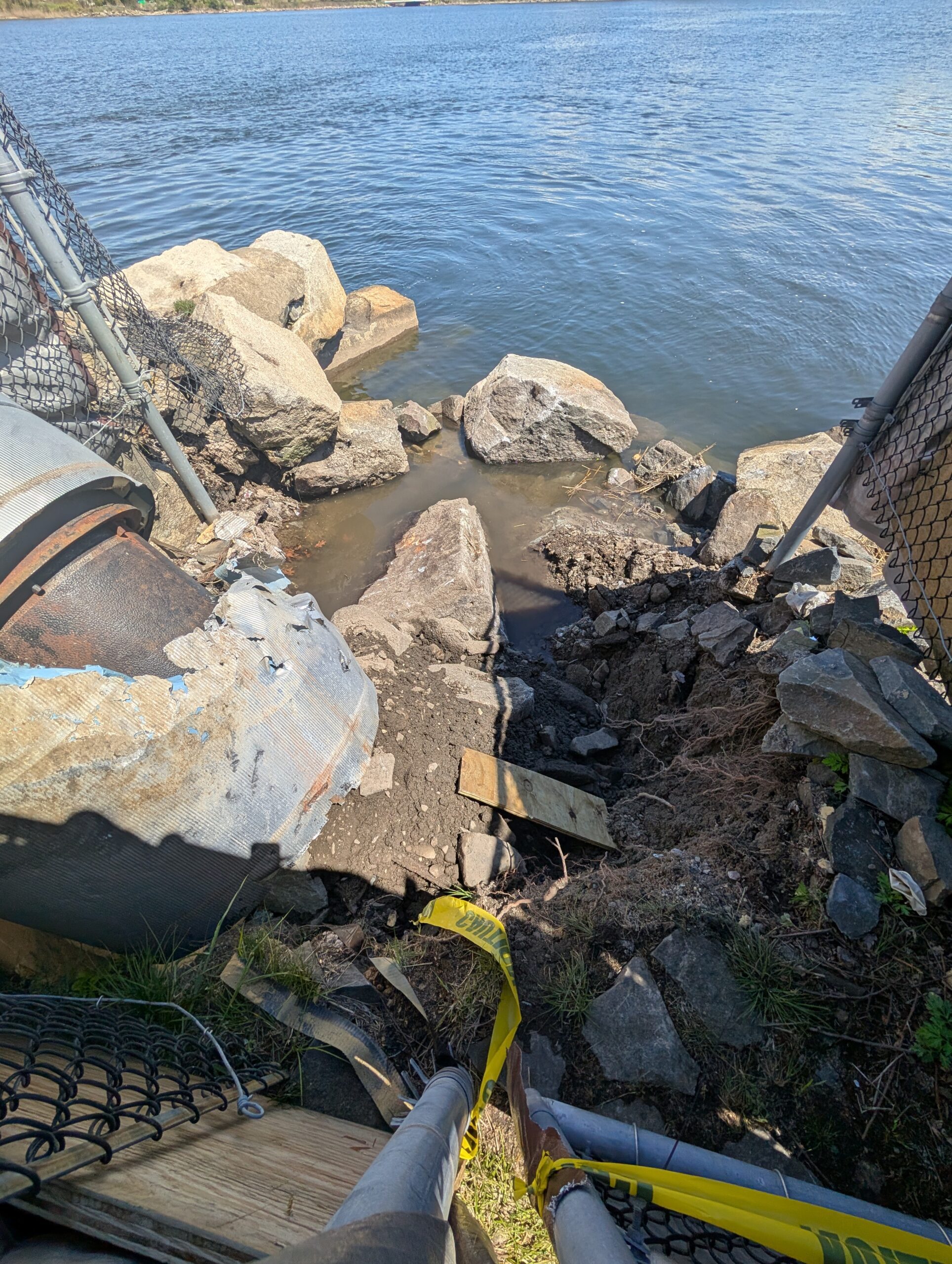
But that Monday, May 4, there was something else in the water besides the people. Just before noon, a sewer main from the East Providence Wastewater Treatment Plant began spilling what would turn out to be more than 800,000 gallons of raw sewage into Watchemoket Cove and the Providence River.
The sewer discharge caused the East Bay Bike Path, which crosses the cove, to be closed for a few days starting May 12, while workers repaired the 20-inch pipe spilling sewage into the river. Bicyclists and pedestrians were detoured onto Veterans Memorial Parkway in the interim. The Department of Environmental Management, the state agency in charge of wastewater systems, announced a temporary shellfishing closure the following Tuesday, just after 2 p.m.
But that shellfish closure was the only notification that nearly a million gallons of raw sewage had leaked into Narragansett Bay — the state isn’t required, nor does it have the infrastructure, to notify the public about sewage spills into public waterways.
“We don’t have a right-to-know law regarding these kinds of discharges,” said Chris Dodge, baykeeper for the Providence-based environmental nonprofit Save The Bay. “The only way we are required to be informed about these discharges is if they affect a swimming beach resulting in a closure, or if they affect a shellfish area resulting in a closure, but if this discharge happens in a location that doesn’t affect either of those, there’s currently no law saying that we have to be informed.”
Wastewater treatment plants disclose discharges like the one on May 4 to DEM, but DEM isn’t required to tell the public unless it hits one of those trigger points. Dodge said he receives overflow notifications from the Massachusetts city of Worcester’s Department of Public Works via email. DEM, at least for sewage, doesn’t have something similar.
“DEM is required by law to notify the public of shellfish harvesting closures, regardless if caused by a sewage spill or another cause,” said Evan LaCross, a DEM spokesperson, when asked by ecoRI News what circumstances prompt the department to notify the public. “This is done by phone message, an email list, a webpage, press releases, and social media posts. RIDOH leads on notifying the public through health advisories regarding impacted waterbodies.“
While the source of the May 4 discharge has been traced back to a specific pipe, the exact cause of the rupture has yet to be determined or announced by DEM officials. The department told ecoRI News the investigation into the sewage leak was still ongoing.
“The results of the inspection will not be made publicly available until a decision is made regarding a potential enforcement action. Enforcement actions are publicly available once issued,” LaCross said.
East Providence’s sewer discharge put a spotlight on sewer infrastructure and the environmental health of the bay. Rhode Island has aging sewer infrastructure. A pump station in Bristol discharged into Mount Hope Bay just weeks prior to the East Providence sewer leak, spilling 5,000 gallons of sewage. That spill resulted in DEM closing conditional shellfishing in the area of the spill.
Managing sewer systems, and the 19 wastewater treatment plants around Rhode Island, has been a key theme for DEM to clean up the bay. On Aug. 20, 2003, a million menhaden were killed due to extreme hypoxia in Greenwich Bay; there simply wasn’t enough dissolved oxygen in the water for aquatic life to survive.
Hypoxia typically indicates an overload of nutrients such as phosphorus and nitrogen. Effluence, the discharge from the wastewater treatment plants around Narragansett Bay, had much higher concentrations of these nutrients, contributing to the 23-year-old fishkill.
“We have to accelerate our pollution control efforts and adopt more ambitious targets, in particular for nitrogen removal,” DEM officials wrote in a preliminary report following the event.
Untreated sewage or backflow from wastewater treatment plants can have serious health implications for more than just aquatic life. Public health researchers out of Boston have begun linking storm-induced sewage overflow to gastrointestinal illnesses and other health issues.
“You immediately risk health concerns for any member of the public that’s out there utilizing that water, which, when we went out on scene the following day, on Tuesday, a discharge was still happening,” Dodge said. “I personally witnessed people fishing for striped bass in the water, in the rocks, collecting crabs.”
Humans consuming fish or shellfish from contaminated waters could be problematic for the consumer, according to Dodge. Aquatic life, meanwhile, risks dealing with further algal blooms this year and possible hypoxic events due to increased nutrients in waterbodies. The shellfishing closure in East Providence was lifted May 15, 10 days after it was initiated.
East Providence has around 700,000 feet, or 132 miles, of sewer pipes. A two-year inspection process by Veolia, the firm that operates the East Providence Wastewater Treatment Plant and others across the state, found that around 99,000 feet of sewer pipe, ranging from 8-21 inches in width, had serious defects.
“That could be a broken pipe, a collapsed pipe,“ Amy Anderson George, a consultant from Arcadis, an engineering firm with an office in East Greenwich, said at an East Providence City Council meeting after the May 4 discharge.
While Veolia had completed the survey, it was Arcadis that, ironically enough, had reviewed the Veolia surveys to ascertain just how much East Providence’s sewer system was in need of repair. The firm had been scheduled to present its findings to the council before the May 4 leak occurred.
Arcadis identified 30,000 linear feet of sewer pipe, around 5 miles, ranging from 8-15 inches in diameter, as “critically defective,” the worst of the worst in East Providence’s sewer system.
“In some instances the pipe has collapsed,” Anderson George told council members May 6, and is “in major need of rehabilitation or repair.”
Environmentally, long-term impacts from the sewer discharge in the Providence River and Narragansett Bay will likely be minimal. The volume of water in Narragansett Bay is replaced roughly every 26 to 28 days, and without testing, most shellfishing closures are lifted after 21 days.
But Dodge said the discharge is an opportunity for DEM to step up its oversight of wastewater treatment plant management plans. There’s also an opportunity for DEM to create its own public notification system beyond what’s the minimum required by state law.
“We see it as a potential point of advocacy here,” he said. “There’s a real opportunity for growth here with a more rapid and comprehensive alert or notification system.”