
Wetlands a Vital Link in Ecosystem Chain for Hundreds of Species
June 4, 2026
Share


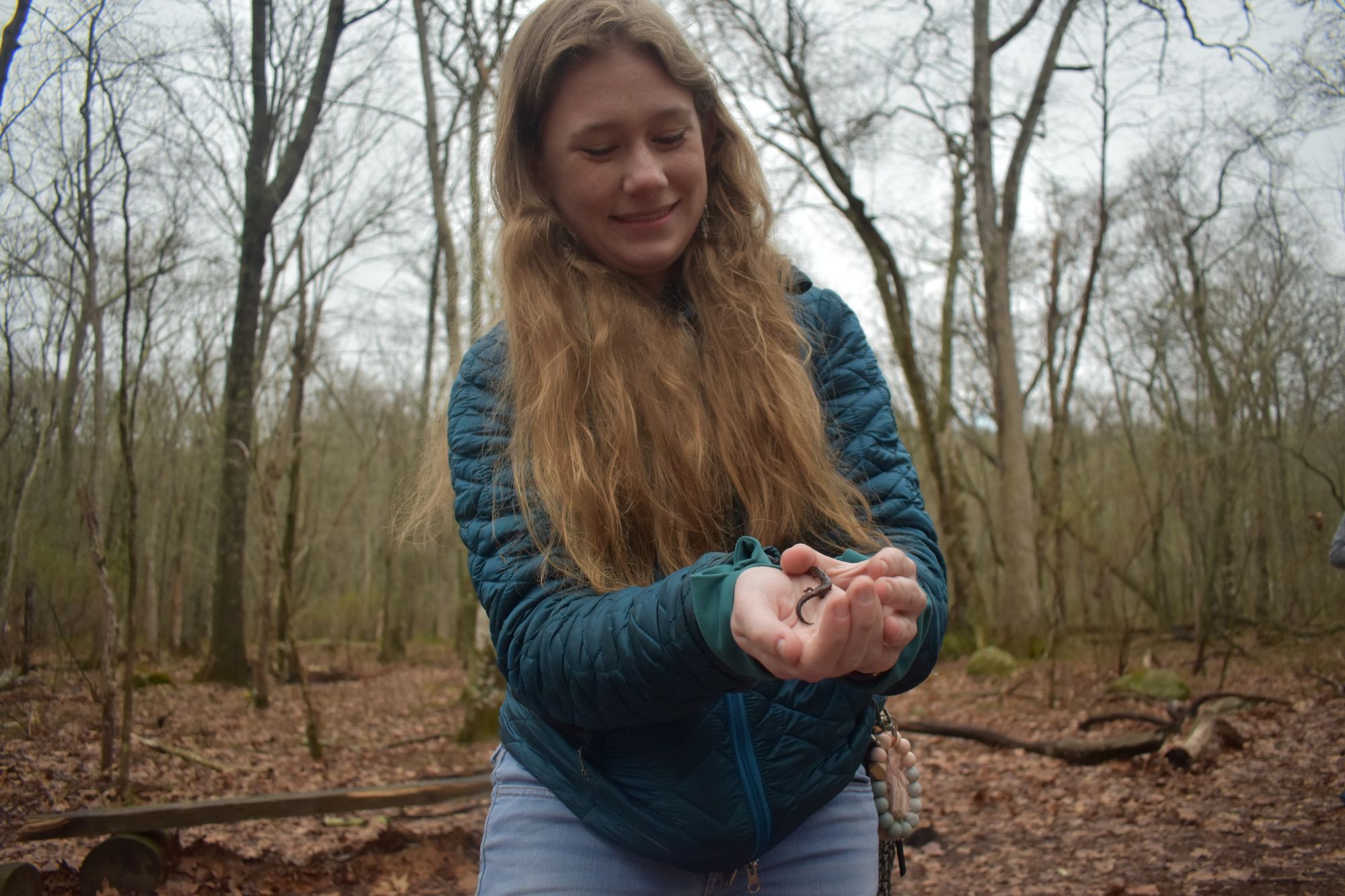
KINGSTON, R.I. — Amanda Andrews cradled the tiny eastern red-backed salamander in her hands.
“It’s warmer now,” she said. “It’s moving more.”
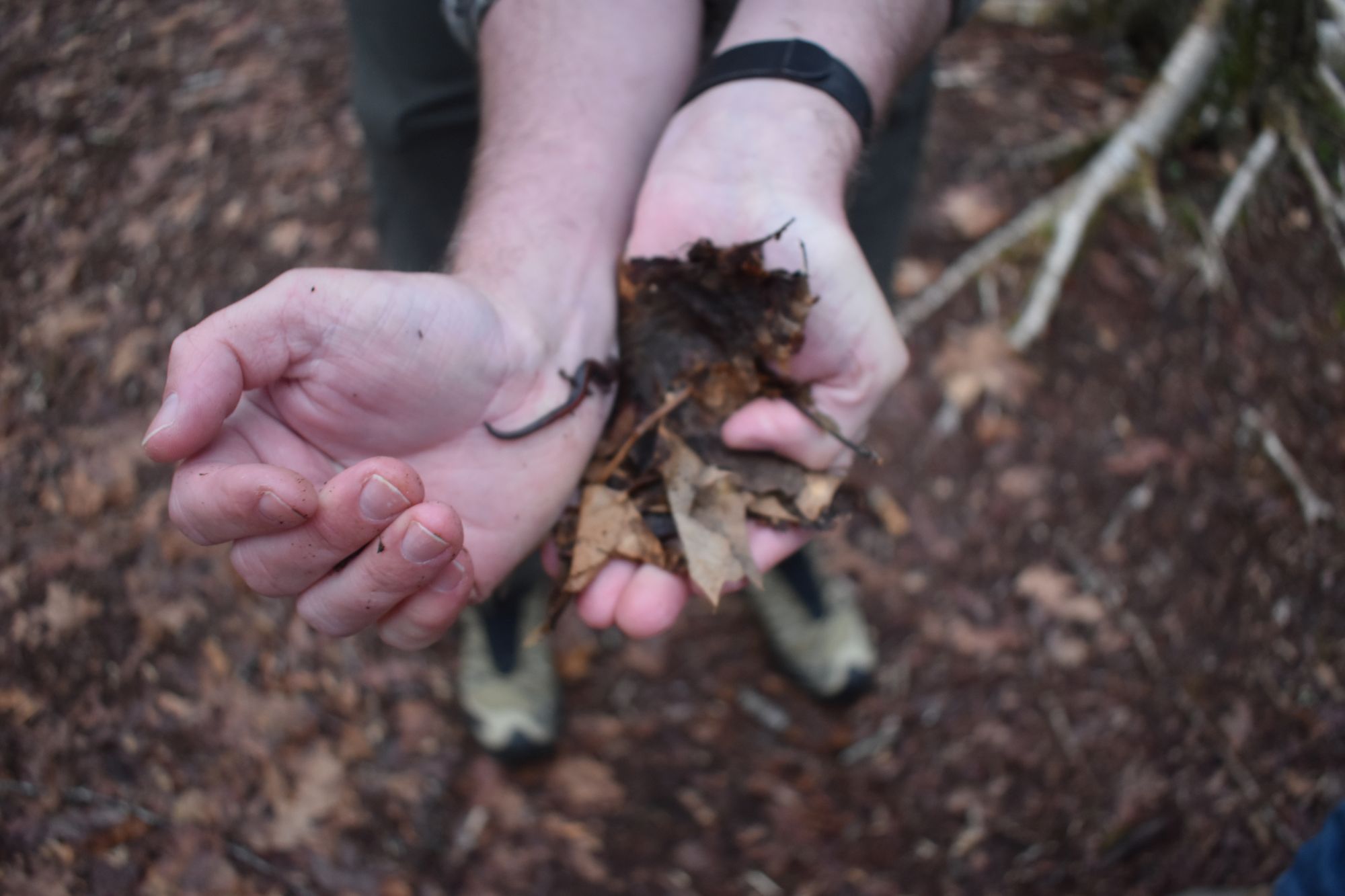
She had found the salamander in the damp, chilly soil under a rock in the North Woods at the University of Rhode Island, 225 acres of forest, wetlands, and streams adjacent to the college campus on Flagg Road.
It was a rainy, cool, late April evening, and the salamander was sluggish in the cold at first. After spending some time in the 18-year-old West Greenwich resident’s warm hand, it became more active, scooting around her palm.
Andrews said it wasn’t her first time holding one of the creatures.
“These are like the ones in my garden,” she said. “I catch them all the time in my yard.” Her mother Sandy, standing nearby, laughed and added, “We live for this.”
The family, including Sandy’s husband Gary, were attending what was expected to be a springtime peeper walk in the woods, led by Michelle Peach, a clinical assistant professor in URI’s Department of Natural Resources Science. It was part of the North Woods Project with URI’s Digital Writing Environments, Location and Localization (DWELL) Labs.
But a collective decision by the peepers, apparently, not to come out that evening instead turned the focus of the discussion on the value of wetlands in the natural world.
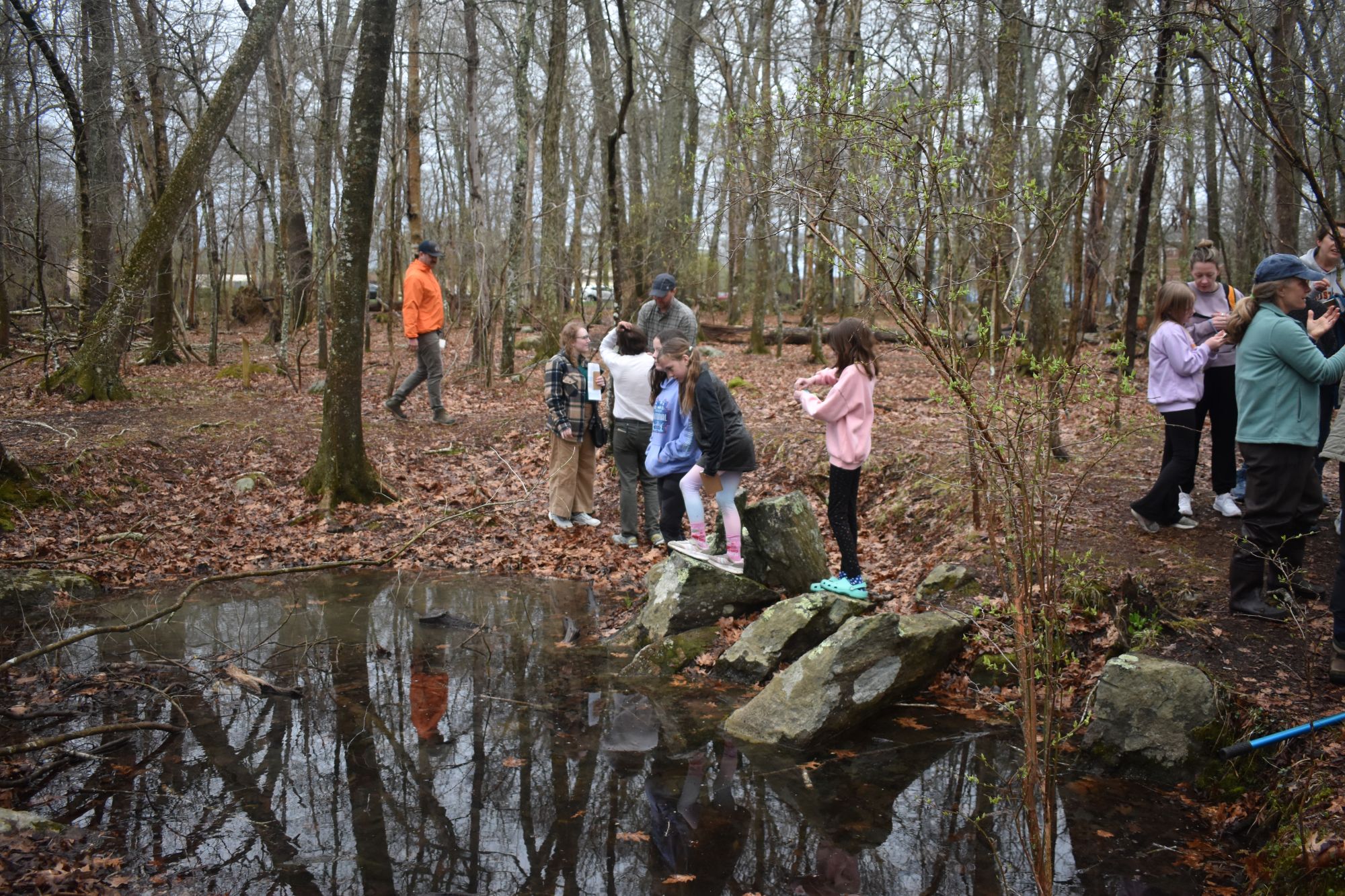
Peach, addressing a rapt audience that included students from nearby schools and members of a 4H club, stood knee-deep in a small pool wearing waders and brandishing a small net.
“Wetlands benefit people really disproportionate to their size,” she said. “A big, important thing wetlands give us is they provide habitat for lots and lots of species.”
Diverse habitat
Wetlands are among the most productive ecosystems in the world, comparable to rain forests and coral reefs, according to the Environmental Protection Agency. As Peach pointed out, an immense variety of species of microbes, plants, insects, amphibians, reptiles, birds, fish, and mammals can be part of a wetland ecosystem.
Factors including climate, landscape shape, geology, and the movement and abundance of water determine the types of plants and animals that inhabit specific wetlands and benefit from their food webs.
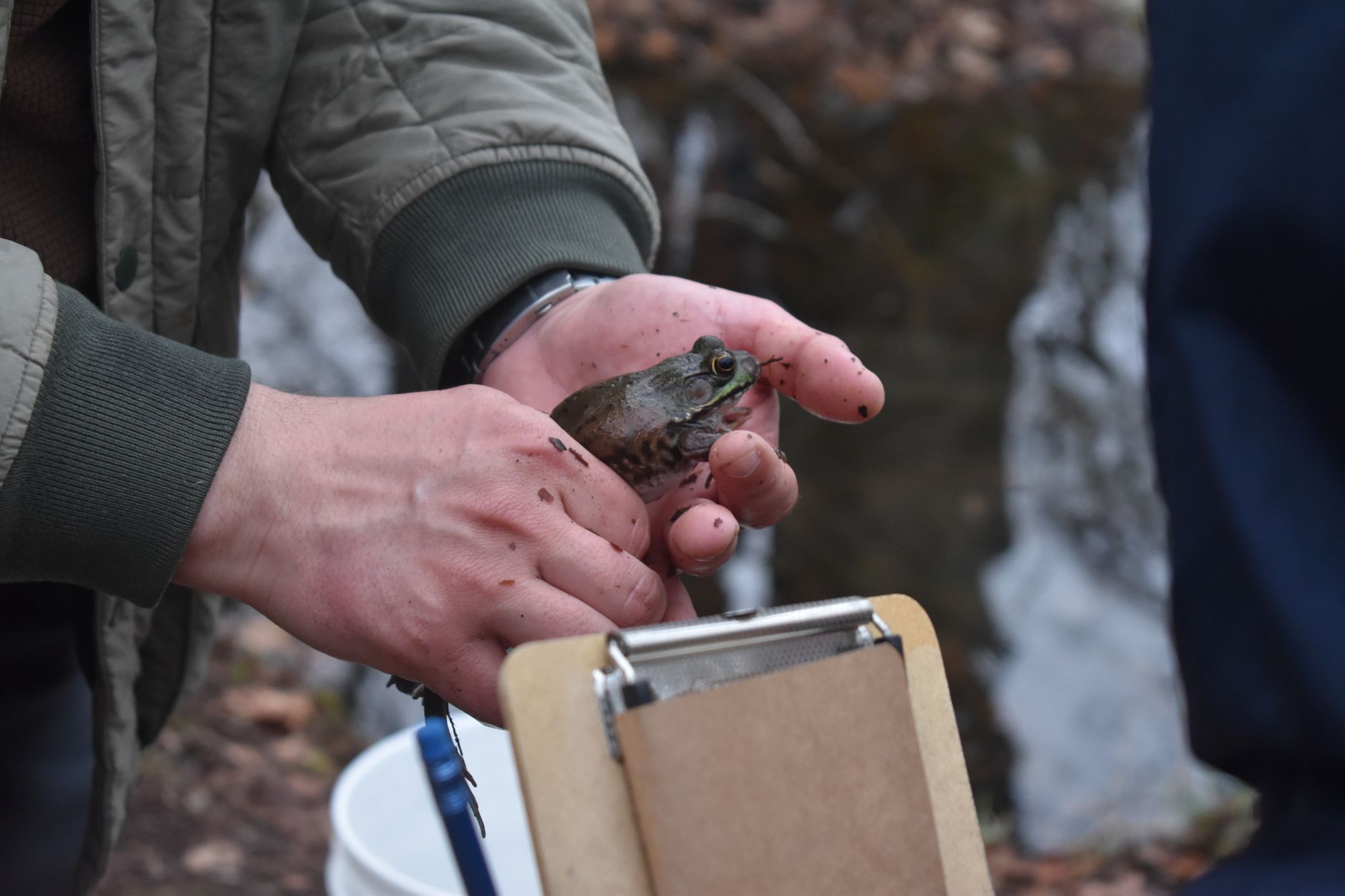
Wetlands meet different needs for different creatures, according to Peach. Green frogs, for example, don’t breed in wetlands. They eat. “They are here to prey on things,” she said.
“But there are the peepers that we talked about, they will climb trees. There are wood frogs that are going to be up in trees. Bullfrogs are going to live in the water almost all the time,” she added.
When it comes to food, wetlands can be a type of biological supermarket, providing diverse types of meals that attract many animal species. Dead plant leaves and stems break down in the water to form small particles of organic material, which feed insects and small fish which, in turn, are food for reptiles, amphibians, birds, and mammals.
A wetland’s functions and value depend on its complex relationships with other ecosystems in the watershed — the area where water, sediment, and dissolved materials drain from higher ground to a shared outlet such as a stream, lake, aquifer or estuary.
Wetlands are vital to watershed ecology. Their shallow, nutrient-rich waters support organisms at the base of the food web that sustain fish, amphibians, shellfish, and insects. Many birds and mammals also depend on wetlands for food, water and shelter, especially during migration and breeding.
Wetlands’ microbes, plants, and wildlife are part of global water, nitrogen, and sulfur cycles. Scientists now know wetlands may also help maintain the atmosphere. By storing carbon in plants and soil instead of releasing it as carbon dioxide, wetlands help moderate the global climate.
“Wetlands help remove toxins from runoff entering streams, ponds and groundwater,” Peach said. “Wetlands also are really, really good at preventing flooding.”
Wetlands act as natural sponges, trapping and slowly releasing surface water, rain, snowmelt, groundwater, and floodwater. Trees, root mats, and other wetland plants also slow floodwaters and spread them across the floodplain. Together, this storage lowers flood peaks and reduces erosion.
Wetlands in and downstream of urban areas are especially valuable because they offset the increased runoff from pavement and buildings. Their water-holding capacity helps control floods and prevent crop waterlogging.
More than one-third of U.S. threatened and endangered species live only in wetlands, and nearly half use them at some point in their lives.
“Anywhere from 25% to 75% of endangered species in the U.S. rely on wetlands for summer or all of their life,” Peach said. “Globally, 40% of amphibians are considered endangered.”
Many other plants and animals also depend on wetlands for survival. Coastal wetlands are essential to estuarine and marine fish, shellfish, birds, and some mammals. Many commercial and game fish breed and raise their young in coastal marshes and estuaries. Fish such as menhaden, flounder, sea trout, spot, croaker, and striped bass, along with shrimp, oysters, clams, and blue and Dungeness crabs, rely on wetlands for food, shelter and breeding grounds.
Types of wetlands
Marshes are among the most recognizable freshwater wetlands. Water depth and duration vary: some marshes flood seasonally, while others hold water year-round.
Marshes provide habitat for wildlife, serving as breeding, nursery, feeding, and resting areas. They also improve water quality by filtering excess nutrients, sediment, and pollutants from surface water.
Ponds: Rhode Island’s landscape includes hundreds of freshwater lakes and ponds covering 20,749 acres, according to the Department of Environmental Management. Whether called ponds, lakes or reservoirs, these waterbodies offer recreation, important aquatic habitat, and drinking water.
Rivers and streams are common, easily recognized habitats. Their channels may be wide or narrow, deep or shallow, with sandy, muddy or rocky bottoms shaped by their origin and the speed and volume of flow. Rivers and streams connect vegetated wetlands, carrying water and supporting aquatic wildlife movement.
Vernal pools are shallow waters that fill in spring or fall with rain or snowmelt. Some are isolated woodland depressions, while others occur within wetlands such as red maple swamps. Because they lack a permanent water source, they often dry up by mid-summer.
Their seasonal drying prevents fish populations, creating a unique habitat and valuable breeding ground for wildlife. In Rhode Island, spotted salamanders, marbled salamanders, and wood frogs depend on vernal pools for breeding and survival.
Vernal pools and the species that rely on them are highly sensitive to urbanization, agriculture and logging. These species need both the pools for breeding and the surrounding upland habitat for the rest of their life cycle.
Swamps are the most common wetland type in Rhode Island. Dominated by trees or shrubs, they occur along rivers and streams, pond shorelines, in isolated areas, and on hillsides. Because they are not always obviously wet, they can be hard to identify. Some have surface water in spring and dry out by summer. Many never flood but have water near or just below the surface. Their soil may be saturated and mucky, though not always where no surface water is present.
In the past, swamps had a bad rap, according to Peach.
“Historically, people really didn’t like wetlands. They were called dismals and mires, all these really negative words, partly because they are breeding grounds for mosquitoes,” she said.
As a result, some swamps were drained in the past, she added.
Now, the state has “really good wetland regulations,” Peach said. “Wetlands are protected in Rhode Island much better than they are in lots of other places.”
State law includes wetlands protection, with permits required for development and other activities near freshwater wetlands. DEM and the Coastal Resources Management Council have jurisdiction over lands near freshwater wetlands and share standards for wetland buffers based on resource protection, watershed needs, and existing land use.
Although the spring peepers didn’t make their presence known during Peach’s discussion, they and other frog species found in Rhode Island, including the green, northern leopard, wood, pickerel, and gray tree frog and the American bullfrog, rely on wetlands for survival.
“I just hope [people] leave feeling like wetlands are pretty amazing,” Peach said. “That’s my goal.”
On the rare occassions I get down to URI, I always visit the north woods. Great frog pond. Interestingly, when folks disciuss amphibians in RI they always leave out my favorite, Fowler’s Toads. We have one really nice population in Providence and ther tadpoles are visible every day for the rest of this month, then turn to tiny toadlets not to be seen again until breeding season next May. Contact me if you want to see the tadpoles.
Thank you for your informative article. I share the love of wetlands and understand their importance within the larger ecosystems. I’m struck however by the overall general lack of concern for this critical resource. My 23 acre farm in Burrillville abuts land (some identified as wetlands), slated for the planned Enbridge/Algonquin pipeline expansion. Part of their proposal is to redirect portions of these wetlands they’ve identified. When I read stories like yours my heart breaks because I realize in the end it just doesn’t matter. It’s all in the name of as Enbridge calls its Reliable Affordable Resilient Enhancement (RARE). Yes rare indeed.
Excellent article! Thank you!
We are fortunate to have a vernal pool on “our” property and one of my favorite places to visit to observe wildlife – both flora and fauna – is at Lonsdale Marsh. I have visited this place fairly regularly for the past 40+ years!
Wonderful article. Thank you very much for sharing.
We have a small freshwater stream at the back of our property that still has a biodiverse ecosystem we cherish. As long as we keep the lawn fertilizers and pesticides away from our wetlands, streams, and ponds, there is a chance to preserve our rich and irreplaceable wetland ecosystems.