Little Compton Art Piece Confuses, Intrigues Beachgoers
June 22, 2026
Share


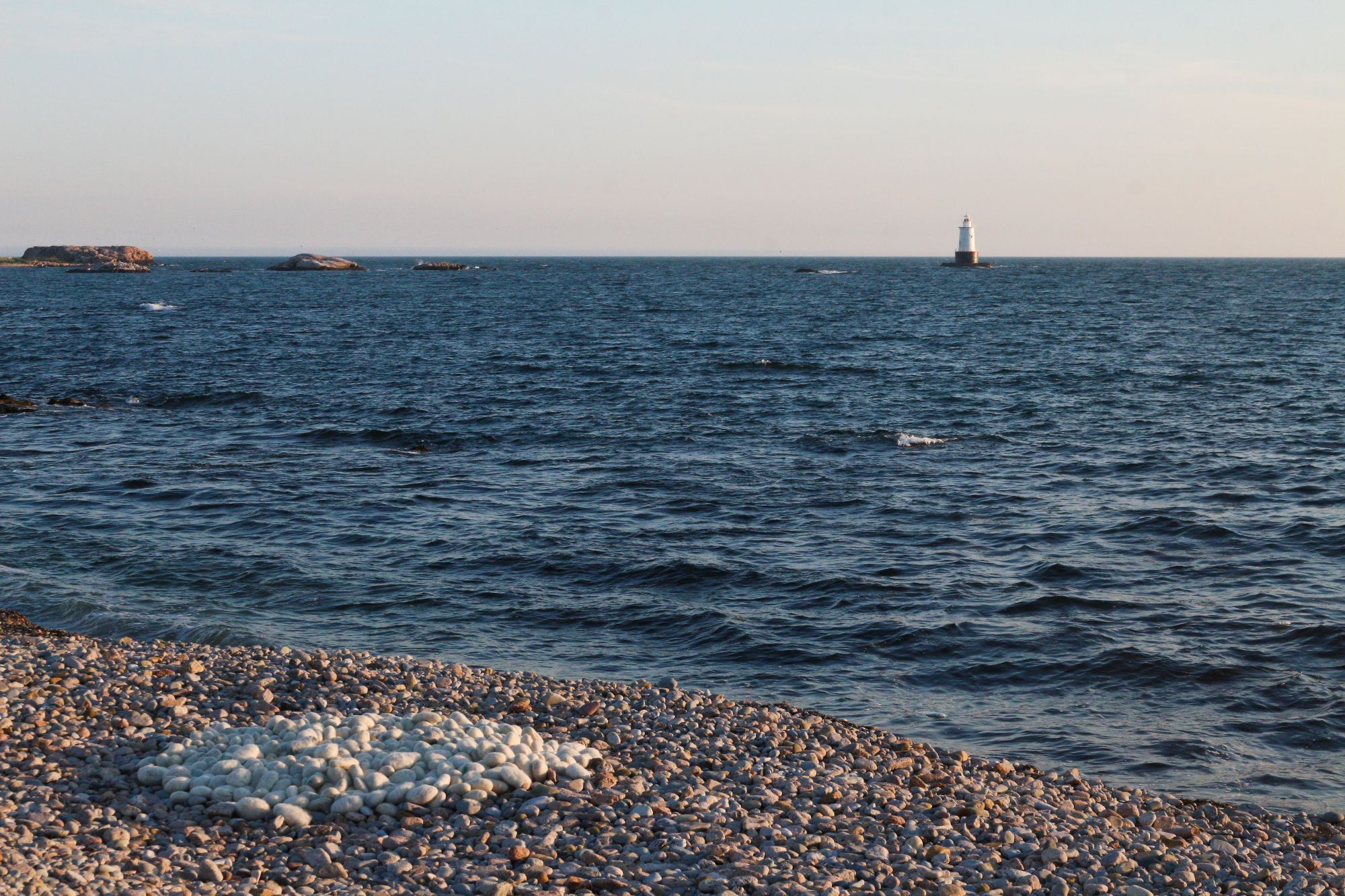
LITTLE COMPTON, R.I. — Beachgoers walking on the shore of Lloyd Beach in early May found themselves perplexed over what looked like rocks covered in wool gathered in a circle.
A social media post about the curious sight had commenters arguing over what it might be, with some speculating that it had natural origins.
Some commenters observed the egg-like nature of the shapes and wondered if it was some sort of hive, while others believed that the piece was a collection of Neptune balls, a type of sphere-shaped seagrass that washes ashore in mass quantities.
It was neither. It was a piece of artwork created by Providence artist Cristin Searles.
Searles made the piece back in 2009 as part of an installation for the Grimshaw-Gudewicz Gallery at Bristol Community College. Searles describes her art as “a collection of objects” and said she usually makes them by hand, but this piece was unique in that it consisted of a group of felted rocks.
The piece, titled “Brood,” was inspired by the particular shape of the rocks found at Lloyd’s Beach. Searles, a frequent visitor to the beach, said the beautiful egg-like shape of the rocks inspired her to experiment with including them in an art piece.
“I had been felting some other things and I just started experimenting with felting these rocks and I loved how they looked, cocoon-like and egg-like, and then with them all standing on their ends together, they looked like a community,” she said.
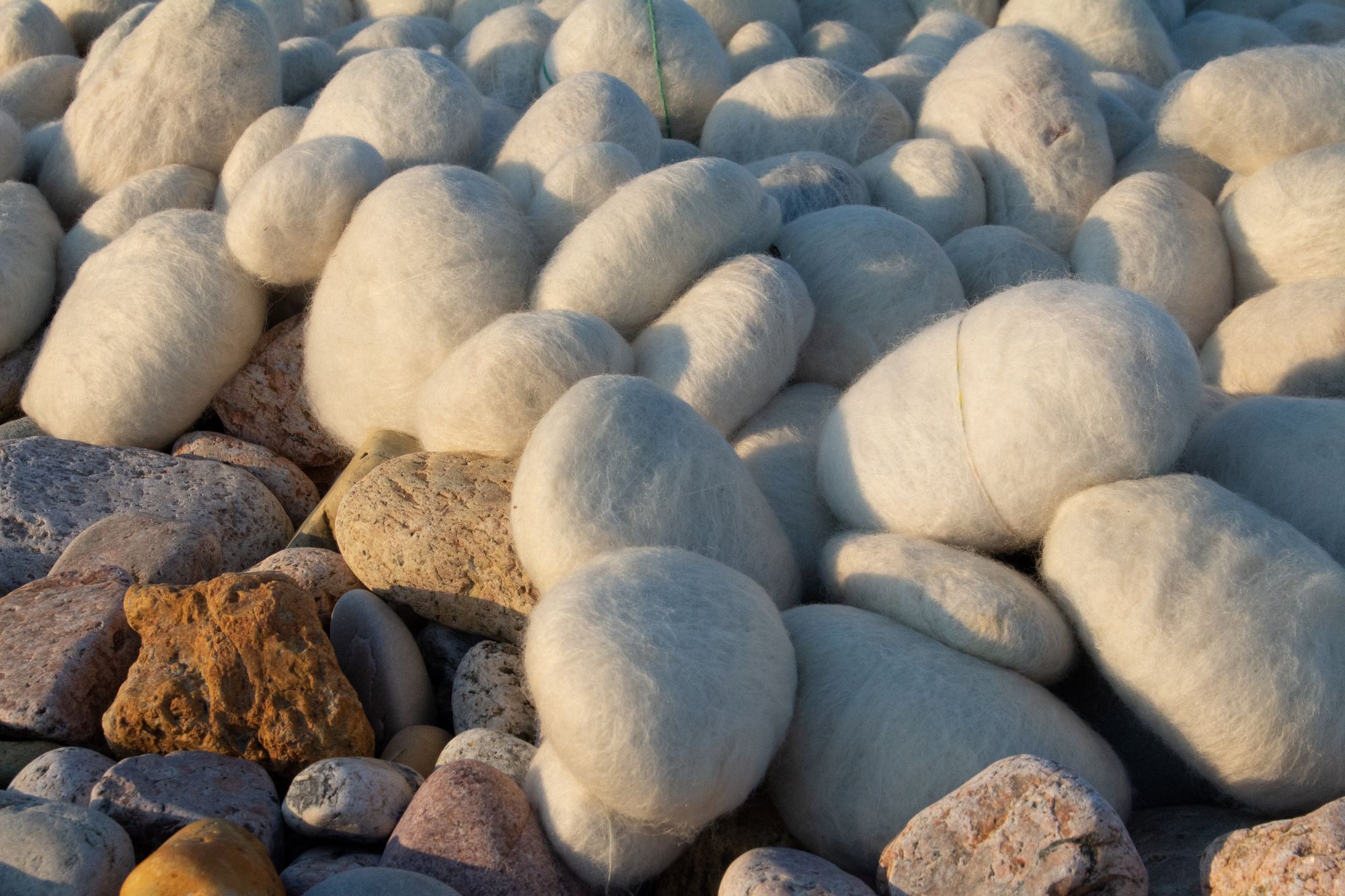
While experimenting with the piece, Searles felted about 50 of the beach’s rocks, but she knew that if it was going to work it needed to be larger. So she called a bunch of her friends to help. Over a few months, and many bottles of wine, Searles and her friends managed to felt some 540 rocks.
Searles said that while most of the art she creates is a solitary process, with this piece every step, between gathering, felting, moving, and setting up the piece, had to be done with others. She described the process of working with her friends to felt the rocks as “meditative” and “warm” and said the community-centered creation process is what made the piece special to her.
After the initial gallery display in 2009, the piece ended up in storage, and was only reassembled two times at other installations. But around the beginning of this year, Searles believed it was time that the piece returned home.
“It needed a last show in a way and it just needed to slip back into the environment where it belongs,” she said.
So Searles called up the same friends who helped her put it together. Her friends braved downpours and high winds to return the rocks to Lloyd’s Beach for good. Searles said she thought the piece would unravel quietly, and she hoped to return every now and then to check on the progress of the decomposing wool and watch the rocks returning to their original form. Instead, she was pleasantly surprised by the conversations the artwork had started.
Residents and beachgoers have been intrigued by it.
“[The piece] seems like it should be there,” said Josh Bixler, a passerby on Lloyd’s Beach, noting that he finds the piece calming. “It provides a really interesting visual context to the environment of stone that surrounds it, and because it’s presumably wool covering stone, it just makes you be a little more aware of what’s around you.”
Searles said she wouldn’t have returned the rocks, felt and all, to the beach if she thought it would be dangerous for the environment. She covered the rocks with natural wool, she said, and the wool will slowly decompose, leaving only the rocks behind.