Electric, Gas Bill Delinquencies on Rise in Rhode Island, with No Relief in Sight
27% of electric customers and 28% of gas customers considered delinquent on utility bills
March 19, 2026
Share


WARWICK, R.I. — Eugene Church drives a 2007 Toyota Sienna. It’s paid off, and while he could buy a new Mercedes Benz, he said, he knows it wouldn’t be a smart purchase.
“You’d say, ‘Hey, kid, you’re not running your budget right,’” Church said. “I can respect that, because it’s not a good financial move.”
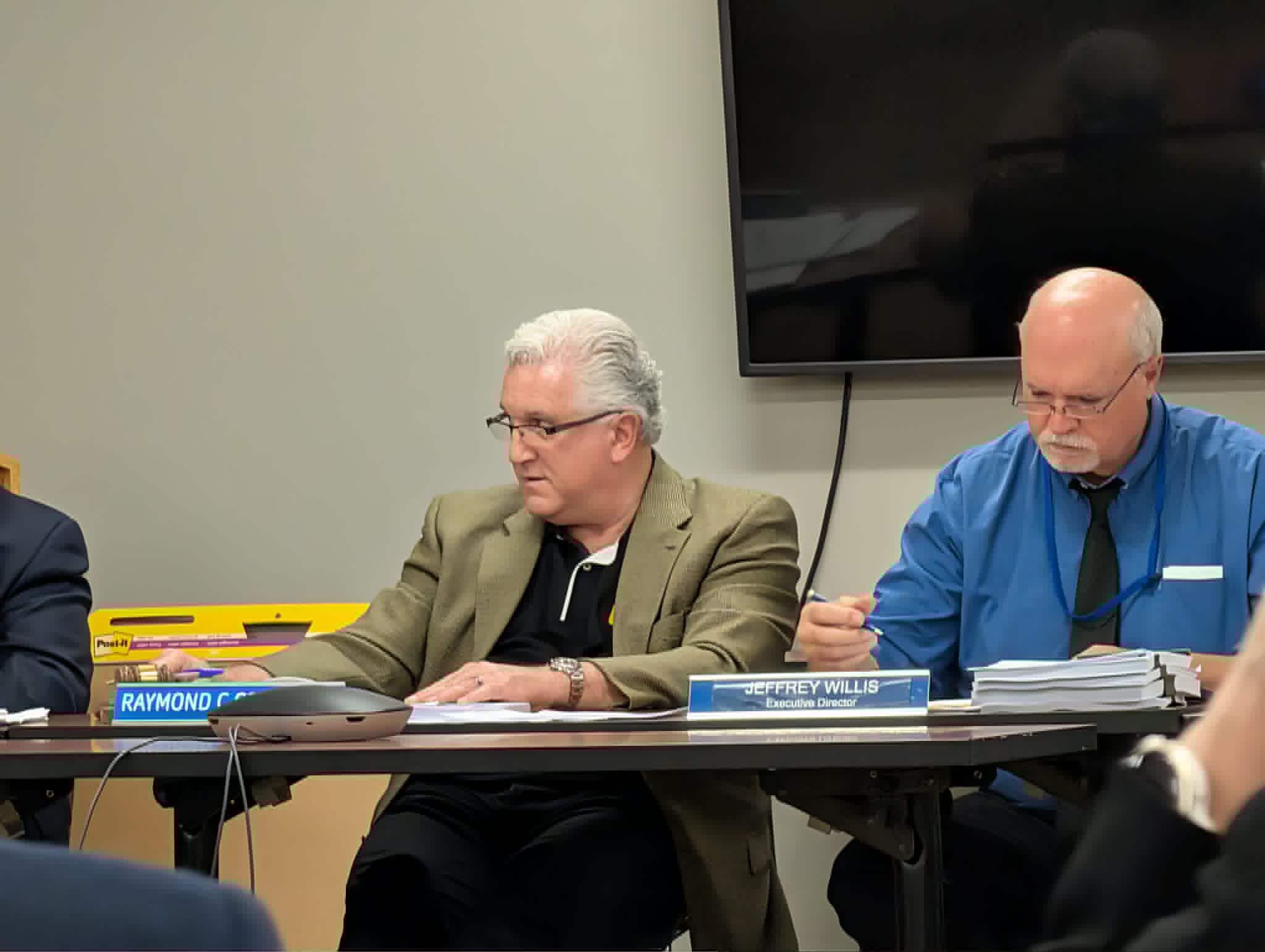
Church was speaking before the Public Utilities Commission on Monday, joining a half-dozen people who testified about their opposition to sky-high energy prices and corporate greed.
The commission was holding one of its twice-yearly hearings on proposed rate changes to last-resort service, the default utility option in Rhode Island, for electric and natural gas customers. In past years, usually only the fall hearing in September has been well-attended by the public, protesting another winter of high energy prices. The March hearing, when the commission approves the summer rates, are usually less well attended. The summer rates are typically cheaper than the winter rates, due to less demand for electricity and gas.
Applying rate changes every six months provides some buffering against volatile natural gas prices, because although roughly half the state has a gas main for heat in winter, all electric ratepayers essentially use natural gas. According to ISO-New England, the nonprofit that manages the Northeast’s electric grid, 54% of all energy consumed in the region comes from natural gas.
Increases in natural gas prices — whether from supply shocks from the Russian invasion of Ukraine, or greater demand globally for the fossil fuel — result in higher electric rate hikes.
The twice yearly date changes only impact the supply side of the bill, usually about half of all charges. The delivery side, where Rhode Island Energy collects charges for state programs and the cost to carry the electricity to consumers, isn’t impacted.
Those charges are adjusted in different PUC dockets, like the base rate distribution charge docket under consideration this year. Residents have, however, in recent years complained the delivery charges are as much or greater than the supply charges.
Utilities in Rhode Island don’t make a profit by selling electricity to ratepayers. Under state law, the utility has to provide electricity under the prices it paid for it; the costs are passed through onto the electric and gas rates themselves.
The profit instead is made on building out new infrastructure such as power lines, natural gas mains, or hooking up new gas lines into homes or businesses. The PUC sets what that profit can be every three to eight years.
But it’s been three years since the PUC signed off on historic 47% rate hikes, and Rhode Islanders are at their limit.
The average Rhode Island utility bill for a home that uses 500 kilowatt-hours (kWh) of electricity a month exceeds $150. In 2021, prior to the historic rate hikes, the average bill for the same usage was around $110. In 2017, it was even lower, coming in at about $100 a month.
A kilowatt-hour measures the energy an appliance uses in kilowatts per hour. For example, if you clean your floors with a 1,000-watt vacuum cleaner for one hour, you consume 1 kWh of energy. Kilowatt-hour consumption factors in how many watts the appliances in a home use and how often they are used.
The PUC estimates with the change in rates effective April 1, electric ratepayers using 500 kWh per month will save around $8.43 a month. But the gas rate is going up effective April 1, to $11.46 per thousand cubic feet of gas annually, from $1,689.42 to $1,701.18.
The state’s residents with the lowest incomes feel the rate hikes most acutely. Rhode Island Energy’s income-eligible ratepayer program has some 33,000 households enrolled. Those households get a 25% discount from the company if they meet income guidelines attached to the federal Low Income Home Energy Assistance Program (LIHEAP) or are enrolled in Supplemental Security Income, Medicaid, SNAP, Rhode Island Works, or general public assistance.
Church told the commission he knows of elderly residents who keep their heat off to avoid running up their utility bills. His own children had to wear two pairs of socks, sweatpants, and a jacket inside his house so the heating bill would remain low, he said.
Meanwhile, said Church, Rhode Island Energy’s parent company, PPL Corp., announced earnings of $888 million in 2024, a 20% jump from the previous year.
“We’re not peasants, we’re not idiots,” he said. “We can read, we can write, we can do math.”
I am embarrassed to look at those numbers, I am embarrassed to say that I have to give money to people who just take it.”
— Eugene Church
Patrick Maloney, when it was his turn to speak, showed the commission his prescription medicine. He held up different pill bottles for blood pressure and thyroid medication.
“I’m lucky, I’m a veteran,” Maloney said. “I can’t get more, but people who don’t have that ability are going to run out of their medicine, and they aren’t getting more. People aren’t going to be able to breathe at night, people are going to die.”
Rhode Islanders are struggling with high utility bills, and it’s not just low-income residents. According to monthly data reported by Rhode Island Energy and submitted to the PUC, 27% of electric customers in the state are delinquent on their bills, as of November 2025. Over half of all delinquent customers, around 69,000 electric accounts, are more than 90 days behind on their utility bills.
The reports were filed monthly by Rhode Island Energy, and National Grid before that, starting in 2019 and ending in November 2025. Reporting the data was part of the agreement in the utility company’s most recent base rate case, which was settled in 2018, and the PUC kicked off a new one in December.
The numbers are similar on the natural gas side. The same report shows 28% of gas customers are considered delinquent by Rhode Island Energy, with around 17% behind 90 days or more on their utility bills.
Those delinquencies are a big increase over just three years ago. In 2023, the rates of delinquency on electric and gas bills were still pretty similar to what they were before the pandemic. The total number of delinquent accounts vary year to year, ranging between 75,000 and 100,000 delinquent accounts for electricity and from 45,000 to 60,000 delinquent accounts for gas customers.
That started to change in 2024, when the number of delinquent accounts began to spike in August. Reports from that year show 136,000 electric customers were considered delinquent on their bills, and for gas customers the number was 73,000.
By that point in time, Rhode Islanders had already gone through two years of sky-high electricity prices. The winters of 2022 and 2023 recorded electric prices of more than 17 cents per kilowatt-hour, a 47% increase compared to prior years.
Natural gas prices have followed a similar trajectory. In October 2021, the price of delivered natural gas to residential customers was $21.21 per thousand cubic feet of gas. Two years later, in September 2024, the price reached a record high of $31.98 per thousand cubic feet of gas, according to data from the U.S. Energy Information Administration.
The biggest proportion of customers in delinquency are Rhode Island’s low-income ratepayers — 15,504 electric customers and 9,757 gas customers are behind on their bills, according to data submitted to the PUC in November.
Meanwhile, low-income ratepayers bear the brunt of the high prices. The data show Rhode Island energy has 28,696 customers enrolled in the low-income electric rate program, and another 19,389 in the low-income gas rate program. The majority of these have bills in arrears older than 90 days.
It’s no surprise that energy costs have become a theme this year, both in the General Assembly and on the campaign trail. Gov. Dan McKee, who is running for reelection, proposed in his 2027 budget cutting almost all of the state’s energy efficiency and renewable energy programs in order to reduce monthly utility bills. By the governor’s own estimates, the cuts, opposed by environmental groups that argue they would stymie progress on climate, would only save ratepayers $15 per month.
“This used to be a state everyone moved to,” Maloney told the commission. “Now they can’t afford to stay.”