
Arrested Development: Stop & Shop’s Tactics Keep Richmond Grocery Store Vacant for Decades
Grocery chain's restrictions in deeds and leases limiting competition deepens barriers to access to healthy foods in rural and urban communities
May 28, 2026
Share


RICHMOND, R.I. — Julie Harney grew up within the same 41 square miles where she first watched airplanes lift off, developed a passion for horses and now raises her own children.
The 45-year-old, who spends her days answering questions that help develop new medicines, has had one question linger in her mind for most of her adulthood: how do you fill the vacancies in Chariho Plaza?
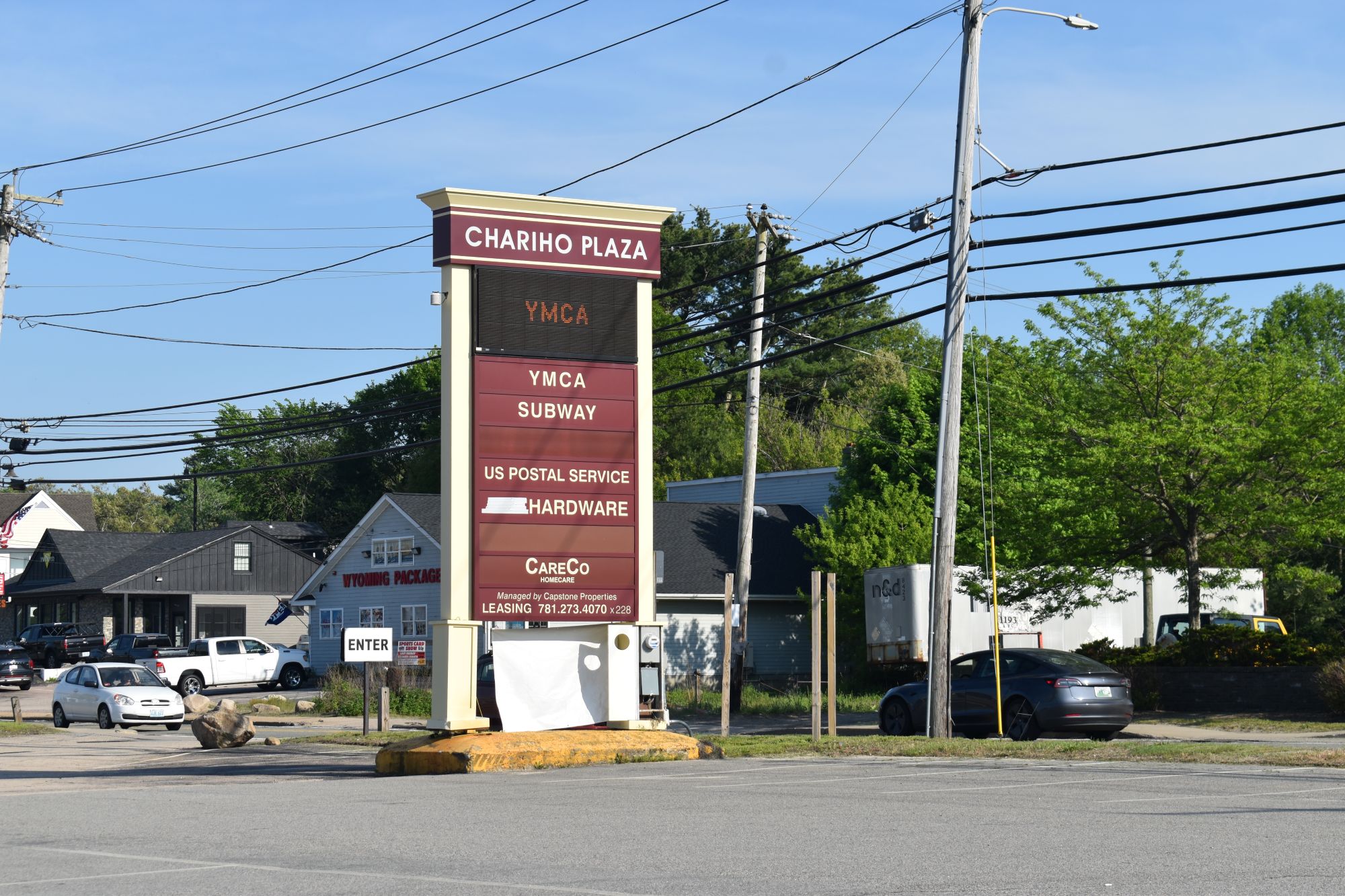
The Richmond shopping center has struggled to retain tenants as businesses closed and others outgrew their space, while its ownership changed hands over the years.
Four vacancies remain: a boarded-up gas station, two former retail storefronts and an empty supermarket building. But none has drawn more attention in the town of 8,000 than the vacant grocery store that Stop & Shop has held on to for three decades.
Grocery chains are known to engage in anti-competitive behavior by implementing restrictions in deeds and leases that prohibit the sale of groceries in certain properties to limit nearby competition. The practice deepens barriers to access to healthy foods and has left buildings and lots vacant for decades in rural and urban communities.
Researchers have also found another tactic: vacating a property yet continuing to pay the rent.
“It appears that Ahold/Stop & Shop will employ virtually any means available to stifle competition,” University of Connecticut Professor Ronald Cotterill wrote in a 2002 research paper.
Lt. Gov. Sabina Matos’ staff have searched for restrictive covenants across the state, and some of their findings include examples where Stop & Shop has left commercial property frozen: a demolished Almacs plaza in Coventry and the building in Richmond.
While property records show the company owns the land in Coventry through a subsidiary, it leases a parcel in Richmond while retaining ownership of the building on top of it, and that lease is set to expire on July 31, 2026, Stop & Shop said in a statement emailed to ecoRI News.
The company said that it does not plan to renew the lease: “Because we believe the plaza is best positioned for long-term success if marketed in its entirety under a unified vision for redevelopment, Stop & Shop does not plan to renew the lease. We are hopeful that this will enable a more comprehensive redevelopment approach and create new opportunities that will benefit the community.”
Matos has pushed to outlaw restrictive covenants in the grocery sector in Rhode Island, and congressional leaders have called on the Federal Trade Commission to investigate their use as antitrust violations.
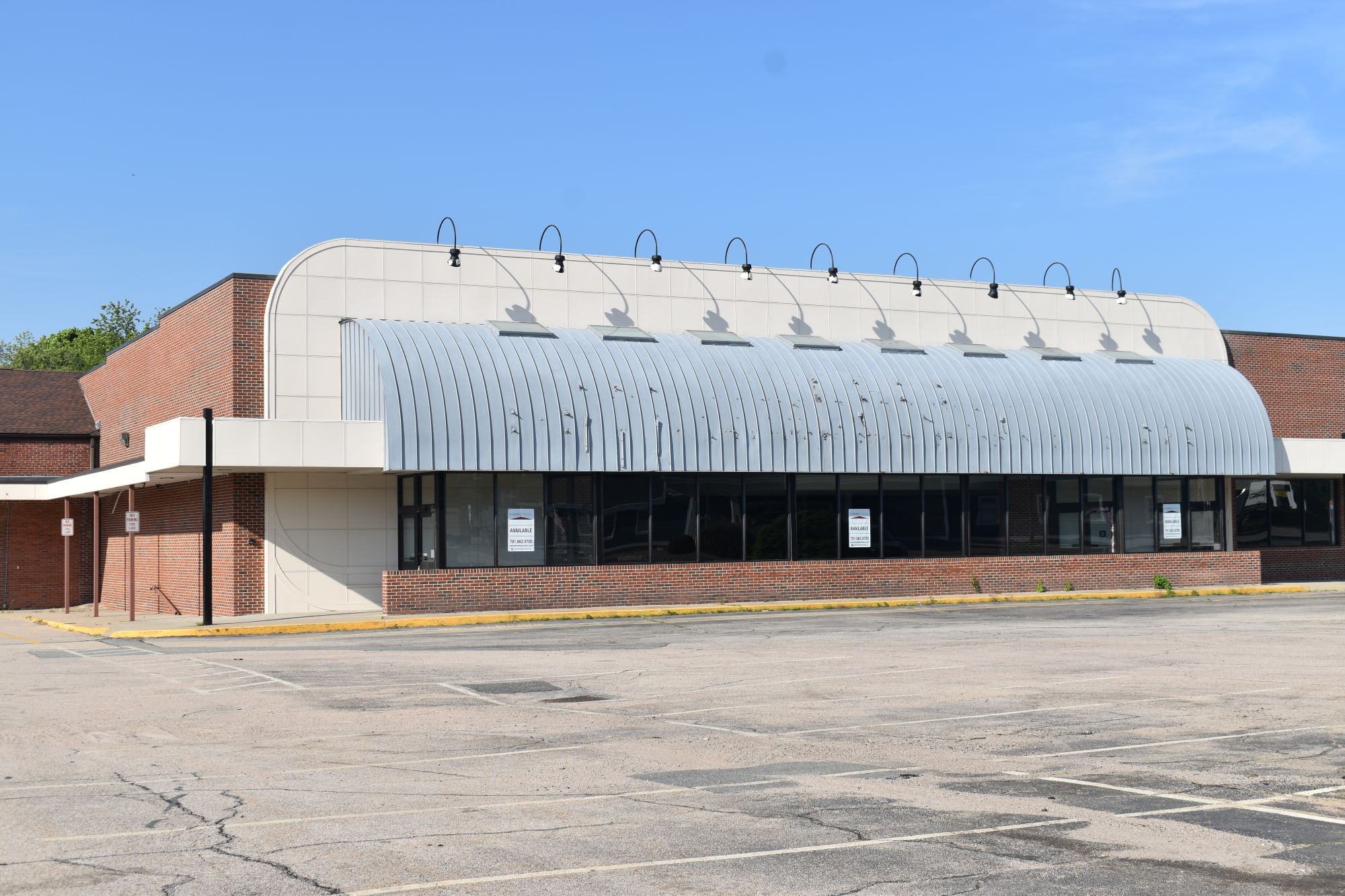
As residents watch how those efforts will affect areas where a restrictive covenant doesn’t exist, Richmond residents are looking for ways to bring new life to Chariho Plaza.
“It’s really disappointing that nothing yet has taken hold to create something better in that location,” Harney said.
Unfinished business
The location has become a bipartisan concern, with both town Republicans and Democrats raising questions about how to put the property back to use.
Former councilor Paul Michaud’s frustration over its condition boiled over during a 2019 council meeting, where he criticized Stop & Shop for neglecting the property and questioned whether anything inside had survived years of decay.
He feared the company had its eye on a vacant Walgreens property and would treat it the same way it does the building in Chariho Plaza.
“They’re buying up property and keeping it empty,” Michaud said during the meeting. “I’m getting tired of Stop & Shop doing this.”
Property records show Stop & Shop’s lease for nearly 31,000 square feet at the plaza dates back to 1986, when A&P secured rights to the building through a ground lease with the shopping center’s owner.
A&P poured millions into expanding its Richmond store by replacing its smaller building with a new supermarket, The Providence Journal once reported.
The expansion was part of A&P’s attempt to reclaim the dominance it once held over the grocery industry after antitrust scrutiny and mounting competition fractured it.
The plaza’s owner predicted the new supermarket would help it become southern Rhode Island’s dominant shopping center.
The vision lasted until 1995, when A&P transferred the lease to Edwards Super Food Store, a chain that was under the control of retail giant Ahold Delhaize.
A new era of grocery consolidation was reshaping the industry by then, as foreign retailers were expanding into the U.S. amid weakening antitrust enforcement.
The Dutch company’s acquisitions of Edwards and Stop & Shop drew scrutiny and forced it to shed 29 stores, including seven in Rhode Island, to two Massachusetts-based chains.
Food industry experts told The Providence Journal that the move would benefit consumers and create a market where price and service dominate. But independent grocers and union workers at stores slated for sale in South County feared being squeezed out.
“There isn’t enough room for three major supermarkets in town,” Vincent Siravo, the owner of Belmont Market, told the Journal.
The Richmond store wasn’t affected, but Ahold Delhaize shifted its focus away from the former A&P building.
The company followed another departing Chariho Plaza tenant in 1997 to vacant land near the interstate at the intersection of Stilson Road and Route 138. It opened the town’s only full-scale grocery store, which is less than a mile away from its former Main Street location.
Commercial development report
The Main Street property sits in the village of Wyoming, one of the seven villages that make up the town of Richmond, and was once defined by iron manufacturing. Interstate 95 transformed Richmond’s villages into commuter communities that attracted residents seeking a rural lifestyle, according to the town’s historical society.
Developers marketed the Chariho Plaza as a retail hub positioned to capitalize on interstate traffic, a planned nearby housing development and little competition in the 1960s.
They filled it with the A&P store, a post office, liquor store, and a dry cleaner, while continuing to recruit new tenants, an advertisement in The Providence Journal showed.
The village had “awakened from a long sleep” by the 1980s, one resident wrote in an article, as commercial development spread across the community.
Some of the developments were in trouble a decade later, including the plaza, when Rhode Island’s credit union crisis sent shockwaves through the state.
Years of bad loans and risky investments destabilized financial institutions, while an embezzlement scandal involving a banker deepened the crisis and fueled a surge in bankruptcy filings, according to local and national reporting.
Property records show a Superior Court judge placed the plaza into receivership before it changed hands several times and landed with Capstone Properties in 2012.
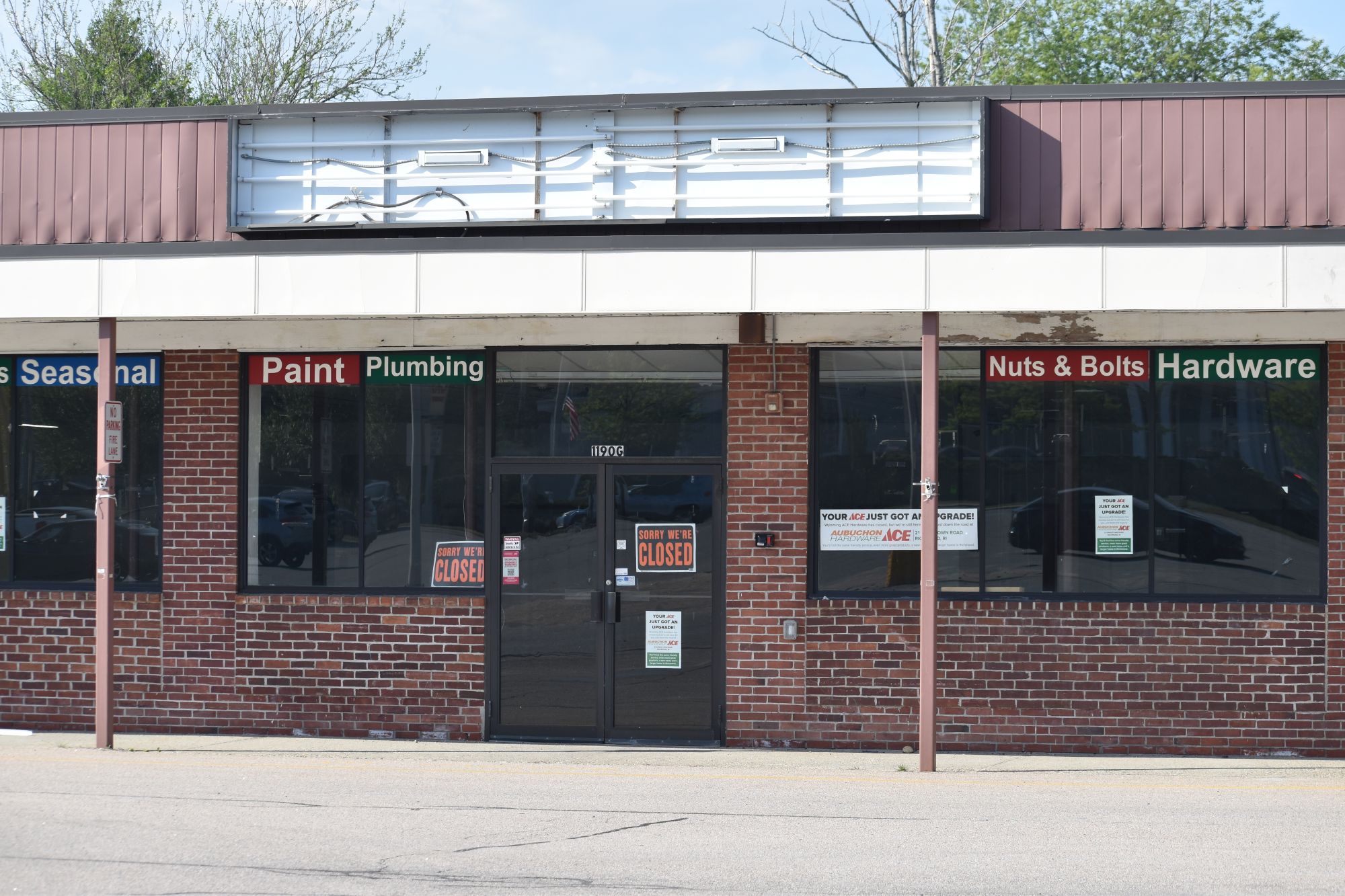
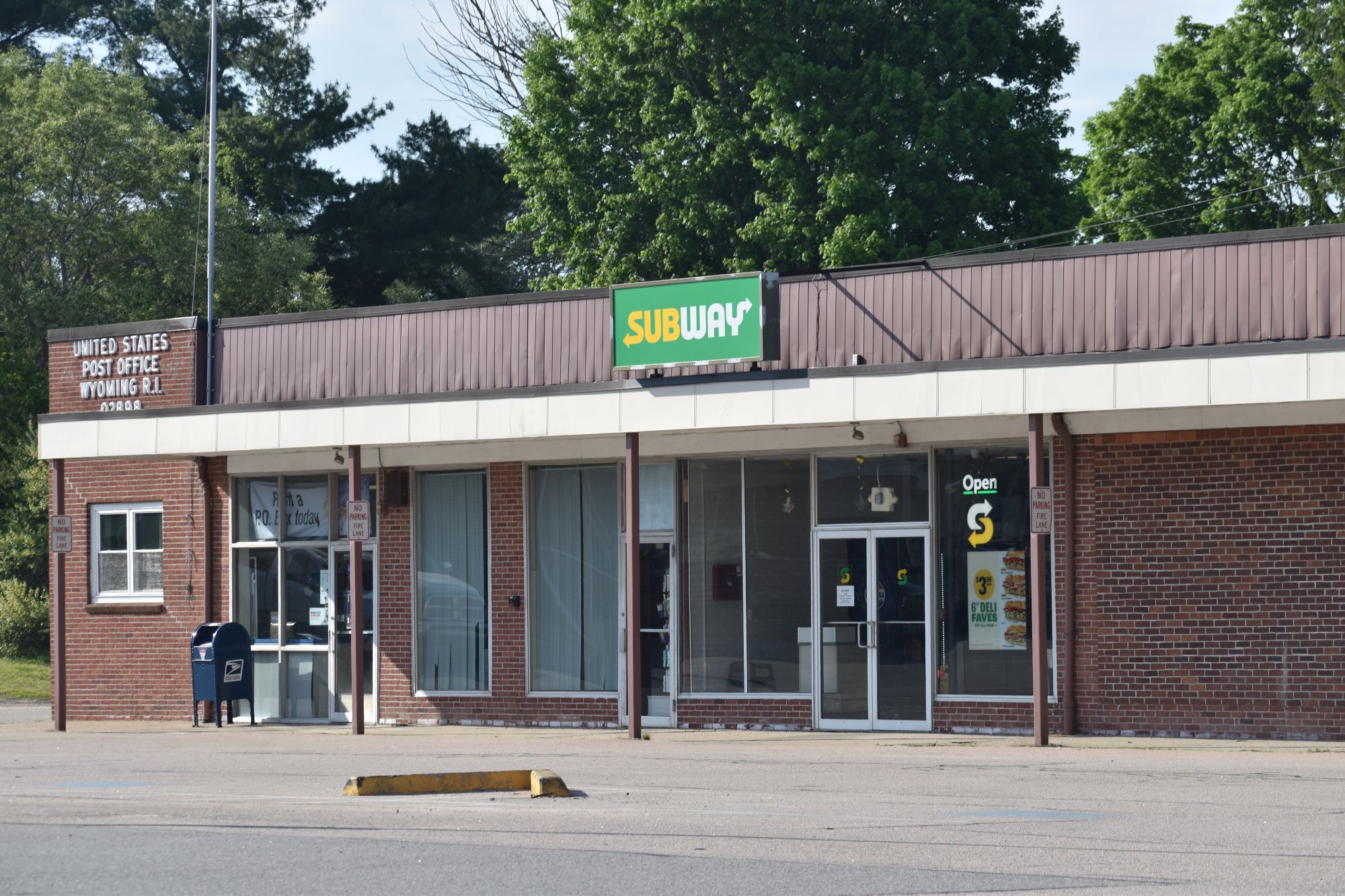
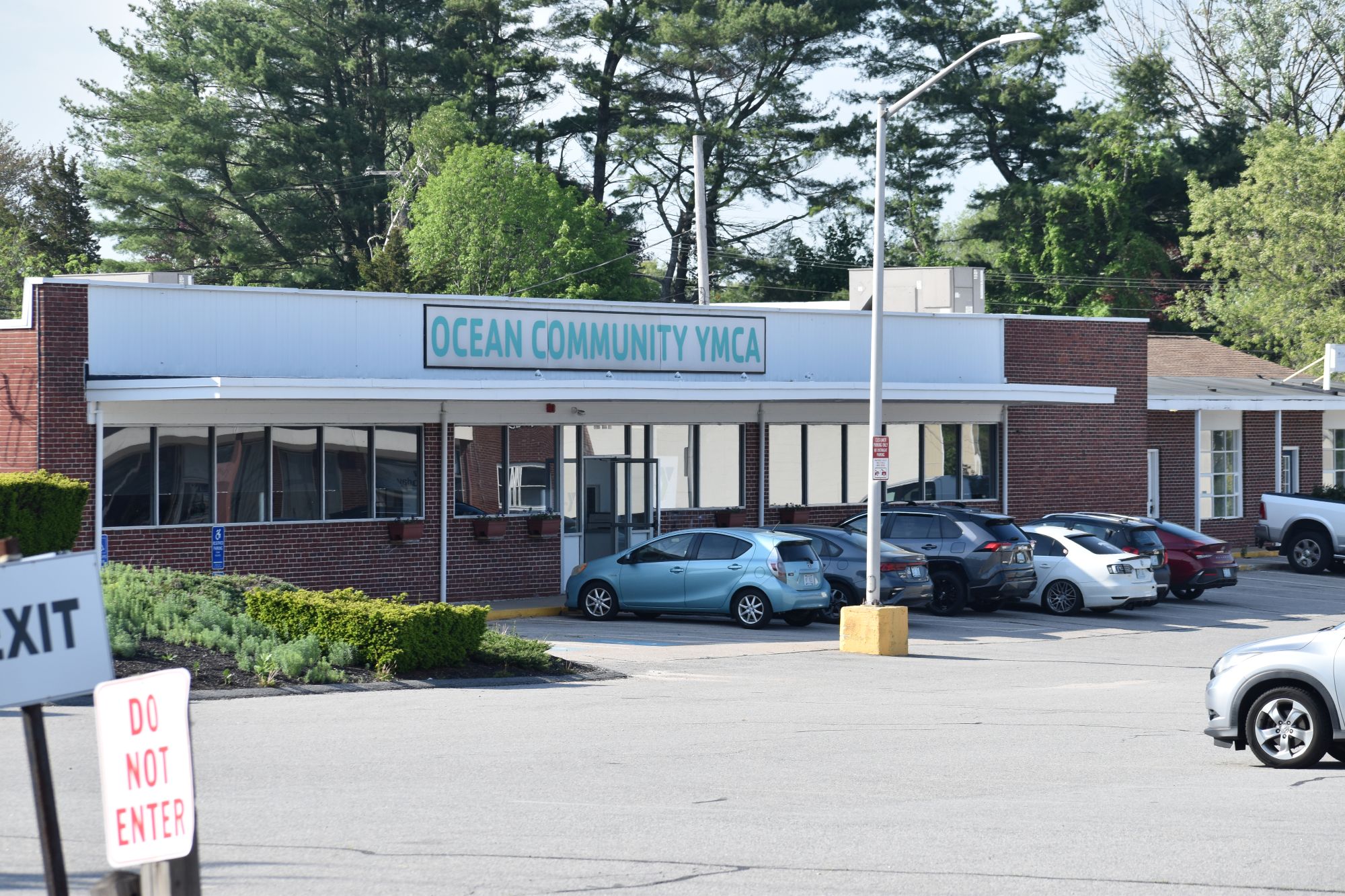
Businesses have come and gone from Chariho Plaza over the years, leaving the post office as its longest-standing tenant after the loss of a grocery store.
Redeveloping the plaza that one resident said in planning documents looked as though the “town was subject to a forced evacuation” is part of Richmond’s efforts to strengthen the town as a place where residents can live, work, dine and gather without losing its rural identity.
Officials focused on the village of Wyoming, particularly its “downtown” business district, as the best place to signal that the town is “open for business.” The village is the only part of town served by municipal water, according to Richmond’s comprehensive plan.
Attracting a new anchor tenant in the plaza has remained difficult, as town leaders have said in meetings that the former grocery store space cannot be used for another food or beverage retailer.
The town could probably benefit from a clothing store, Harney told ecoRI News.
A motion was made
Capstone Properties, the owner of Chariho Plaza, pitched a new future for the shopping center to local leaders in 2015.
The company presented renderings showing a renovated plaza that included additional storefronts and upgrades to existing buildings, according to the town’s economic development commission meeting minutes.
Meeting minutes from the years that followed show town officials pressed for updates. They discussed plans to send a letter to the plaza owners requesting rehabilitation plans, floated the idea of Stop & Shop donating its building to the town, and questioned whether raising taxes or offering tax incentives could push redevelopment.
Rhode Island allows municipalities to impose taxes on vacant properties, but those efforts have focused on blighted housing rather than empty commercial storefronts. Some cities, including Washington, D.C., which banned grocery-restrictive covenants in 2018, have adopted commercial vacancy taxes to curb blight.
Even Harney said she had wondered whether a blight ordinance modeled on those authorized in Connecticut could spur movement at the plaza.
Still, some elected officials have said in a voter guide that the town cannot force a property owner to rent or renovate a building. They also blamed one another for comments made during public meetings and unethical behavior that they said jeopardized revival efforts.
“We don’t dictate what companies come here or don’t,” councilor Jim Palmisciano told ecoRI News, adding that elected officials can only shape the regulations and environment intended to attract business investment.
Tension surfaced during a 2023 council meeting when Capstone Properties representative Rick Zini said that, before new development can happen, the town must decide what it wants and how it will be regulated.
“That needs to be settled before any developer or major taxpayer is going to make additional investment in the town,” Zini added.
Councilor Daniel Madnick, former vice chair of the town’s planning board, has pushed to ease barriers for development in the village, including groundwater regulations and traffic congestion along Route 138, where the plaza sits.
The council revised the town’s aquifer protection ordinance to allow for more commercial projects. Madnick said the change hasn’t triggered a wave of new applicants, but it hasn’t stopped plans from moving forward either.
Route 138 cuts through the town from Kingston Road to Nooseneck Hill and carries more traffic than the narrow state-owned road was designed to handle, Madnick said.
He pushed the Rhode Island Department of Transportation (RIDOT) to study the corridor and include widening projects in the State Transportation Improvement Plan.
But Madnick said the state is not expected to prioritize work on the road until sometime in the 2030s. More economic effort in the area, he said, could help move the proposal higher on RIDOT’s list.
New business
Capstone Properties and Ahold Delhaize representatives have not responded to ecoRI News’ request for comment about barriers to attracting new tenants to the plaza. But Palmisciano and Madnick said they met with retail officials in a May 19 council meeting as part of ongoing efforts to revive the property.
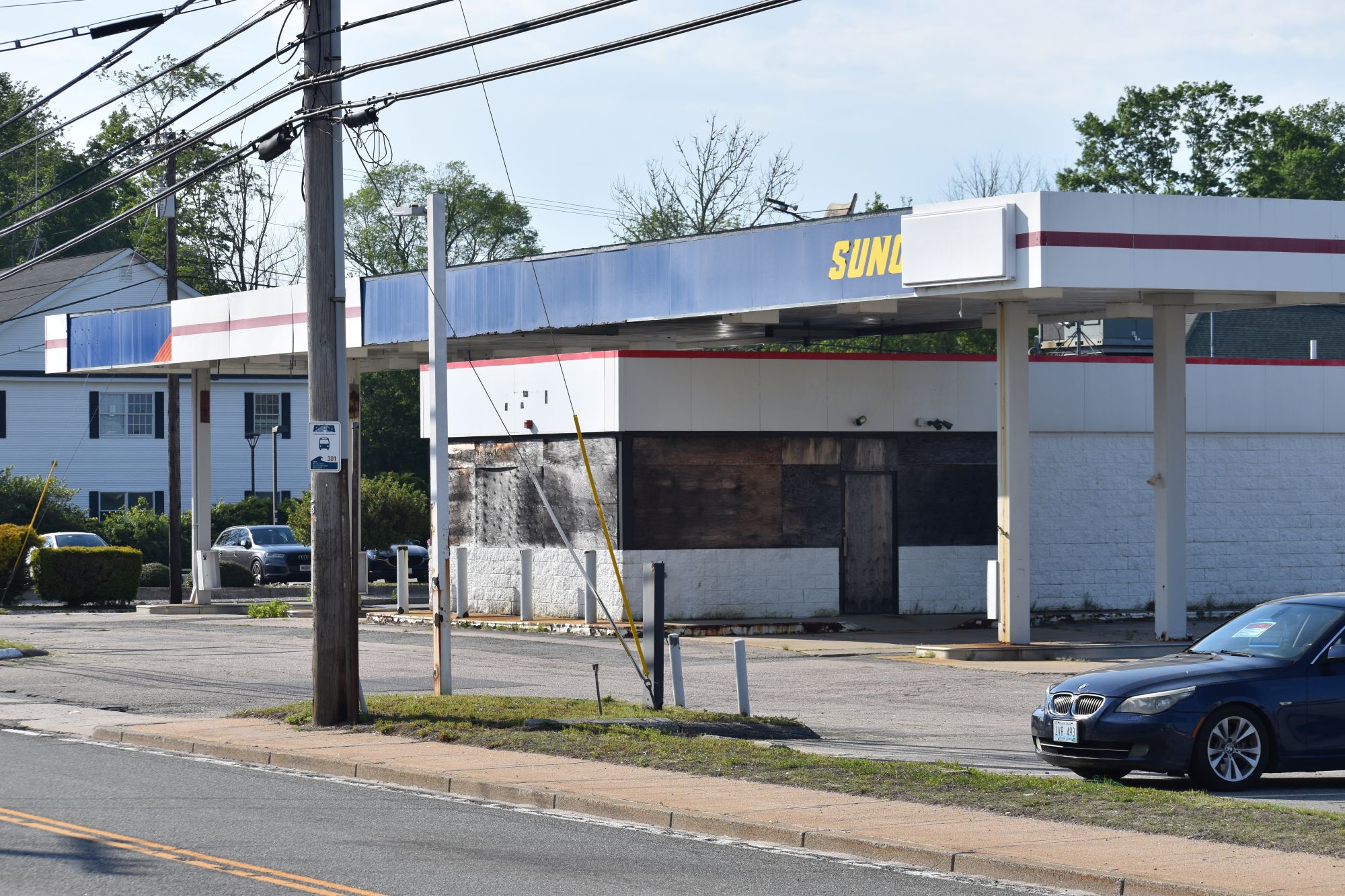
The meeting followed the councilors’ outreach to a state representative for help. Madnick told ecoRI News that a suggestion emerged to create a redevelopment agency that could address blight and, if necessary, use eminent domain when properties cannot be redeveloped through private investment.
He shelved the plan after an opportunity to meet with the retail giant arrived.
Madnick said the plaza’s conditions are “embarrassing,” but he’s reluctant to pursue a “stick approach” and instead is hoping the company will move forward with redevelopment plans in the next few years.
Vacancy taxes and eminent domain are seen as last-resort options because those efforts involve high costs and lengthy processes, according to Matos, a former Providence City Council member.
“We always try to find an amicable resolution in which we can work with the carrot instead of the stick,” she said.
The former supermarket has had one tenant since Stop & Shop moved: Cycle Brothers Motor Sports, whose tenancy didn’t last long.
In its statement to ecoRI News, Stop & Shop said that over the course of its tenancy in the plaza, “we made concerted efforts to sublet or find an alternative use for the space. We faced a number of challenges in doing so, including the limitations associated with leasing only a portion of the property and infrastructure changes that would have been required for certain prospective uses. We worked collaboratively with both the Town of Richmond and the property owner to explore viable opportunities.”
As for attracting another grocery store to the area, Matos said her staff has been reaching out to independent grocers and chains to stress the need in underserved communities, especially in Richmond, where the prolonged vacancy has driven some residents away from shopping at Stop & Shop.
“This is an example of a large corporation creating a monopoly and taking advantage of a largely rural population’s basic needs and is simply just wrong,” Harney wrote in an email.
Editor’s note: This story was updated with a response from Stop & Shop officials at 5 p.m. on Friday, May 29.

When we built our home in Richmond in the late 80”s A & P was the only market aside from Ma and Pas variety store. The changes I have seen over the years are too many to dwell on. When Flemings closed we no longer had a place to buy everything but food. We lost Cost Plus, Family Dollar, Brooks and a drug store whose name escapes me right now but do have a CVS which remains very important to the town. When Stop & Shop built the new “super” store the question was why??? And now years later and no competition allowed they have the monopoly. There is always the option of going to Westerly, Coventry, Warwick, etc but at my age I like one stop shopping and not traveling 20-25 miles when S&S is ten minutes from home.
Obviously from reading this article, I truly don’t see any changes probably in my lifetime which as a happy resident for almost 40 years is pretty sad.
The plaza is a terrible waste of space being held onto by corporate America with apparently no hope for the little guy.
We do not have a bakery, some type of store like Flemings was, or whatever ideas others may have that would keep Richmond as Richmond and not land filled with thousands of solar panels or data centers.
I guess the future generation will see. I can only hope that there are no huge changes coming that totally take the appeal away that brought so many families to raise a family in what was an amazing place to live.
I will continue the hope for my children and grandchildren who will inherit the wonderful place we call home.
Madnick said the plaza’s conditions are “embarrassing,” but he’s reluctant to pursue a “stick approach.” This is wishful thinking and not how leaders address issues (aka passing the buck). The plaza has been in decline for decades; the time for the “stick approach” has arrived.
So much beauracratic red tape! How about a Whole Foods market? Keep it simple, and natural.
IMHO I , given the University and the nature of South Washingtion County why a Co-op has never taken off. In my visits to friends in Western Ma. There are multiple options, from farm to table to major suppliers . It’s worth a feasibility study . I live in Saunderstown and I would definitely go. Face facts Stop and Shop isn’t going to do a thing.
As a 45 year resident of Richmond I agree with the comments labeling this eyesore as it is a thumb in the eye of the town. I am familiar with a town in Massachusetts where when a food store closed, the town purchased the site and made it into a park to benefit the residents. Fringe area to the park can benefit, and nearby residences can benefit from better property value. The town has a stake in this but while it refuse to make an animal shelter safe, as too costly, it will not likely add a dime to the rate to add value to the town landscape.
As a somewhat new resident of hopkinton, after living in WA State for over two decades, I am frustrated by needing to drive to Wakefield, westerly, and Lisbon CT for most services and shopping.
We do not have a self sustaining plan for Richmond and hopkinton. Downtown is derelict and embarrassing. A shopping center would keep tax dollars here and reduce fuel consumption and ecological impact.
There are grants available for redevelopment in rural communities.
All that is needed is support and action to improve our economy.
There is power in numbers. I can’t get a manicure or pedicure in town, never mind competitive groceries. I can think of hundreds of stores that would be welcome to offer what we all go out of town for.
Someone needs to get this thing done!
There’s a solution to this: it’s called BOYCOTT! Buy up highway signs that point out what SNS is doing! People hold the power here. They just need to commit. I no longer shop at SNS for reasons of my own.
Lived in Charlestown most all of my life. Love the country, and I would love to see Trader Joes, Cosco, maybe Cracker Barrel.
Nice idea! A natural foods coop thrived on Main St in Wakefield for years (I want to say in the 70s?), and maybe it’s time has come again.
This area is an eyesore and could use a major remodel, at least to the storefronts. Perhaps walkable senior housing/mixed use area with a village-like appearance would work. Plant some shade trees to mitigate the heat island effect. And of course some grocery alternatives to SNS (Dave’s would be on my wishlist).