
Growing Legislative Contingent Supports Renewable Energy Program Cuts
March 23, 2026
Share


PROVIDENCE — There’s a debate in the General Assembly this year on how best to tackle electricity prices.
It’s no secret energy prices in Rhode Island have been high for years; state officials have little power over the price of natural gas used to run power plants and heat homes.
But a conservative faction within the General Assembly has been arguing that it’s time to roll back the state’s climate and renewable energy programs, which are funded via charges collected every month on residents’ electricity bills.
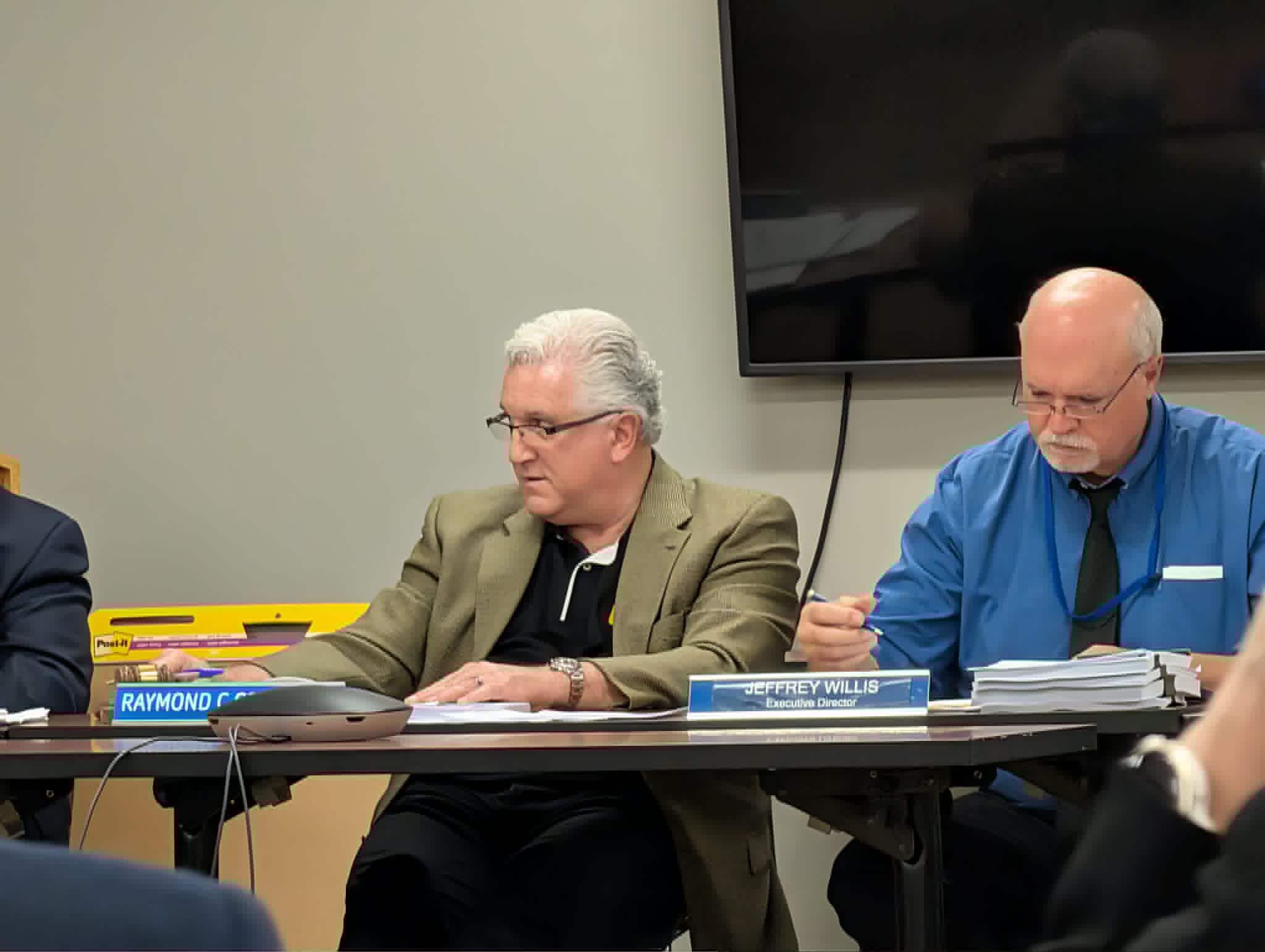
House Minority Leader Rep. Michael Chippendale, R-Foster, has introduced a package of legislation designed to eliminate many of the state-mandated charges on utility bills to deliver relief to ratepayers. He denied the legislation was meant to end renewable energy programs in Rhode Island.
“Each of these may have been created with good intentions,” Chippendale said during a House Corporation Committee bill hearing Thursday. “But each and every legislator in this building is hearing from our constituents that they cannot afford to pay their increasing electricity bills with good intentions. It requires money, and a lot of it.”
Smith Hill Republicans aren’t the only elected officials backing rollbacks to renewable energy and climate programs. Gov. Dan McKee proposed rollbacks to the programs as part of his budget, although the most optimistic savings Rhode Island households can expect is $15 a month, according to estimates from the state Office of Management and Budget.
McKee proposed capping the state’s energy efficiency programs to $75 million per year, capping net metering program costs, and pushing back the deadlines for Renewable Energy Standard requirements out to 2050. The governor in his budget announcement said it would save ratepayers $1 billion over five years.
Here’s a breakdown of rollback legislation:
H7139 would require all changes to the Renewable Energy Growth Program (sometimes referred to as RE Growth) be approved by the General Assembly, instead of the Public Utilities Commission.
H7174 would repeal the energy efficiency charge, which funds the program that allows Rhode Island Energy to offer rebates, free weatherization services, and other initiatives that help ratepayers use less energy, in its entirety.
H7176 would repeal the Renewable Energy Growth Program entirely.
H7177 would end the net metering program, used to finance solar arrays, and prohibit any state subsidies for consumer heat pump purchases.
H7523 would place a five-year moratorium on the Renewable Energy Growth and energy efficiency program charges.
Rep. Pat Serpa, D-West Warwick, spoke in favor of many of the rollbacks introduced by Chippendale, telling committee members it may not be a “popular opinion” but it was a practical one.
“Rhode Island Energy is a for-profit business. It’s not a charity that exists for the benefit of distributing energy at little or no cost,” Serpa said. “We can’t control everything. You’re right. They have products to buy, they have gas lines to pay for, they have employees to pay for.”
Environmental groups have strongly opposed proposed cuts to climate and energy programs this year. Timmons Roberts, a professor of climate science at Brown University, questioned the legislation and asked why legislators would walk back much of the 20-year progress they had made on climate, calling it “a quite dramatic throwing overboard.”
“I don’t know about you guys, I paid over $540 for fuel oil today to heat my house,” Timmons told the committee. “I think the longer we take to make this transition to renewable energy, which has stable prices that are often increasingly cheap. If you look at the declining rates of cost of solar, wind and storage, like electric batteries, it’s all plunging.”
The rising global price of natural gas is the biggest driver of energy costs in Rhode Island today, due in part to its prevalence in the state. Between 87% and 90% of electricity consumed in the state comes from natural gas-fired plants, and about half the state uses it for heating during the winter and cooking.
Rhode Island is somewhat protected against most market shocks. The PUC requires Rhode Island Energy to enter into contracts between 6 and 24 months in length, giving some breathing room from the day to day volatility of the market.
The Russian invasion of Ukraine was the original impetus for tightening natural gas supplies around the world, and the U.S. war on Iran is likely to drive prices up further. The war in Iran has resulted in attacks on energy infrastructure in Kuwait, Qatar, and Saudi Arabia, and the Strait of Hormuz has been closed to shipping. About 20% of global natural gas supplies pass through the strait.
Climate advocates have long argued to lawmakers the state’s reliance on fossil fuels comes at the cost of global events and price fluctuations. The cost for renewables is primarily upfront in installing the arrays and the infrastructure to feed it to the electric grid. Sunshine and wind don’t have to pass through shipping lanes closed because of sudden wars.
Lawmakers opposed to rolling back the programs point out, with Revolution Wind coming online this month, it’s going to help Rhode Islanders in the long term. Rep. Art Handy, D-Cranston, said the energy would have helped last winter.
“Ratepayers would have saved like $400 million in Rhode Island because of the volatility of electric prices during that winter,” Handy said. “Everybody remembers we had this giant spike in prices that winter. So having something like a real stable source of energy is actually quite good at lowering rates.”
Categories
Join the Discussion
View CommentsRecent Comments
Leave a Reply


Your support keeps our reporters on the environmental beat.
Reader support is at the core of our nonprofit news model. Together, we can keep the environment in the headlines.
My question is how much will this cost Rhode Islanders that made the decision to have solar panels installed ?
Mr. Chippendale, like most conservatives, has his head in the sand as far as long-term energy outlooks are concerned. While non-renewables may last through his lifetime, though increasingly costly as we run out of oil producing countries to invade, what about our children and more future generations? Will we have to go back to burning charcoal and wood to heat our homes? These measures curtailing expansion of renewables and programs to implement them for the average homeowner are extremely short sighted. The wealthy CEOs of R.I. Energy and their parent company in Pennsylvania have more money than they can use in several lifetimes. Since R.I. Energy is essentially a monopoly in this state, they naturally don’t want the competition of renewables. If ratepayers are paying high prices for electricity, then we are being charged too much, period. Yes, the workers need to be paid, and equipment procured. But the greedy utility CEOs don’t need such huge salaries.
Rolling back on climate goals is the stupidest thing ever,. it will tank the economy and kill people. The only way to future prosperity is eliminating fossil fuels. That Republicans and our oil dealing governnor are too stupid to understand is expected and incredibly bad for RI. Oil prices are up because of war, we need to stop being dependent upon fossil fuels to have price stability and healthy communities.
I hope the legislature will quickly pass the legislation allowing plug-in solar, also known as balcony solar. It would cost the state nothing and would allow people to use small solar systems that can plug into a regular outlet to feed the energy to the home. Read about it here: https://www.wri.org/insights/enabling-plug-in-solar-states
It is not the renewable energy programs that need to change it is how to fund them. As people install renewable energy devises they no longer fund the programs that they benefited from. The nearer to zero your net energy use becomes the less you pay to keep these programs going. In 1985 we installed our first grid tied system a Bergey wind turbine. The installation and approval procedure was simple and transparent. Approval by our town including a variance for height and notifying the utility. We received a 20% state tax credit along with a federal tax credit. I am. strong advocate for small solar arrays. My 1.2kw system produces half of our electric needs. Our legislature needs to approve plug in solar to help homeowners and renters reduce their energy costs.
These proposal are a mistake IMO but, although I personally have benefitted from the programs these proposal would end, I do see problems with them so some revision would be warranted.
– Subsidies for expensive equipment (heat pumps, solar panels) go to people who can afford them (or nearly). This leaves people that can’t subsidizing people that can.
– Net metering where the credit per kWh a homeowner gets is the same as they pay when using a kWh, means the burden of paying for the grid goes to those homeowners without their own energy source (solar panels).