As Rhode Islanders Lose Food Assistance, Providence Library Steps Up To Help
March 23, 2026
Share


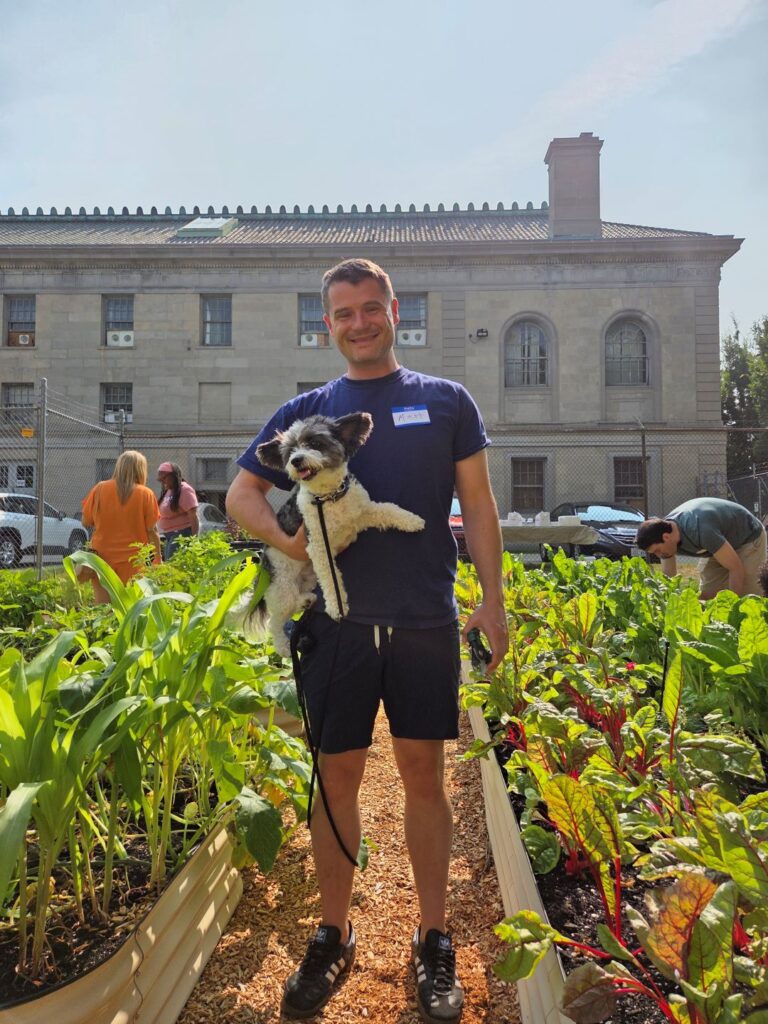
PROVIDENCE — Michelle Freeman, who lives across the street from Knight Memorial Library, has long wanted to harvest produce in the green space that divides the library from the now-demolished Gilbert Stuart Middle School.
The social worker-turned-librarian-manager seized the opportunity when the library administration announced plans to beautify the nearly 102-year-old building’s landscape.
The 700-square-foot garden in the rear of the library came at a time when President Trump slashed Supplemental Nutrition Assistance Program (SNAP) funding, food banks across Rhode Island saw a decrease in food donations, and reports showed that food insecurity has worsened over the past five years.
The Community Libraries of Providence, a network of nine libraries including Knight Memorial, are public health hubs that bring together residents of different backgrounds to nourish not only minds but also tummies with Swiss chard, eggplants, green tomatoes, and cucumbers.
Knight Memorial Library’s new gardening club members gave out thousands of dollars worth of free food as they stopped cars last year while holding signs that read “Free Veggies” in English, Spanish, and Haitian Creole as a way to help alleviate the state’s food insecurity crisis.
“It’s just amazing that something that is such a feel-good thing can serve the community in such a big way,” Freeman said.
One in three Rhode Island households are food insecure, according to data from the RI Life Index, a study by Blue Cross and Blue Shield of Rhode Island and Brown University of Public Health.
Researchers found the state’s food crisis disproportionately affects communities of color.
In 2025, 58% of Hispanic households and 50% of Black households lacked access to food compared to 27% of their white peers, researchers noted.
Knight Memorial Library serves one of Providence’s most diverse neighborhoods, with 68% of residents identifying as Hispanic, according to Census data.
The library’s zip code, 02097, had the second highest number of SNAP cases in Providence. The Rhode Island Department of Human Services reported 5,409 cases as of March 20. The caseload data ecoRI News obtained from the department does not include the number of individuals who are receiving SNAP benefits.
Food insecurity is “just everywhere,” Freeman said.
Hunger relief advocates and food policy experts believe food insecurity rates will increase as Rhode Islanders navigate a new era of SNAP benefits, formerly known as food stamps.
Trump gutted $187 billion in federal SNAP funding — the largest cut in history — through 2034 when he signed his “One Big Beautiful Bill Act” into law in 2025. The act also narrowed SNAP eligibility and expanded work requirements for participants.
The Economic Progress Institute, a nonpartisan research and policy organization, found 10,000 Rhode Islanders are at risk of losing food assistance due to SNAP changes, including 2,300 lawfully present immigrants.
The bill revoked eligibility for most lawfully present immigrants who had arrived in the country for urgent humanitarian reasons, such as refugees, victims of human trafficking, and asylum seekers.
United Way Rhode Island has encouraged residents to call its 211 hotline for information and referrals for food assistance.
The nonprofit handled 648 calls from residents about the federal program from November to February, according to Michael Cerio, a spokesperson for United Way Rhode Island. He added that 617 of those calls were regarding questions about eligibility, and 31 were for application assistance.
Milagro Sique said the organization she leads, Dorcas International Rhode Island, is already feeling the effects of the new changes for refugees and immigrant communities.
She said there has been an increase in refugees who have been in the states for two years and are either in the process of applying for a green card or haven’t received it and are concerned about their SNAP benefits.
These individuals have lost benefits as of March 1 or will lose them on their recertification date under the new federal rules requiring green card holders to maintain legal status for five years.
The nonprofit is on Elmwood Avenue near the Knight Memorial Library and offers legal immigration services, refugee resettlement programs, and other resources.
Even newcomers who are currently resettling through Dorcas International Rhode Island’s refugee resettlement program are no longer eligible for SNAP.
So far, 10 clients have lost benefits, said Sique, adding that she anticipates the number will increase to more than 200 people.
“These are families of two, families of four, families of five who are in this situation and are losing SNAP benefits,” Sique said. “We are seeing a growing increase — and I think this is just the beginning.”
She added that her clients were already having tough conversations about which basic needs to prioritize each month.
“Now it’s do we pay for food or do we pay for the light?” she said.
Freeman said she reached out to Dorcas International Rhode Island last year about the library’s free vegetables and plans to donate to the organization this harvest season.
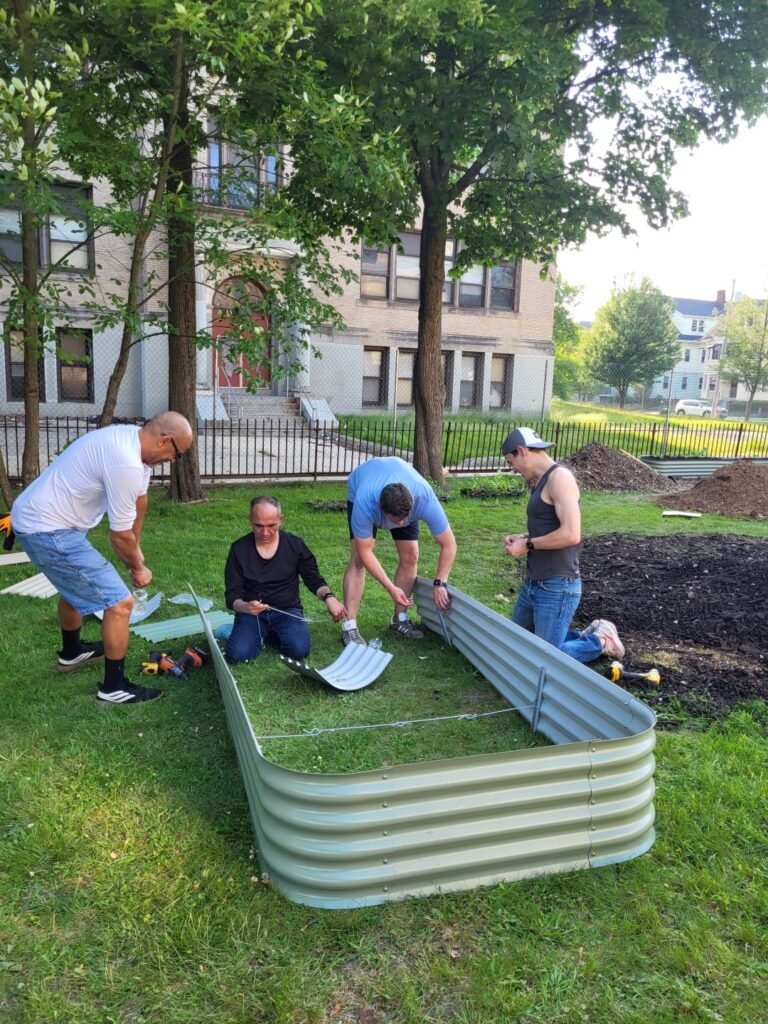
The garden contains 18 garden boxes, and Freeman expects to double that number this year.
Knight Memorial Library is one of the few third spaces, a place outside of home and work, where people don’t have to buy anything to gather.
One of the reasons Freeman wanted to start a garden was to fight social isolation and bring people together for a good cause.
Volunteers don’t need gardening experience, she said, adding that club leaders will teach them what they need to know.
“We learn as we go as well,” she said.
Knight Memorial Library is scheduled to hold volunteer meet-ups April 2 at 6 p.m. and April 4 at noon.