
We’re Eating on Borrowed Time
Local and regional food systems need to replace the industrialized global machine
March 5, 2026
Share


The destruction of worldwide food supplies by crop pests is being supercharged by the climate crisis, with losses expected to surge as temperatures rise. The authors of a research paper published last spring said the human race was lucky to have so far avoided a major food shock and was living on borrowed time.
Their warning received little attention, even as the team of researchers noted immediate action was needed to diversify crops and boost natural pest predators. More monoculture and spraying more poisons is not the solution to this emergency.
For southern New England and the greater six-state region, it means building robust food systems that don’t rely on other regions, such as water-scarce California, to feed us.
To grow more food, though, requires land, preferably of the healthy variety. Southern New England, however, has spent more time watching farmland be covered with pavement, unaffordable homes, and ground-mounted solar panels than helping farmers feed themselves and the 12 million people who live in Rhode Island, Massachusetts, and Connecticut.
In 1945, New England had about 6 million acres growing and producing food. Since then, Rhode Island has lost some 80% of its farmland to development. In Massachusetts, from 1999 to 2005, land was developed at a rate of 22 acres a day, converting some 40,000 acres of farmland and forest to residential use, according to a 2009 Mass Audubon report.
Rhode Island’s transition to suburbanization has left the Ocean State with some of the highest-priced farmland in the country — about $17,500 an acre, compared to the national average of about $3,800. As older farmers age out of this demanding work and sell/lease their property to developers because of a lack of younger interest in the financially challenging occupation, the local food system withers on the vine.
Backyard and community gardens play a vital role in feeding us, but they alone can’t fill the void being created by disappearing farmland, and farmers.
Despite support for the movement, growing awareness about the importance of local food — for both human and environmental health — and taxpayer money and government time being spent commissioning reports, holding legislative hearings, and creating task forces to address the local food economy, the amount of local sustenance being produced, bought, and consumed here hasn’t changed much in the past 15 years.
All of New England produces about 10% of the food it consumes. In Rhode Island, that percentage gets cut in half. Much of what is produced and consumed in the Ocean State is milk and potatoes.
The other 90% of New England’s nutriment comes from outside the region, brought here by a global food system and industrial monoculture that will continue to be further stressed by prolonged drought, intense flooding, and other severe weather, a growing human population, and marauding pests — none bigger than our collective selves.
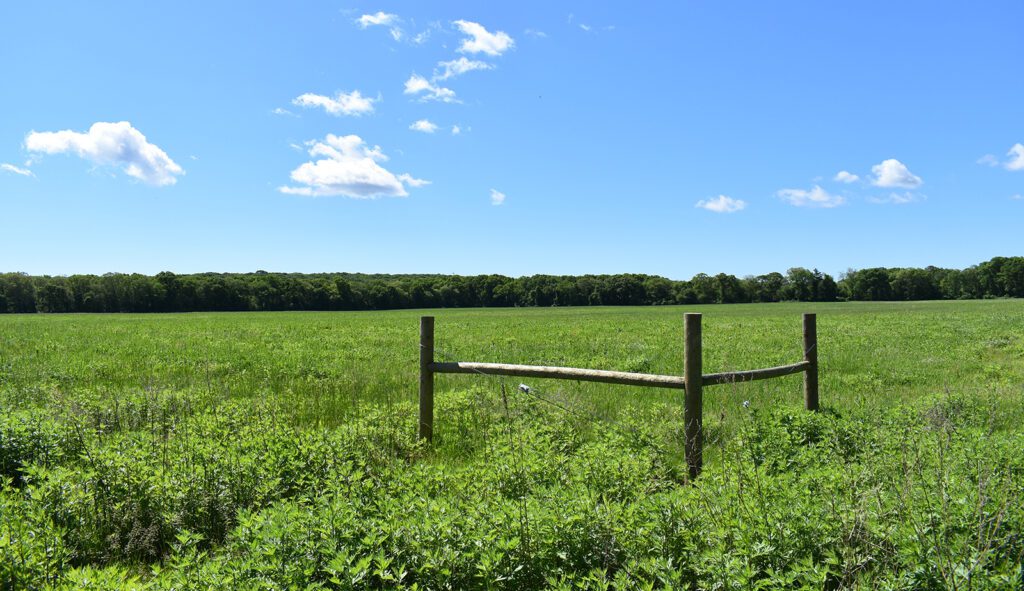
The Marion Institute’s Southcoast Food Policy Council consists of a diverse group of nearly 300 partners throughout the South Coast of Massachusetts, including farmers, fishers, food pantries, churches, social service agencies, schools, and institutional buyers.
In 2021, the Council published a food assessment report for Bristol, Norfolk, and Plymouth counties, where 1,643 farms and 99,688 acres of farmland were identified in the area’s combined 2,228 square miles. Those farmland acres represent just 0.07% of the region’s 1,425,920 acres. The assessment found the three counties, which have a total population of 1.8 million — more than the entire state of Rhode Island — were experiencing a decrease in farms, farmland, and market value of agricultural products.
From 2012 to 2017, the number of farms decreased 8.1% and the amount of farmland decreased by 8%, outpacing the state in both instances, according to the 140-page report. This shift in farm acreage more than reversed a 7.8% gain documented between 2007 and 2012. The number of farms growing vegetables fell by 15%, from 250 in 2012 to 212 in 2017.
Overall, the market value of the three counties’ agricultural products decreased by 25%, from $157,222,000 in 2012 to $118,400,000 in 2017, with Plymouth County witnessing the largest percentage drop at 33%. The region’s top agricultural products were fruit, tree nuts, and berries at 44%; nursery, greenhouse, floriculture, and sod at 25%; and livestock and poultry and vegetables, potatoes, and melons both at 14%. The top three vegetable crops by acreage were sweet corn (37%), pumpkins (12%), and squash (10%). Many more of those pumpkins likely end up carved or smashed than eaten or even composted.
Since the Council’s food assessment was researched, written, and published during the COVID-19 pandemic, the public health crisis identified many of the inequities and cracks in the regional food system, according to Liz Wiley, the executive director of the Marion Institute.
“While we were doing this report, we were really responding to the crisis, and that really illuminated a lot of gaps and priorities,” Wiley recently told me. “It was super obvious during the pandemic because it affected everybody regardless of socioeconomic status. We remember everybody was like, ‘Wait a minute, where do I get my food from? The shelves are bare, and who’s my local farmer, and where can I access it?’ I think that was a really great wake-up call for the importance of building a resilient local food system.”
Shrinking human-wildlife interfaces worldwide will likely unleash more viruses that will disrupt the Big Ag food network built for profit, not resiliency. Protection from this inevitability lies with building robust local and regional food systems.
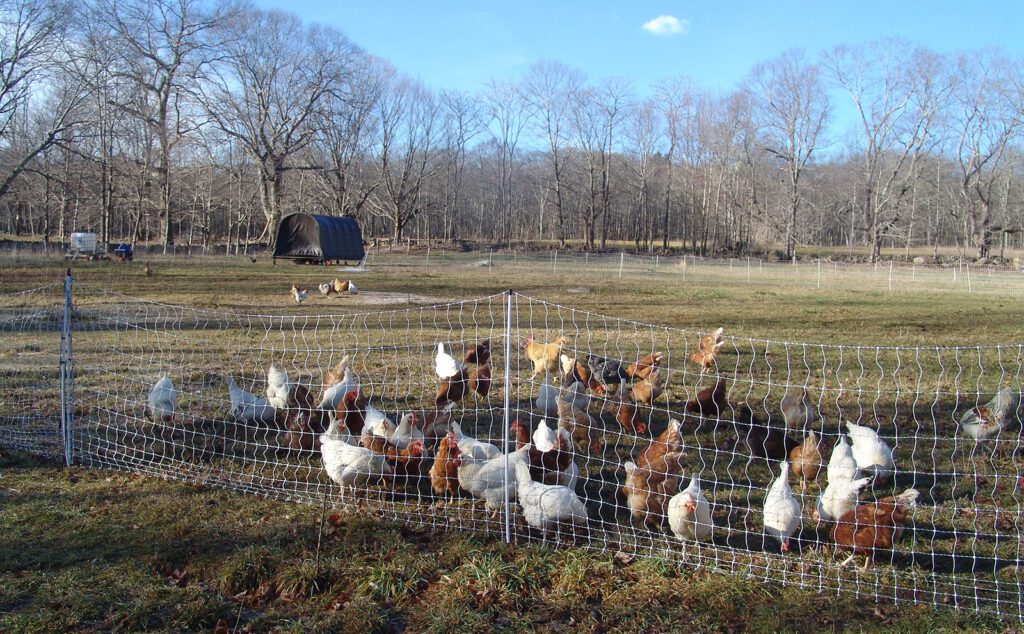
A mid-20th-century level of farmland acreage would support the production of all of New England’s vegetables; half its fruits; all of its grass-fed dairy, beef, and lamb; and all pastured pork, poultry, and eggs, according to a 2014 Food Solutions New England report.
The problem is that most of those missing farmland acres are now covered by concrete, solar panels, and asphalt. For example, in 2012, two years after the University of Rhode Island unveiled its “Think Big. We Do.” marketing campaign, the public land grant university went small, paving over some 15 acres of prime agricultural soil to build a parking lot and a new road. Too bad we can’t eat cars and pavement and drink gasoline and ethanol.
Returning New England to 6 million acres of farmland is unrealistic in 2026, but we can and must do better, a whole lot better. Like public transit, local food must be a top priority, especially for densely packed southern New England. Such a movement requires significant legislative funding and support, not more task forces and bills held for further study.
“We have a big, huge issue with access to farmland and keeping farmers farming,” Wiley said. “We have sort of the same issues that are everywhere in all of these states — our farmers and our fishermen are retiring. And, you know, there’s not good succession plans.”
She also noted cuts to federal extension services are having a significant impact.
Among the things southern New England can’t grow — besides popular items such as bananas, cocoa, coffee, and oranges — is land. To produce more local food requires us to stop taking farmland out of production; provide better financial support to farmers; approve more bond money, not less or none, for farmland protection; attract young farmers to the profession; make farmland affordable; and use the land we do have with our future in mind.
Basically, to boost local food production, we need to get creative, because the climate crisis is boiling the global food system. We need to think big.
A food system, like an economy, that functions optimally is circular. The global industrial food system we created and are now tied to like an anchor is spaghetti on a wall. This inefficient system takes out more, way more, than it puts back. The result is wasted resources, abused soils and people, polluted runoff, and sour air.
For local and regional food systems to work well, according to Wiley, processing facilities and distribution centers are critical. The Dartmouth (Mass.) Grange Kitchen, Hope & Main in Warren, R.I., the Southeastern Massachusetts Agricultural Partnership, and Farm Fresh Rhode Island are perfect examples of the kinds of infrastructure needed to support local food.
The Southcoast Food Policy Council learned during its food assessment research that more supply chain infrastructure is needed.
“We know that we need a lot of the middle of the supply chain to be rebuilt if we really want to support our food producers,” Wiley said. “So that in the next five to ten years we’re actually working all collaboratively together to actually rebuild a regional food system that’s going to support our food producers.”
With more aggregators, distributors, and processors needed, the Council looked at the potential for building a Food Innovation Hub on the South Coast. Both times it tried, in two different locations, “we just weren’t getting the right momentum,” Wiley said.
The Council, which focuses on the six counties in southeastern Massachusetts (Barnstable, Bristol, Dukes, Nantucket, Norfolk, and Plymouth), is now gathering more data and further researching the hub idea and local food system needs. Much of that work is being supported by the North American Food Systems Network’s Community & Agriculture Resilience Audit Tool.
This work includes determining how many processing centers and aggregators the region needs. How many distribution locations are needed, and where.
Growing a local or regional food system also requires “breaking down silos,” according to Wiley.
“We’ve broken down silos amongst the six counties, and we’re sharing data,” she said. “We’ve created shared language and we’ve created a map for each county … then to take that data and that language and create a food action plan based on what everybody else is doing, so that we’re not working in those silos anymore.”
Plenty of food work in southeastern Massachusetts remains, however.
“We need more processing, we need more distribution, transportation, all of those components to get the food that our farmers and fisheries and shellfishers are producing to the end users — hospitals, K through 12, retail stores, restaurants, and ultimately the consumer.”
The global food system simply isn’t a sustainable mechanism for that need.
For instance, key global crops — wheat, rice, and maize — are expected to see losses to pests increase by about 46%, 19%, and 31%, respectively, when global heating increases by 2 degrees Celsius, according to the aforementioned April 2025 paper.
After that, the direct impact of the climate crisis on the world’s trio of top crops is projected to cut yields by 6% to 10% for every degree of heating.
From ancient olive groves to root vegetables, foreign pests introduced via the Europe Union’s open import system are causing damage worth billions, and outbreaks are on the rise.
Christine Smith is the program manager of the Southcoast Food Policy Council. She recently told me the Council is looking at local data points that “factor into our understanding of these colossal, huge climate change events that are occurring.”
Smith also noted education is an important component when building a local food movement.
“People go to the grocery stores, but they don’t understand where their food comes from,” she said. “They don’t understand the local food system and its value. How do we educate the broader community to better understand the food system? That’s a piece of the puzzle.”
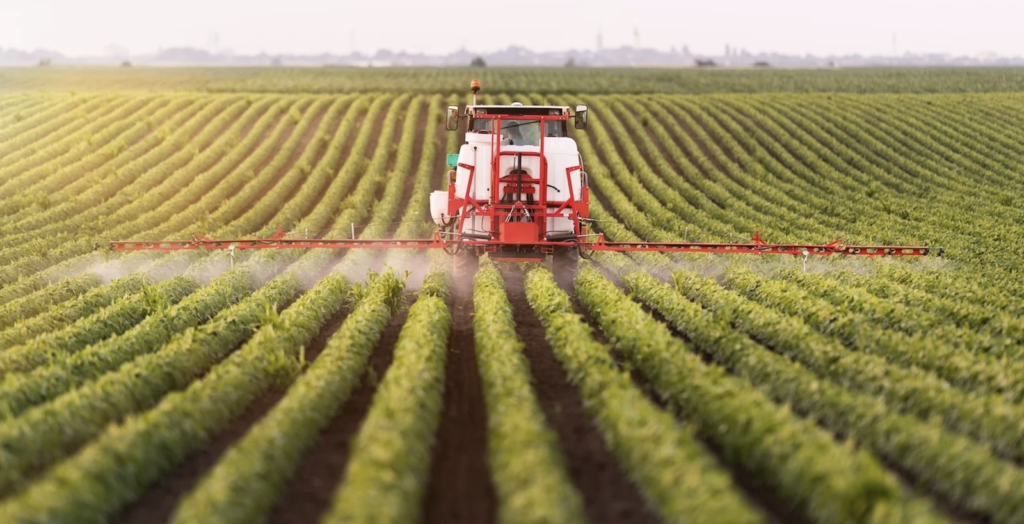
Global heating is helping insects such as aphids, locusts, planthoppers, and stem borers thrive. More warmth enables them and other insects to develop faster, produce more generations each year, and attack crops for longer as winters shorten, according to last year’s paper titled “Crop pest responses to global changes in climate and land management.” Rising temperatures are also helping these insects invade places further from the equator and on higher grounds that were previously too inclement.
Crop pests adapt well to global change because of their high stress tolerances and their migratory behavior that allows them to track suitable host plants and climates, the researchers explained.
This climate-driven flourishing of pests will be worst in temperate places, such as the United States and Europe, according to the researchers. They noted temperatures may have already hit a limit for some insects in the tropics, but warned that the bulldozing of cropland into tropical forests supports more pests.
The destruction of wildlife habitat, such as tropical areas and old-growth forests, the overuse of pesticides and fertilizers, and rampant heat waves are wiping out natural predators of pests and stressing our ability to grow food.
John Marsham, professor of atmospheric science at the University of Leeds, warned The Guardian two-plus years ago that the global food system is vulnerable to the climate crisis and human activity.
“There are growing risks of simultaneous major crop losses in different regions in the world, which will really affect food availability and prices,” he said. “This is not what we’re seeing right now, but in the coming decades that’s one of the things I’m really scared of.”
We need to be actively preparing for our food — and transit — future now.
“As a human being, if you’re wealthy enough, you can get inside and put the air conditioning on,” Marsham said. “But natural ecosystems and farmed ecosystems can’t do that.”
Pest movement is also being accelerated via the global food network.
This vast network — along with technology, crop breeding, fertilizers, and fungicides, insecticides, and herbicides — allows us to feed many of the 8.3 billion of us colonizing this planet. Most of those going hungry now is because of human greed and a lack of empathy.
The climate crisis, sooner than later, is going to take that inhumane choice out of our greedy hands.
In a rapidly warming world, combined with centuries of soil abuse and our incessant assaults on biodiversity, the fertile lands we stole and inherited are turning barren.
The authors of the 2025 paper also noted deforestation and the conversion to monoculture cropland enhance warming and reduce biodiversity, which in turn leads to more crop damage.
This is the destructive hamster wheel we’ve put ourselves on.
“We have a vibrant regional food system,” Wiley said. “We have, like, the biggest fisheries in the country. We have shellfish. We have a lot of small farmers, but we don’t have that regional infrastructure that’s supporting our farmers the way that we need them to be supported.”
Perhaps we could stop building parking lots and unaffordable homes and focus our attention on cultivating robust local and regional food systems.
Notes: Rhode Island, Massachusetts, and Connecticut each have a food policy council. For its 2026 Summit, the Rhode Island Environmental Education Association will focus on how environmental education can strengthen our relationship to land, food, and community. The event will be held Saturday, March 14, from 8 a.m.-noon at Rhode Island College. To register, click here.
Frank Carini can be reached at [email protected]. His opinions don’t reflect those of ecoRI News.

A stark warning from 2013 Ken Burn’s documentary, The Dust Bowl: about 20 years of subterranean water left. “The Ogallala Aquifer underlies parts of Colorado, Kansas, Nebraska, New Mexico, Oklahoma, South Dakota, Texas, and Wyoming. From wheat and cows to corn and cotton, the regional economy depends almost exclusively on agriculture irrigated by Ogallala groundwater. But according to the Fourth National Climate Assessment (NCA4), producers are extracting water faster than it is being replenished, which means that parts of the Ogallala Aquifer should be considered a nonrenewable resource.”
you note that we have seen agrigultural land become ground mounted solar panel farms. well whose fault is that? the climate renewable folks who want our states to be paneled over with solar panels. Instead of requiring these solar farms to go over existing corporate or business parks or cities roofs, no they are using up our growing land for solar panels that produce so little electricity as to be a joke, or battery storage facilities, again which should be heavy loaded into corporate or industrial parks on already spoiled land. But No. The big corporate solar and battery people sue sue sue little towns so they can make money money money. There is your agricultural crisis.
Frank,
The war on fossil fuels hurt farmers. No mention of this in your article. I wonder why?
Bev and Babs are pretty clueless, The farms were disappearing before the solar farms started. But I do agree all the solar farms should be rooftop and parking lot solar arrays. The war on fossil fuels is the only thing that is going to keep farmers in business. Agriculture will be untenable in the weather of the future if we keep burnbing fossil fuels. The rest of the economy will crash if we keep burning fossiul fuels as well, starting with the insurance markets.
Greg,
What fuel is used to operate farm equipment?
While I may not agree with the level of concern Mr. Carini has for global heating or the climate crisis, I agree with him that Rhode Island and New England should try to break free of its dependence on California and other regions for our foods. The ability to grow and (minimally) process our foods more locally could benefit us in terms of our health, our financial well-being, and our independence from problems that might affect agriculture in the regions that we now rely upon.