
Rhode Island Has No Real Plan to Decarbonize State Buildings
February 19, 2026
Share


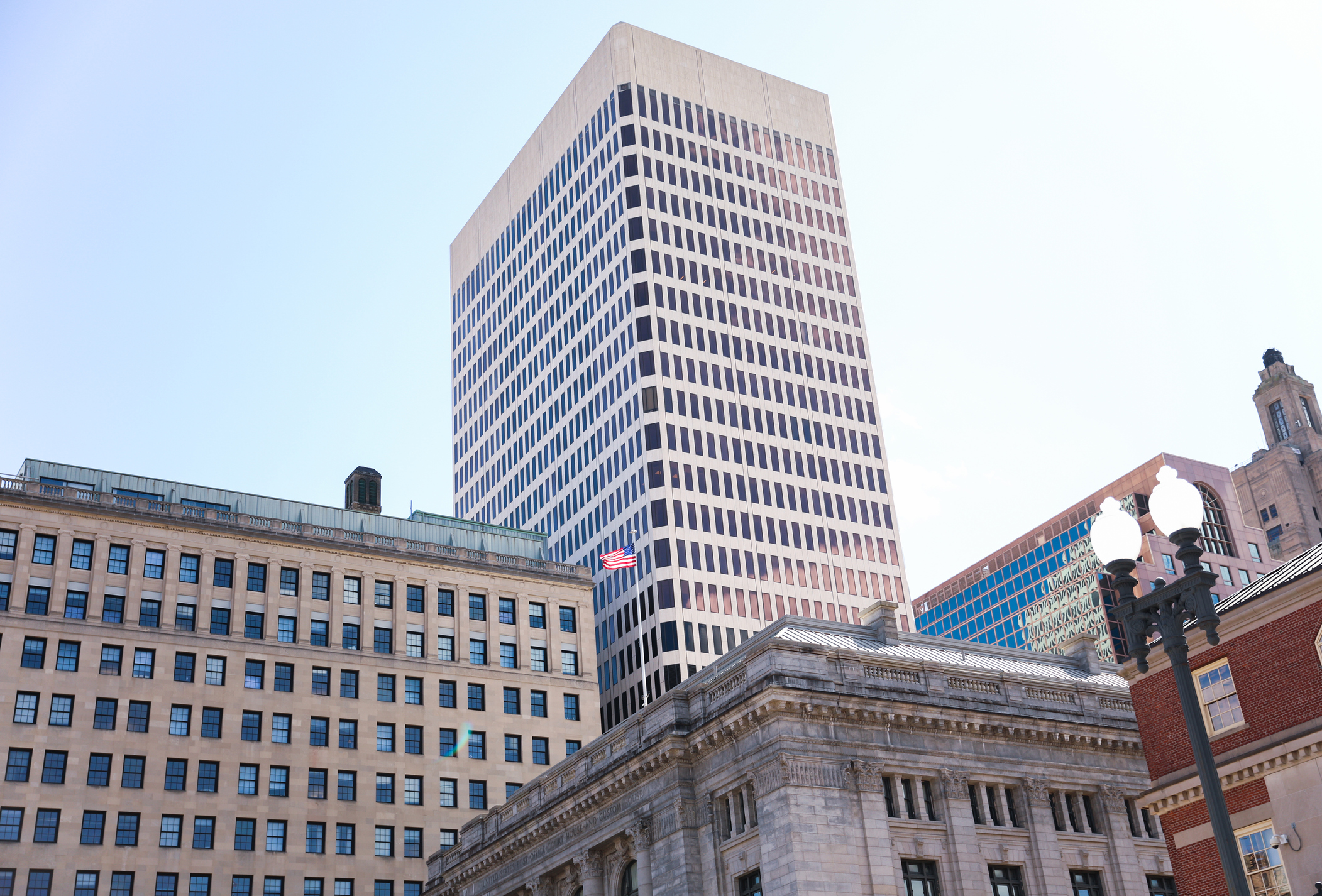
PROVIDENCE — When it comes to greenhouse gas emissions in Rhode Island, the state’s policies have a hole big enough for the Superman building to pass through — literally.
The years since the Act on Climate law was passed in 2021 have seen a raft of new programs and policies adopted. The General Assembly raised the Renewable Energy Standard to 100%, requiring all electricity in the state come from renewable energy sources by 2033, or buy offsets.
The Rhode Island Department of Environmental Management adopted a rule mirroring California’s rules to phase out gasoline-powered cars by the middle of the next decade. Car dealerships, starting in 2035, will have to start selling electric vehicles only, as the state tries to reduce its transportation sector climate emissions.
Transportation and electricity consumption account for 56.3% of all emissions released in Rhode Island, according to DEM’s latest greenhouse gas inventory, and are likely to at least let the state slouch toward its climate mandates.
But there’s one sector, which accounts for around a third of all emissions produced in Rhode Island, that lawmakers and policy wonks have failed to enact a plan for.
“The state doesn’t have a policy to reduce emissions in the building sector, on a statewide scale, to meet the Act on Climate,” said Tina Munter, Rhode Island policy advocate for the Green Energy Consumers Alliance. “The sector is the second-largest source of greenhouse gas emissions in Rhode Island.”
Most Rhode Islanders probably don’t think of their home, their place of work, or their favorite weekend restaurant as a significant source of carbon emissions. But Rhode Island homes and businesses are still heavily reliant on fossil fuels for heating, hot water, cooking, and industrial processes.
Half of all households have natural gas hookups, meaning they use natural gas to heat their homes or light their stoves. Another 30% of homes in Rhode Island use fuel oil, regularly delivered heating oil, to provide hot water and heat. Only 9% of households in the state rely wholly on electricity for heating.
If Rhode Island is going to meet its Act on Climate mandates, it’s going to need a policy around moving buildings in the state toward electrification. That policy gap is something Munter and other environmental groups are aiming to fill this year.
They have two key pieces of legislation in the General Assembly: the Building Decarbonization Act, which would create a benchmarking program to track energy usage and emissions in large buildings; and another for performance standards for building owners to reduce emissions.
The 2026 decarbonization act is different from the Building Decarbonization Act introduced in both chambers last year, which combined benchmarking and performance standards into a single bill. Munter said ultimately, after discussions with stakeholders, the performance standards were taken out. That bill eventually passed the House but died in the Senate.
“There was consensus about benchmarking,” Munter said. “But I think folks may get hung up on what’s required of them. Will it end up costing large building owners money, and how? How would we pass compliance?”
It was a big priority for environmental groups last year. The Environment Council of Rhode Island (ECRI), a coalition of environmental groups, listed it as among its top priorities for the year, a spot it’s likely to keep again this year.
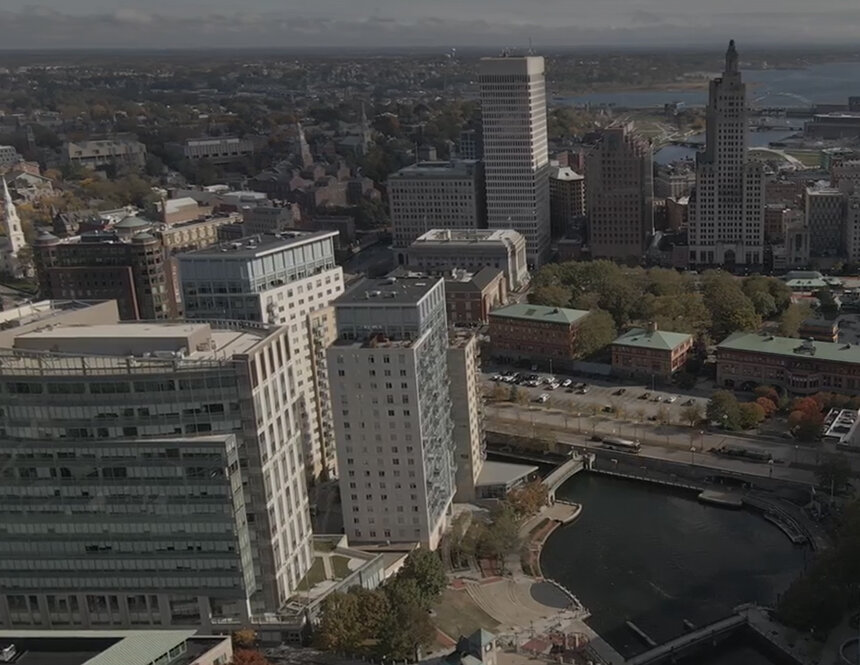
This year’s legislation hews closer to a homegrown example. The city of Providence passed its own benchmarking program for large buildings in 2023, gradually phasing in energy reporting first with 64 publicly owned buildings, and this year with most privately owned large buildings.
Last year buildings greater than 50,000 square feet in size were required to report their energy usage, and this year buildings greater than 20,000 feet in size will have to start tracking. The ordinance applies to 866 buildings within the state’s capital city, ranging from among the biggest (the Omni Hotel) to the smallest (the Admiral Street Fire Station).
Data from the first year of the program has already shown to be useful for the city’s planning purposes. The city’s 2024 report showed that public school facilities represented about 77% of all square footage owned by the city, and consumed 74% of all energy used to operate Providence buildings.
The city can use that information, according to the report, to further its own climate goals. The state reimburses municipalities for up to 91% of school construction projects, and new school buildings are required to adhere to energy-use performance thresholds.
“This combination of policies enables the City to build or completely renovate three to four schools per year, which facilitates building decarbonization at a pace that could allow the City to meet the carbon emission reduction mandates set by the State’s Act on Climate legislation,” according to the report.
To improve energy efficiency and reduce emissions, said Munter, you have to know how much energy you’re using in the first place.
Building owners, if they aren’t tracking their energy usage already, may just not know. They may not know if their building is energy inefficient, or efficient or somewhere in between, and they may not know what that looks like if they can’t compare it to other, similar buildings.”
— Tina Munter, Rhode Island policy advocate for the Green Energy Consumers Alliance
This year’s benchmarking legislation (H7183/S2260) is similar to Providence’s program. Building owners would be required to track their annual energy use, their source energy use intensity, and their emissions for each calendar year. Starting in 2028, buildings greater than 50,000 square feet would be required to start tracking. In 2028, buildings bigger than 25,000 square feet would have to start tracking. Buildings would be required to submit their benchmarking reports by May 15 each year.
“Think of a large warehouse, or a big-box store, education institutions or municipal-sized buildings being used for office space or retail,” Munter said. “It won’t cover single-family homes.”
It will be up to the Office of Energy Resources (OER) to run the program. The office, under the legislation, would also provide educational informational sessions for building owners, and notifying new building owners as more structures become eligible for the program. Municipalities such as Providence already conducting their own reporting program would be allowed to continue.
The Building Performance Standards Act (H7184/S2218) meanwhile, would empower OER and DEM to analyze energy use and emissions from buildings in the state and, by the end of 2028, start imposing performance metrics on specific building types.
The final standards for buildings “shall collectively cause the aggregate greenhouse gas emissions attributable to all covered properties to be reduced in line with net zero by 2050,” the bill reads.
Every five years a large building owner would be required to show progress toward their performance standards, and penalties would be levied against owners in noncompliance. Penalties would get deposited into a building performance standards fund OER can use to support benchmarking and performance standard programs.
How many buildings in Rhode Island would be covered under these new laws? The exact inventory is unknown, but the data is out there, according to Munter.
“We have approximate data on the number of large buildings, and we have municipal tax assessor’s databases that go into a lot more depth,” she said.
Even a small state like Rhode Island has tens of thousands of buildings. A 2020 building count from the National Laboratory of the Rockies, a facility within the U.S. Department of Energy, showed that Rhode Island had 17,170 commercial buildings.
About 8,900 of them, around half the state total, are between 5,000 and 10,000 square feet. Just 13%, around 2,320, of the total commercial buildings in Rhode Island are greater than 25,000 square feet, the minimum size requirement under the proposed benchmarking law and 550 of those commercial buildings are in Providence alone.
Utilizing more energy efficiency programs, and switching to electric heat pumps, is a key plank in the state’s future decarbonization plans, and a key strategy for building owners to decarbonize their properties. The state’s Climate Action Strategy, released by the Executive Climate Change Coordinating Council (EC4), an entity made up of different departments in Rhode Island government, identified two main strategies: energy efficiency initiatives such as weatherization, improved windows, insulation, air sealing; and a switch to electric heat pumps.
“Reaching Act on Climate targets will require a transition of all building end uses away from fossil fuel-based equipment and toward decarbonization technologies” the Climate Action Strategy reads. “The main end uses that use fossil fuels in buildings are space heating, water heating, cooking, and clothes drying. While space heating represents the largest source of building sector emissions and therefore the most significant opportunity for reductions, progress across all end-uses will be necessary to meet the state’s climate goals.”
The strategy emphasizes the state will need to sell serious numbers of heat pumps in the coming years if Rhode Island is going to meet the 2040 and 2050 mandates in the Act on Climate. The EC4 estimates this year the state will have to sell 5,600 heat pumps, next year it will have to sell 8,900 heat pumps, and by the end of 2030 it will have to sell 15,000 heat pumps every year to stay on track.
For comparison? The all-time high of heat pump sales is 5,127 in 2024, according to data from the Clean Heat Rhode Island program, the state’s only incentive program for heat pump adoption.
Last year’s data showed only 3,064 heat pumps were sold, likely due to the program’s non-low-income incentives being exhausted. A data dashboard tracking program funds show that residential incentives stopped almost entirely last May, with the remaining months filled by income-eligible and moderate income filling out the rest of the year.
To date the program has issued more than 4,000 rebates paying out more than $10.4 million across the state. Its main funding mechanism was American Rescue Plan Act funds, which the state has spent, replaced with a much smaller annual allocation of Regional Greenhouse Gas Initiative proceeds.
What about the climate impact of electrifying homes and businesses with heat pump rebates from the program? Program estimates show that the total lifetime emissions avoided will be 258,184 tons of carbon dioxide, that’s the same amount as 31,454 homes’ energy usage for just one year.
One unknown is the cost of running a benchmark and performance standards program for buildings. There’s no fiscal note attached to either piece of legislation, but OER did issue its own report on benchmarking and performance standard programs in 2025, after lawmakers the previous year passed a resolution asking for it.
“A statewide benchmarking and performance standard program for large municipal and private buildings would likely require approximately four full-time employees, including a program manager, policy analyst, and two compliance specialists, and an annual budget of approximately $600,000 initially and approximately $1.4 million following the launch of a recommended technical support program,” wrote OER in its final report to the General Assembly. “These figures represent a preliminary estimate based on data from precedent programs and cannot be determined with greater precision until specific Rhode Island program details are refined.”
The agency also posited that lack of preexisting large building inventories, and lack of available data from Rhode Island Energy, would prove to be roadblocks for a program. OER estimated it would take a year and a half to design and implement a benchmarking program, plus another two years of phasing buildings in, and with performance standards enforced in the program’s 10th year.
OER instead recommended rolling out a program for large state-owned and -occupied buildings instead, to lay the foundation for future expansion.
Still, advocates like Munter are pressuring the state not to give up on its climate goals.
“It comes back to that ambition piece; advocates are calling and have been calling for these policies for many sessions in a row,” Munter said. “In the short term, how do we make sure electric rates are affordable for folks, but also in the long term, like under the Act on Climate framework we have, how can we slot in these policies to get us there and make sure we meet those targets?”



Going backwards on decarbonization is among the stupidest things the government will ever do. McKee is a fool to think going backwards on cliamter will help the state, in fact, as clearly shown in my new book, “Economic Development, Climate Justice, and Prosperous Communities, RI has no chance to have a prosperous economy without really leaning into ending the climate crisis.