Back to the Fake Future
Providence author studies plastic history to learn how to reduce its future impact
February 4, 2026
Share


Her green plastic watering can
For her fake Chinese rubber plant
In the fake plastic earth
— “Fake Plastic Trees,” Radiohead
On the website rebecca-altman.com, under the tab Plastic Bags, is a quote that best captures the useless existence of these petroleum pouches: “The life of a plastic bag is really an endless series of entanglements.”
The quote appears in a 2018 story, with the headline “American Beauties,” written by Rebecca Altman. The Providence resident, who holds a Ph.D. in environmental sociology from Brown University, writes and speaks a lot about plastics, from how the history of plastic can inform efforts to reduce future plastic pollution to the planetary pressures plastics exert.
Her writings have appeared in Science, Aeon, and Orion, among other publications. She has been featured in ConvergenceRI. The sociologist is the author of the upcoming book “The Song of Styrene: An Intimate History of Plastics” scheduled to be published next year.
Altman also is the daughter of a former plastics-maker. In a March 2015 essay in Aeon, she wrote:
“For more than a decade, my father and I had talked about returning to the place where he made plastics before I was born. The plant had exerted an inexplicable pull on me for longer than I can remember, since before I had kids, and even before I entered graduate school to study environmental legacy.
“So I dialed. He answered quickly. When I asked whether he’d like to go with me, he didn’t hesitate. Within minutes, we had set a date. Two months later, in May 2013, we stood on the grounds of the former Union Carbide plant in Bound Brook, New Jersey, the birthplace of modern plastics.”

Nineteenth-century industrial plastics, derived from natural sources such as cellulose and latex, foreshadowed contemporary concerns while also posing significant implications to public health, human rights, and the natural world.
Then, as now, plastics relied on chemical additives, toxic solvents, and the exploitative extraction of raw materials. This trio of nastiness led to deforestation, displacement of both humans and wildlife, occupational and community hazards, resource depletion, and human rights violations.
Altman’s father, Chuck, oversaw four production lines of polystyrene, each capable of regurgitating 2,000 pounds an hour. Polystyrene is the solid plastic polymer formed when styrene molecules are linked together.
“The equipment ran round the clock, nearly every day of every year he was there,” his daughter wrote in 2015. “It was his job to keep the pressure and temperatures steady, lest they blow the roof. He knew styrene was hazardous, but it would be decades before the government confirmed its potential as a carcinogen.”
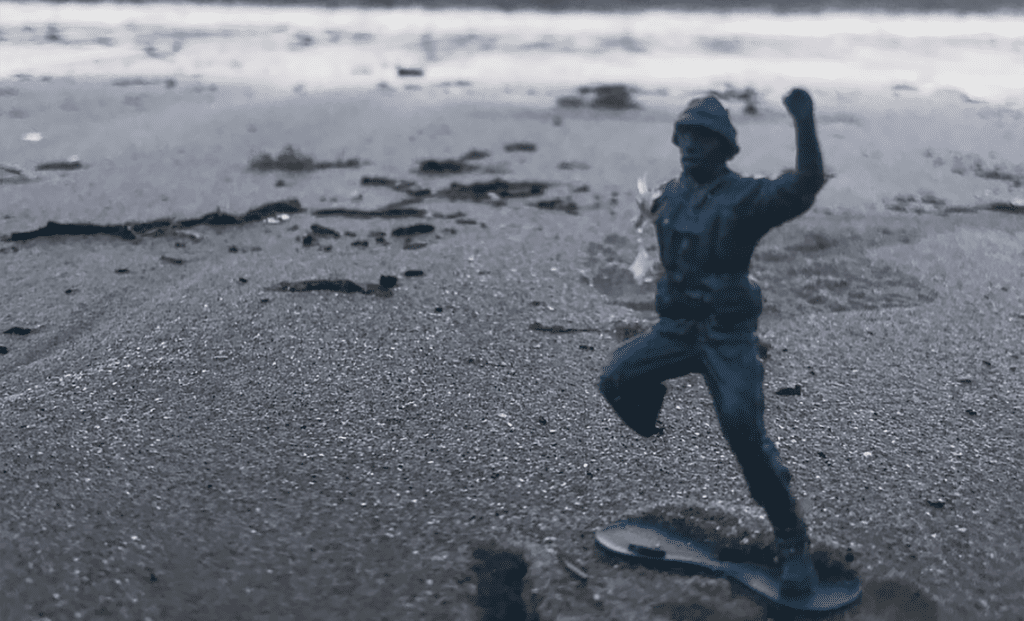
Styrene, the main ingredient in Styrofoam, has been linked to developmental, genotoxic, immunological, neurological, and reproductive effects. The volatile, sweet-smelling, colorless liquid has also been linked to lymphohematopoietic cancers (leukemia, non-Hodgkin lymphoma) and to a lesser degree to esophageal and pancreatic cancers.
Altman recently told ecoRI News she has focused on studying plastics because “some of the stuff coming off the plant where my dad had worked was implicated in suffering and childhood sickness in New Jersey. I just really wanted to understand this larger system of which it was a part.”
This poisonous system includes polychlorinated biphenyls (PCBs), per- and polyfluoroalkyl substances (PFAS), polybrominated diphenyl ethers (PBDE), and vinyl chloride, according to Altman.

“It took me a long time to understand they were all a piece of a larger system — that plastics is a system kind of held aloft by all of these toxic materials, because these are the materials that allow plastics to perform as they do, or allow them to be made in the way that they are,” said Altman, who grew up in Park Ridge, N.J. “If these chemicals are going to be intimate with us, in our bodies, then we ought to be as intimate with them and their history.”
Chuck, who turns 86 this year, worked in the New Jersey factory for a decade. He eventually learned that in 1971, in the span of five months, a third-party waste hauler stashed at least 5,000 55-gallon drums from the Bound Brook plant at a farm in Toms River, N.J. Drums labeled “styrene,” “polymer solution,” and “chemical waste” were eventually found empty and others damaged and leaking. All told, an unknowable concoction of chemicals had seeped into the soil and spread to wells and fields. More than a decade later, in 1983, this illegal dumping ground was listed as a Superfund site.
Altman’s dad, who grew up in East Greenwich and graduated from the University of Rhode Island, eventually switched careers, moving into public administration. He was hired by their hometown to manage snow plowing, the town’s drinking water supply, and its curbside recycling program, among other duties.
“He took to it with zest and made our little hometown one of the most award-winning programs in recycling in the country,” his daughter said. “I think it’s been kind of heartbreaking for him to see the news — particularly since 2018 when China closed its doors on U.S. [recycling] exports — to realize, ‘Wait, that’s what we’ve been doing. That’s what this has been all about.’ Most of the material has not made it back into something new. I think it really broke his heart.”

Plastics are of the category of things both deeply familiar and also deeply misunderstood, according to Altman. She likes to ask this question: How can we begin to alter our future in relationship to plastics without a deeper sense of knowing where they came from?
She has noted that what the answer to this question requires are stories about plastics that don’t focus on firsts, founders, and inventors, but in-depth reads about the wider context of the material’s emergence and development and intimate stories of the lives wrapped up in these petroleum-based products.
Those are the kind of stories Altman writes. Her stories add layers of impact that go beyond the facts and statistics that typically fill articles about plastic use and pollution (see bolded entries in this story). Her stories insert faces, personalities, and emotions into a complex issue.
In a May 14, 2024, essay publish in Orion headlined “From War Machine to Supermarket Staple: A History of the Plastic Bag,” Altman asks this question: Plastic bags weren’t always this popular. So how did we get here?
She explained that for a century the paper bag held dominion over how groceries were hauled home. By the 1980s, she reported, the plastics industry saw the grocery bag — a lucrative market, about $600 million at the time — as “the last stronghold” of the American supermarket.

A succession of packaging innovations — cellophane followed by fossil carbon-based plastic films — had revolutionized how food was bought and sold, she wrote. Producers started prepackaging breads, meat, and produce in see-through plastics. Shopping evolved to self-service in one-stop shops. By the mid-20th century, supermarkets had eclipsed the bakery, the butcher shop, and the greengrocer. Then plastics picked off the meat tray, the bread bag, and the egg carton, jobs previously performed by paper, according to Altman.
The plastic takeover of grocery bags wasn’t easy, however. Altman reported that people were fond of the paper bag. The American Paper Institute said paper bags are as “American as the flag and apple pie.”
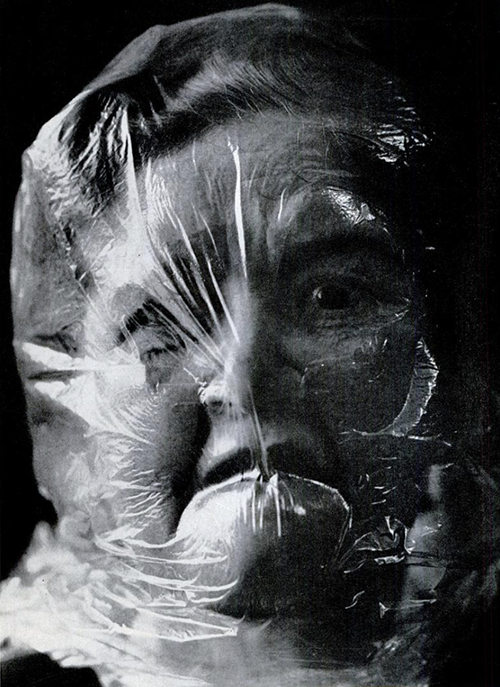
In 1959, she reported, the magazine Life cautioned parents about plastic bags with a full-page image of Dr. Leona Baumgartner, commissioner of the New York City Department of Health, shown gasping for breath, a bag over her head, the film taut across her mouth.
Sixty-seven years later, plastic bags, plastic bottles, plastic nips, plastic straws, plastic cups, countless other single-use plastics, microplastics, and microfibers are suffocating life.

“I think one of the successes of what’s happened over the last three, four years is that the definition of plastic pollution has been expanded to include the full life cycle of plastic and plastic-associated chemicals,” Altman said.
This expanded knowledge base, however, hasn’t been enough to stymie the efforts of special interests and petrostates.
As for how the story of plastic ends, Altman has no idea. No one does. But it’s most likely going to end up a tragedy.
“There is no nature absent plastic,” Altman said. “It’s on every field to now have to incorporate this reality. Geologists have to study it. Archeologists have to study plastics. Endocrinologists have to study plastics — physiologists, cardiologists, neurologists. I mean, even if we stopped today, all of these materials that have been made up to this point haven’t yet really put their full weight on planetary boundaries.”
The time to act aggressively is now, before the planet is totally plasticized.
Sources: The bolded facts and figures were found in the book The Problem With Plastic, Beyond Plastics, and rebecca-altman.com.