
DEM Has Big Plans for URI’s Alton Jones Campus
November 26, 2025
Share


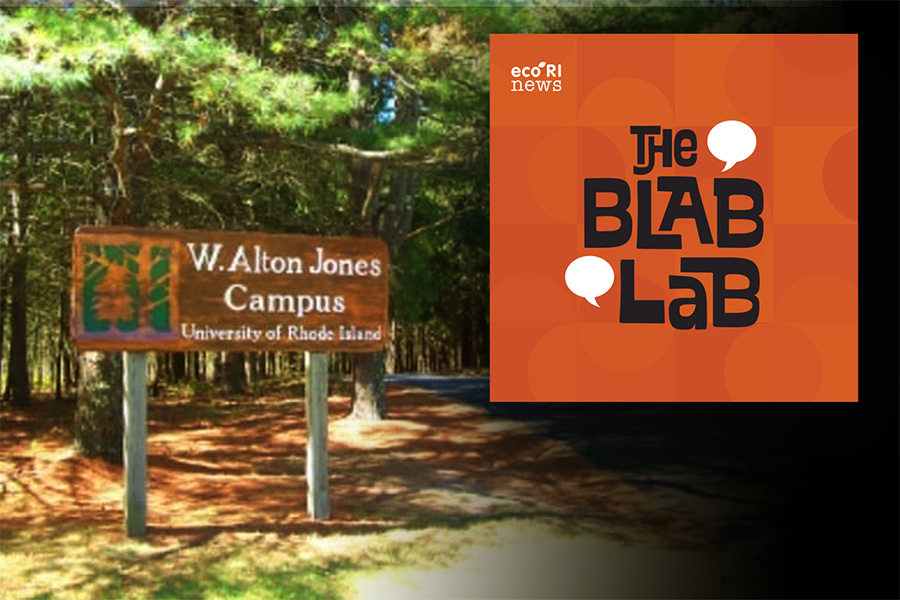
Rhode Island Department of Environmental Management director Terry Gray discusses his agency’s plans for the soon-to-be-reopened property that was formerly the W. Alton Jones Campus of URI.
Subscribe and listen on iTunes, Spotify, YouTube, or wherever you get your podcast.
This transcript was edited for clarity and length.
Colleen Cronin
Terry, welcome to the show today. Thanks so much for coming on.
Terry Gray
Oh, it’s great to be back.
Colleen Cronin
I’m really excited to talk about the Alton Jones campus. I just wonder if you can start off and kind of describe it, what it is, where it is?
Terry Gray
So the Alton Jones campus is a beautiful satellite campus to the University of Rhode Island, and it makes up about 2,800 acres of property in West Greenwich.
Colleen Cronin
Wow.
Terry Gray
Yeah, it’s big, and most of it is wooded. It’s beautiful to walk through there. There’s a couple of lakes, there’s a couple of streams, there’s a lot of paths, but there’s also a few buildings, and we’re excited to work with URI to establish a DEM presence at the campus.
Colleen Cronin
That’s huge, that’s a lot of space. Can you kind of, you know, give me a little bit of background, like, who was Alton Jones, and why is this big swath of forest out there?
Terry Gray
So, Alton Jones used to own this property. It was set up like his retreat, his hunting lodge in the woods, if you would. And he used to invite President Eisenhower to come out and go fishing, go hunting. And whenever you walk through the buildings in the campus right now, there are pictures of him and the president out there just kind of hanging out. And it was, it was sort of like Camp David. I think where they could get away from Washington and get a little relaxation.
Colleen Cronin
That’s so cool. I mean, when I got there and looked through the entrance, it’s so impressive, all the pine trees just kind of lining the road, this long, winding road, it’s beautiful.
Terry Gray
A lot of that landscaping was meant to impress the president.
Colleen Cronin
Impressed me.
Terry Gray
He did a good job at it. And they did a lot of fishing. They stocked the ponds in the campus or the property at the time, and they just chilled out, relaxed and enjoyed the time out in nature.
Colleen Cronin
Yes, seems like a nice place to do that. And I know it’s had a pretty big history since it was donated to URI?
Terry Gray
Yeah, a lot of people have a deep personal history with the campus. A lot of people went there as a kid, to go to camp, the Alton Jones nature camp and environmental camp was very well known. A lot of graduates, many of which work at DEM now.
Colleen Cronin
Very Rhode Island.
Terry Gray
Yeah, it is Rhode Island. And especially when you talk to people around West Greenwich, they have deep roots, and a lot of kids went to that camp, and learned the value of woodlands and nature that’s all around them. The other thing is the Whispering Pines camp conference center. And the Whispering Pines conference center had a long history of hosting different meetings, primarily for the state, but also hosting weddings. So, a lot of people got married out there. It was a very popular place to have a wedding and a reception.
Colleen Cronin
So why did it close? I know it closed a couple years ago now,
Terry Gray
It’s been closed for almost six years, and primarily the reason why it ended up closing to the public was because of the pandemic, and when that happened, you couldn’t really do gatherings like the traditional venues that Alton Jones was used for. So, summer camps were out, weddings were really downsized. The university decided to close the campus at that point.
Colleen Cronin
So then where does DEM come in?
Terry Gray
So where DEM came in is when I became director. There were some very preliminary discussions happening with URI, DEM, and The Nature Conservancy really trying to figure out what the future of this piece of property was going to be, and there was some anxiety because it wasn’t legally conserved. And nobody wanted to see this property lost.
Colleen Cronin
So just to pause for a second, you know, I think people take for granted that if something is a big open space or, you know, big wooded area, it’s going to stay that way, but this didn’t then have any sort of conservation easement or anything at the time.
Terry Gray
No, it did not. And so there was a discussion with the university about whether or not there could be a conservation easement that could be drafted, or some kind of a transaction that would result in a conservation easement on the property. So that really wasn’t going anywhere fast. And the university, I think, was justifiably nervous about what the implications of that would be. So we ended up taking things in a different direction. We worried less about the future of the property and how we could reopen it to people. When I met with URI president Marc Parlange and vice president Abby Benson and their teams, it was clear that they weren’t developing this property. It was not going to change use, so that the level of anxiety on that conservation easement piece kind of went way down. So, now we talked about, well, how can we reopen this? And we started to talk about a more wide-ranging partnership between the University and DEM and how we could get things moving.
Colleen Cronin
Had you guys previously done anything on the property, like any research or anything?
Terry Gray
We partnered with a lot of the URI professors that ran research projects and still run research out there. Most of them were through our Fish and Wildlife programs, because it’s a wide-open space, right? There’s a lot of wildlife passing through there. So, we did a lot of surveys, a lot of time-based surveys, to figure out what was out there. And, you know, we just built off that partnership, I think, to say, “Hey, look, our values and our missions align here. Let’s work something out where we can really bring it to the next level.”
Colleen Cronin
What are some of these plans that you guys have for what this place is going to become?
Terry Gray
So, lots of plans. Let’s talk a little bit about those. First and foremost is that we want to establish a natural resource campus of our own down there.
Colleen Cronin
Oh, wow.
Terry Gray
We are looking at relocating staff from Forestry, Fish and Wildlife and Agriculture onto the campus. And they will be doing business there. They will be working there. A lot of those folks do environmental education. So they will be offering environmental education programs at the campus as well. The cool, the real vision is to up our game in environmental education. And there is actually a beautiful lodge there that’s called the Environmental Education Center. So that really kind of says it all, right? So what we want to do is work with the Rhode Island Environmental Education Association, RIEEA.
Colleen Cronin
Who we had on our podcast last month, last time.
Terry Gray
Right! We want to work with them. We don’t want to duplicate the work that they’re doing, but we want to work with them and amplify the work that they’re doing and really look at all the entities that provide some level of environmental education in Rhode Island, including DEM, and connect them with the providers. So there’s a lot of teachers out there. There’s a lot of camp operators that are looking for programming, and we have tons of programming. And by “we,” I’m talking like the environmental community has tons of programming. And we’re hoping to partner with groups like Audubon, Save The Bay, Roger Williams Park Zoo, Coggeshall Farm and Old Sturbridge Village. I could keep going, right. There’s a lot of options in Rhode Island, including some of the watershed associations: Woonasquatucket, Blackstone. They have awesome education programs that engage a lot of kids. And we just want to provide an outlet to connect and collaborate and share information. That’s the goal. It’s still kind of fuzzy in terms of what it’s going to mean in terms of implementation and boots on the ground. But it’s something that we really want to emphasize.
Colleen Cronin
You mentioned Roger Williams Park Zoo. And I think also about their wildlife rehab element that they have. And I know that that’s also part of what the mission of this partnership will be. Can you talk about that a little bit?
Terry Gray
Yeah, there’s two aspects. So first of all, the zoo does some amazing work with wildlife rehab and trying to continue endangered species. So, we want to work with them. And plus, they have awesome education programs. They connect with a lot of kids, especially in the Providence metro area. So we really want to work with them and keep them as a partner as well. Now, when you talk about wildlife rehab, we are also looking at the Rhode Island Wildlife Rehab Association, as a sub-tenant, if you will, and really working with them as they work to rehabilitate more common wildlife, things like raccoons and opossums and eagles. Right? Recently they released an eagle at the campus, and that was pretty cool. So this could be an opportunity for us to partner with them, to give them a little corner of the place as well, to work with us together.
Colleen Cronin
From a public access perspective, you know, it’s a beautiful place, a great place to get married, but also just to walk around, you know, how can that be reopened to the public?
Terry Gray
Yeah, so, it’s been a closed campus for a while. And that was one of the big priorities that I had, was that I wanted to get this beautiful property open for public access, and people could hike, they could bike, they could fish that type of thing out there. That’s probably going to happen in 2026. So we have a lot of work to do to get moved in, to get set up, to bring the facilities back online. That’s going to take a little while. It’s not open now, but it will be open next year.
Colleen Cronin
So, tell me kind of more about the timeline on some of these things. I know that the announcement of this partnership happened this summer, but, you know, it sounds like there’s some things that are already happening, some things that will happen in the future.
Terry Gray
Let me give you a little framework on how the campus is laid out. There are three main areas. There’s the Environmental Education Center, which I mentioned, with a bunch of different cabins around it. That is going to be the Environmental Education Center. It will be opened as an event space, but the cabins are going to be converted into office space for our staff, and we’ll be working on that. There’s a lot of fixing up to do. They’ve been closed for a while, but we’re hoping to have the event space ready by next year, and then we’ll move in as the space is ready. The other piece is right in the middle of the campus is a farm, and the farm has been vacant as well. We would like to partner with a farmer to come in and operate that farm. It’s a livestock type of place. It’s a great facility. And then hopefully eventually get a partner that will run a farm camp on the property.
Colleen Cronin
Very cool, like having kids come and learn about agriculture?
Terry Gray
That’s what they used to do. And we want to, we want to reinvigorate that. The other piece is, one of the elements in the DEM universe is we have the state veterinarian, and sometimes we need a place to bring animals. So they could be sick, neglected, injured, that type of thing. We don’t have a space now. So this will provide us with a space where we can bring animals in and hopefully bring them back to health. They’ll work out whatever issues are related to them, and have some place where they can be comfortable and cared for during that time. The third piece that we talked about is Whispering Pines. So DEM is not going to work within Whispering Pines. URI is looking at other partners to run that piece of the campus.
Colleen Cronin
Yeah. DEM is not going to get into the wedding running business.
Terry Gray
Well, we already run weddings at the Eisenhower house.
Colleen Cronin
I didn’t know.
Terry Gray
We host about 50 weddings a year.
Colleen Cronin
Oh my gosh, wow.
Terry Gray
So you never know what’s under the DEM umbrella.
Colleen Cronin
Yeah, wastewater, animal rehab and weddings and wedding planning.
Terry Gray
And this week, I signed all the permits for the ski lifts at Yawgoo Valley. So, that’s exciting. That’s kind of a funny relic from the past.
Colleen Cronin
Knocking on my head here in the studio, hoping they get snow this year.
Terry Gray
Yes, exactly, exactly. Always optimistic, always optimistic.
Colleen Cronin
So, that seems like that’s a lot in terms of time and investment. I know it’s been kind of a turbulent year, maybe not for DEM specifically, but for environmental funding on the federal level that trickles down. Is there any concern about any of this sort of funding for these projects?
Terry Gray
Well, I’m always worried about a little bit, right? The good news with this is, this is a state facility. URI, DEM, it doesn’t matter. It’s a state-owned piece of property with state-owned buildings. So, we can consider these capital assets, and we can use capital asset funding to do maintenance and improvements out there. That’s kind of a different track of funding than the operating stuff that you hear about in the news all the time, and it provides us a little bit more flexibility in investing in the infrastructure.
Colleen Cronin
It’s got so many different uses. I’m thinking there’s a lot of different pots that could be kind of explored, too; you’ve got education, you’ve got agriculture, you’ve got fish and wildlife, you’ve got all these different things going on.
Terry Gray
We’re looking in all those pots to see if there’s a couple of dollars in each one that we can invest in this, and most of those would go toward programming. One of the things that I’ve really tried to do is align this effort with the governor’s initiative called Learn 365 and he is developing facilities across the state to provide out-of-school education. And a lot of times people think about math and science and reading as out-of-school education. All that stuff is all important. But when you put an environmental umbrella over it, it can be fun.
Colleen Cronin
Yeah, I went to a STEM camp when I was in middle school, and I loved it. I built a robot. It was on the water. It was great. It was called nerd camp. Makes sense. Do you have any memories of it yourself? Ever been to a wedding there? You know, anything like that?
Terry Gray
I have been to weddings there, and it’s a beautiful space to get married. It’s really memorable. One of my best friends got married there years ago, and we were also involved with the farm, with the camp, the environmental camp. One of my sons went to camp there, so that was kind of a big deal. But it’s also an important part of the West Greenwich community, yeah. And we used to have Cub Scout events there. We’d bring scouts down there to show them kind of some of the outdoor areas and the outdoor skill training that’s part of that program, it’s got a lot of value. It’s really a multi-use piece of property, and it’s beautiful.
Colleen Cronin
It’s also close to a lot of really important environmental, ecological areas around it, right, like other DEM properties, other forested areas, things like that.
Terry Gray
Absolutely, in terms of the ecosystem that it’s located in. It’s essentially surrounded by Arcadia Management Area, Tillinghast Management Area, Wickaboxet Management Area, and then other properties that are owned by the West Greenwich Land Trust. So it has some immense value for connectivity, and that’s something we really want to emphasize: connectivity, both in terms of habitat for wildlife, but also for recreation. So people want to hike, we can connect a lot of trails through this property and provide some serious distance if people are into it.
Colleen Cronin
Is there a favorite part for you of the campus?
Terry Gray
I think opening up some of the lakes to public access is going to be really neat, because they’ve been isolated. They’re very natural. There’s no development around them, and it’s just, it’s a really special place to just kind of hang out and connect with nature. So I think that’s going to be a big piece.
Colleen Cronin
Well, is there anything else that you want to add about this project?
Terry Gray
The thing that I want to add is, this is not a handoff. URI is not just handing the property to DEM and walking away. We’re trying to elevate our partnerships with the university as we take this on. And there’s a lot of programs. There’s a lot of educators at URI that are really interested in getting more engaged with this campus, and it’s a place that they want to bring back to life as well. There are people that are at the university that are very committed to environmental education, not just for little kids, but all the way through to adults. And we would love to engage with them and really kind of build out a super robust program here.
Colleen Cronin
Well, thank you so much, Terry for coming on the show and talking about this.
Terry Gray
Anytime. This is a passionate one for me.
Colleen Cronin
Thank you so much.
Categories
Join the Discussion
View CommentsRecent Comments
Leave a Reply


Your support keeps our reporters on the environmental beat.
Reader support is at the core of our nonprofit news model. Together, we can keep the environment in the headlines.
As a resident of West Greenwich, I’m very excited to learn of the reopening of the Alton Jones campus.
sounds good but Terry and URI people should read the report on illegal destructive ATV use in public woodlands elsewhere in this ecori newsletter and be prepared to prevent that at Alton Jones
Great news indeed. That being said, although Director Gray mentions opening the “lakes” to the public, I hope he would consider alternative ideas and possibilities such ad removing the dams on those small ponds in an effort to alleviate thermal pollution and continuity issues in the upper wood river watershed. Its my understanding that RIDEMs own data has determined that the main pond on the property is a major contributor of warm water to the upper wood river watershed and that this thermal pollution has a major impact on wild brook trout which are a Rhode island species of greatest conservation need.
Wow! Great news, a collaborative effort! it’s such a very special area. Thanks for the info-
The Society of Children’s Book Writers and Illustrators hosted The Whispering Pines Writing Retreat there for many years. It was ranked as one of the best writers’ retreats in the country. A lot of wonderful books were born there. I’d love to connect to see if the kidlit community could be part of the equation here.