
Study Finds Net Positive When Forests Replaced with Solar, But Neighbors Bear Outsized Burden
September 15, 2025
Share


Clearing forests to build large-scale solar installations can deliver climate benefits, but those gains often come at a cost to nearby homeowners and ecosystems, according to new research from the University of Massachusetts Amherst.
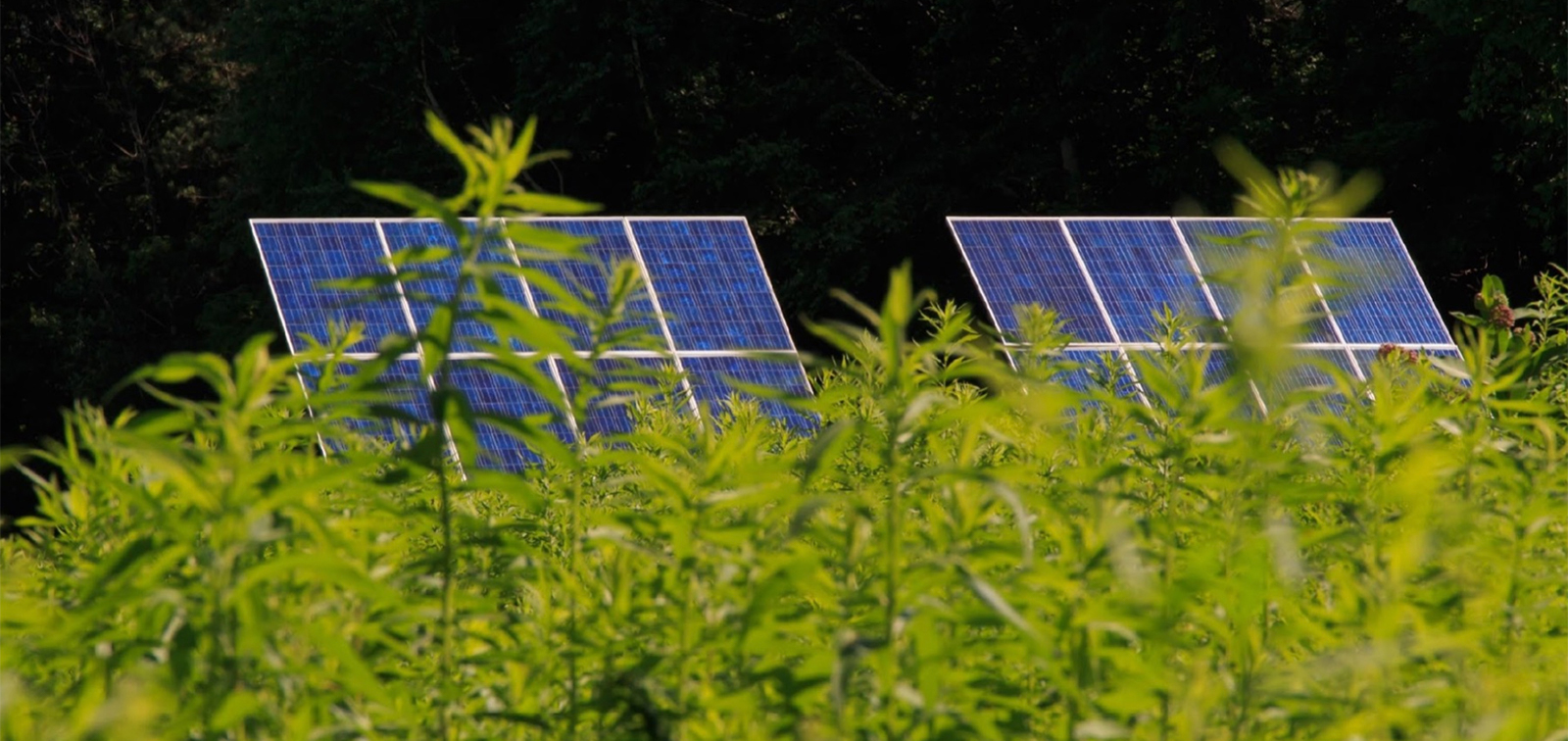
The study, which is scheduled to appear in the November edition of Land Use Policy, examined a proposed 9.35-megawatt solar project in Amherst to weigh the trade-offs of replacing more than 40 acres of forest with photovoltaic panels.
Using a 20-year cost-benefit analysis, researchers found the project’s net benefits ranged from $2.7 million to $12.7 million, depending on assumptions about carbon pricing. Though the solar project has since been withdrawn from consideration, the research establishes methods that can be used to assess similar proposals across the Northeast.
The analysis calculated both benefits — primarily the reduction in carbon dioxide emissions by replacing fossil fuel power — and costs, which included reduced property values near the site, lost carbon storage and sequestration from trees, and diminished ecosystem services, such as air filtration and flood protection.
“From a societal-level perspective, you have positive net benefits, but a lot of the costs are borne by local actors,” said lead author Christine Crago, associate professor in the Department of Resource Economics and the Commonwealth Honors College at UMass Amherst. “So, we have to balance our societal goals with the harm on these local communities.”
The study found that property value losses were the single-largest cost, accounting for more than 70% of total impacts in the “all impacts” scenario. Homes within six-tenths of a mile of the project site were estimated to lose about 2% of their value, based on previous housing studies in Massachusetts and Rhode Island.
Despite these local costs, the researchers found the project’s climate benefits would be realized quickly. The carbon “break-even” point — when emissions avoided by solar power surpass those released by cutting down trees — occurs within the first year of operation. Over two decades, avoided emissions could exceed $4 million at standard carbon pricing levels.
Massachusetts has seen sharp growth in solar energy in recent years, ranking among the top 10 states for installed capacity. But nearly half of the state’s recent forest loss has been linked to solar development, sparking debate over land use and conservation.
“This study highlights an ongoing discussion about balancing renewable energy development with local resources management,” said co-author Richard Harper, extension professor of urban and community forestry at UMass Amherst. “It has application for residents, professionals, and decision-makers throughout Massachusetts, the New England region, and beyond.”
The researchers suggest that policymakers consider compensation mechanisms, such as community benefit agreements, to offset costs to nearby residents. They also caution that the analysis excluded some factors that couldn’t be quantified, including impacts on groundwater and wildlife disruption, which could be significant in certain locations.
“These issues are still enough to hamper a project, as we saw in this case and in many others,” said Crago, who is also a faculty affiliate of ELEVATE, a graduate training and research program focusing on technical, social, and climate challenges in energy transition. “So, we have to find ways to address those concerns if we’re to move forward with solar deployment that is equitable.”
Categories
Join the Discussion
View CommentsRecent Comments
Leave a Reply

Your support keeps our reporters on the environmental beat.
Reader support is at the core of our nonprofit news model. Together, we can keep the environment in the headlines.
How about requiring solar panels on ALL new construction, plus retrofitting ALL factory roofs etc.
This is what comes of Massachusetts’ myopic obsession with CO2 emissions to the exclusion of all else. This is why people who love the natural world roll their eyes at “studies” such as this one done by a few grad students with oversight by a faculty member, all with their eyes on publication (publish, publish, publish or get a real job outside the academy) and on snagging and appeasing funders (in this case, likely the solar industry or groups who benefit from it). No doubt the home owners and community members who protested the clearcutting of 40 acres of forests for solar panels were called “NIMBYs.” I say: Let’s hear it for the NIMBYs of the world who fight against the destruction of what and whom they love, because, if you don’t fight for what you love, then what do you fight for?
The net gain in replacing forest with solar leaves out a significant factor that is rarely mentioned. Gaze down from Google Earth on any populated area and what do you see? The ROOFS OF BUILDINGS!!!
The roof top solar technology is in its relative infancy. Research is needed to develop “solar roofs” that can replace the billions of shingles now covering earth’s structures.
Then forest and solar could exist in harmony for the benefit of all.
We are ultimately all one race of humans who share one home; earth. Let’s work together to keep it going……