
Water, Water Everywhere, But Most of It Stressed or Unsafe to Drink
August 28, 2025
Share


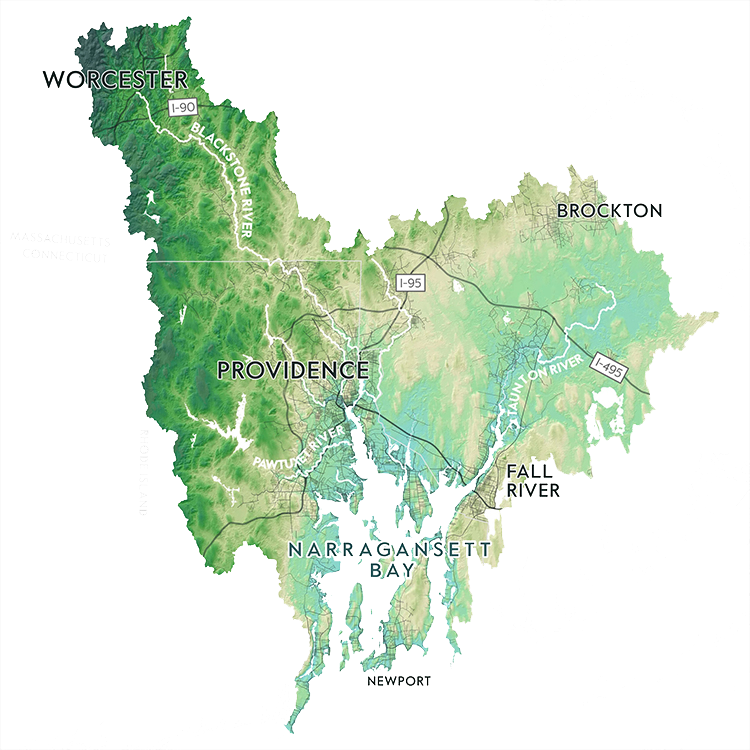
About 60% of the Ocean State’s most valuable, and vulnerable, watershed lies in Massachusetts. Between the two states and 105 municipalities, including 71 in the Bay State, some 14% of the Narragansett Bay watershed is covered by streets, driveways, parking lots, and roofs. Near coastal land draining into Narragansett Bay is often more developed, with up to 20% impervious cover and growing in some places.
The tidal wave of polluted stormwater that pours off these acres of asphalt, concrete, and shingles every time it rains or snow melts sends bacteria, nutrients, and other contaminants into the 1,705-square-mile watershed. Beaches and shellfish beds are closed, toxic algae blooms, and money is lost.
Nearly 3,580 miles of streams and rivers feed into Narragansett Bay, with the Blackstone, Pawtuxet, and Taunton rivers being the major tributaries. All three are listed as impaired.
Within the Rhode Island portion of the watershed, impervious cover can vary significantly by municipality, ranging from 3% to 40%. A high percentage of impervious surfaces — more than 10% — has been shown to negatively impact watershed and stream health, leading to degradation of waterways and impaired water quality.
Despite the enormous pressures facing the Narragansett Bay watershed, the work of state agencies, nonprofits, community groups, voters, and taxpayers in both Rhode Island and Massachusetts have done a remarkable job cleaning up the region’s signature resource.
Narragansett Bay, however, still requires constant vigilance, as new threats, such as plastics and per- and polyfluoroalkyl substances (PFAS), grow and emerge.
About 70% of the Earth’s surface is covered by water. The vast expanse of ocean contains nearly 97% of all the water on the planet. But whether fresh, brackish, salt, ground, or surface, waters in southern New England, across the country, and around the world are under attack. We have long taken their health and importance for granted, even as we actively pollute, poison, and abuse them.
As the climate warms — because we relentlessly burn fossil fuels — a new study shows large swaths of land across the globe are rapidly drying, threatening humanity’s supply of fresh water. ProPublica recently reported that the planet is being slowly dehydrated by the unmitigated mining of groundwater, which underlies vast proportions of every continent.
Nearly 6 billion people, or three-quarters of the world population, live in the 100 countries last month’s study identified as confronting a net decline in water supply — a significant warning for food production and a heightened risk of more conflict and instability.
Mexico City and large parts of China, Indonesia, Iran, and Spain are sinking as their groundwater aquifers are drained. A study published in May in the journal Nature Cities found that 28 U.S. cities, including Denver, Houston, and New York, are sinking, which threatens building safety and transit.
In Arizona, two decades marked by prolonged drought, a changing climate, debates about property rights, and a growing demand for water have left lawmakers trying to figure out how to manage dwindling water supplies in an arid state.
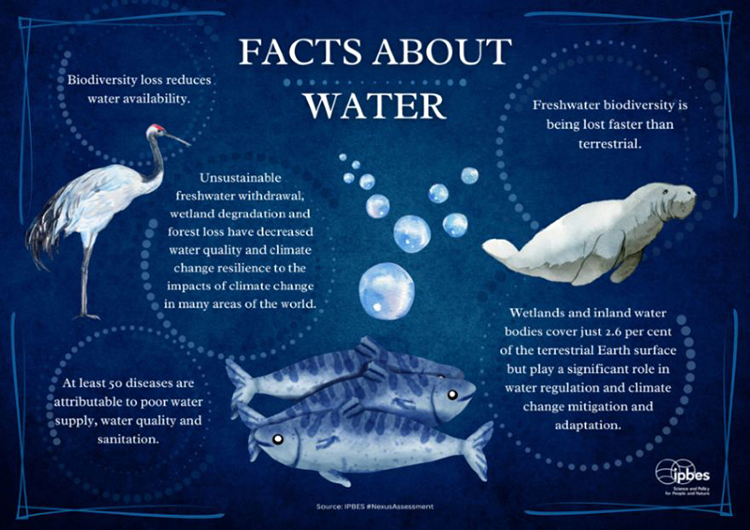
Wetlands — vital wildlife nurseries, breeding grounds, and habitat and important water purifying systems — are the planet’s fastest-disappearing ecosystem. Since 1970, about 35% of global wetlands have been lost or degraded at a pace three times faster than losses experienced within forests.
When we aren’t filling and draining them to build shoreline homes, coastal attractions, and subdivisions, many U.S. wetlands are being loaded with toxic PFAS. Wastewater treatment plant effluent tainted with forever chemicals is increasingly used to restore wetlands — a practice that threatens wildlife, food, and drinking water.
The loss of wetlands is also a big reason why flooding in U.S. coastal areas is projected to occur 10 times more often over the next 25 years, with about 2.5 million people and some 1.4 million homes to face severe property damage from sea level rise.
Our lack of respect for water, especially the supplies we drink, and the natural systems that keep them purified means about 30 million people in the United States rely on drinking water systems that fail to meet federal safety standards.
Millions of other people across the country could be drinking water contaminated with dangerous levels of substances created when utilities disinfect water tainted with animal manure and other pollutants. A recent analysis of testing results from community water systems in 49 states found that nearly 6,000 systems serving 122 million people recorded an unsafe level of chemicals known as trihalomethanes at least once during testing from 2019 to 2023.
Trihalomethanes are byproducts created when chlorine or other disinfectants used by water utilities interact with organic matter, such as decaying leaves, vegetation, and human or animal waste. Some of these chemicals — chloroform, bromodichloromethane, dibromochloromethane, and bromoform — have been linked to various human health risks, including cancer.
A survey conducted in February of nearly 50,000 water networks nationwide found 324 different contaminants flowing out of U.S. taps, with detectable levels of various pollutants showing up in nearly all water systems. Water bottled in plastic doesn’t solve this problem, as the federal government doesn’t require bottled water to be safer than tap. In fact, according to the Natural Resources Defense Council, just the opposite is true in many cases. Tap water must be disinfected, filtered to remove pathogens, and tested for cryptosporidium and giardia viruses. Bottled water doesn’t have to be. Tap water is also typically assessed much more frequently.
If we don’t wise up and start showing Mother Nature the respect she deserves, more drinking water supplies will be poisoned or lost, the further acidification of the ocean will decimate shellfish populations, and the fish we eat will be further polluted with plastics and mercury.
Frank Carini can be reached at [email protected]. His opinions don’t reflect those of ecoRI News.


The Moshassuck watershed is more than 50% hardscaped. It is only a minor tributary of the Bay, but contributes more than its share of pollutants. And now Pawtucket wants to pave parks along the river. Criminality at its finest.
Thanks Frank for reminding us of this important task. What has been done in past years to stem the flow of toxic substances into our waters (marine and fresh) has been accomplished by water quality regulations and the hard working federal workforce at the U.S. Environmental Protection Agency tasked with that job. While not totally successful we should be grateful for their work in preventing an even worse situation. We should be extremely distressed to see so many experienced federal workers leaving their jobs or receiving less funding to accomplish the ever increasing work to protecting our water supplies.