
Turning the Tide on Green Crabs: How Teen Fishers and Chefs Reshaped the Supply Chain for an Invasive Species
August 14, 2025
Share


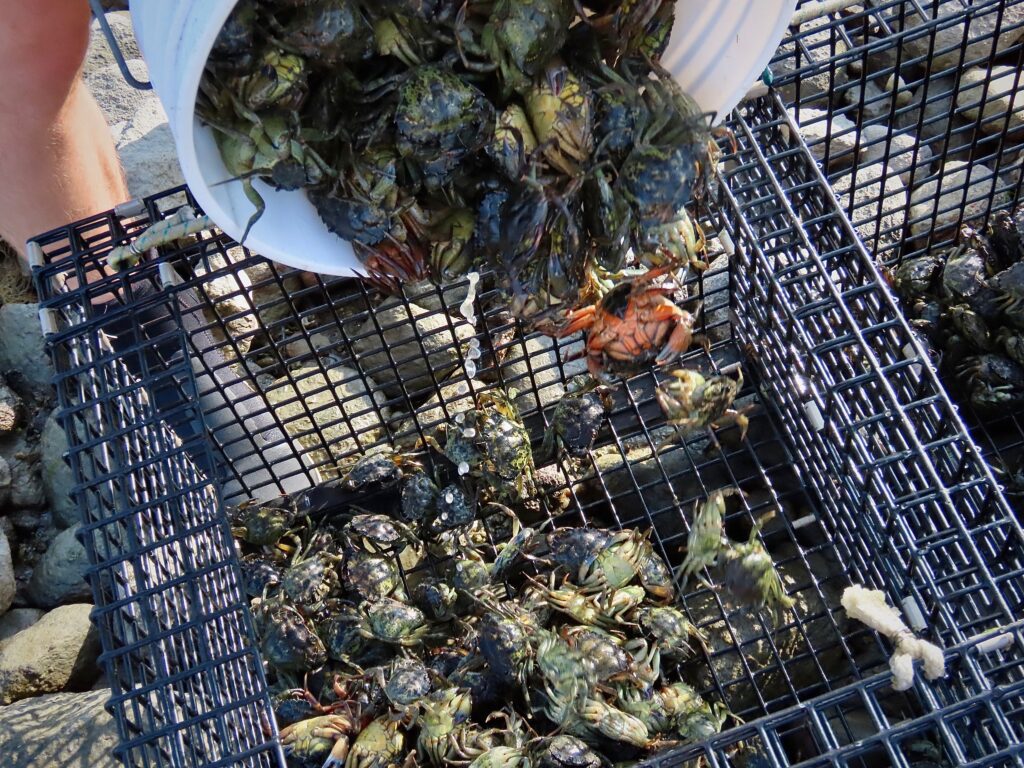
SOUTH KINGSTOWN, R.I. – While many teens spend their summers behind a register in a retail store, 17-year-old Moses Brown High School student Liam Cromie found his job in the waters of Point Judith Pond, where he harvests green crabs.
First introduced to the United States in the 19th century, European green crabs were designated an invasive species due to their spread through San Francisco Bay in 1989, where their populations grew, degraded vital wetland habitats, including eelgrass beds and salt marshes, and outcompeted native species by preying upon shellfish. In Rhode Island, green crabs are widespread throughout the state’s estuaries and coastal waters, including places such as Point Judith Pond, Narragansett Bay, Block Island, and salt ponds along the South County shoreline.
“They’re hurting the ecosystem,” Cromie said. “They eat shellfish, tear up beds, and it’s becoming a problem without a viable solution besides getting them out.”
Cromie is doing his part as a harvester to trap and sell green crabs to bait shops and restaurants around South Kingstown via his dockside dealer license, which allows Rhode Island fishers to sell seafood directly to eateries and the public for $50 annually.
“Ever since I was a very little kid, I spent my summers around the water, looking under rocks for any critter I could find,” Cromie said. “My siblings and I would catch them and use them as our own bait. It started as a fun thing to do, catching crabs and trying to do our little part to protect the cove.”
At age 14, Cromie began gathering up green crabs and attempting to sell them as bait at the marina, quickly learning that fishers need to obtain a commercial fishing license with a “crustacean endorsement” to do so, legally permitting him to harvest and sell green crabs for an annual price of $200.
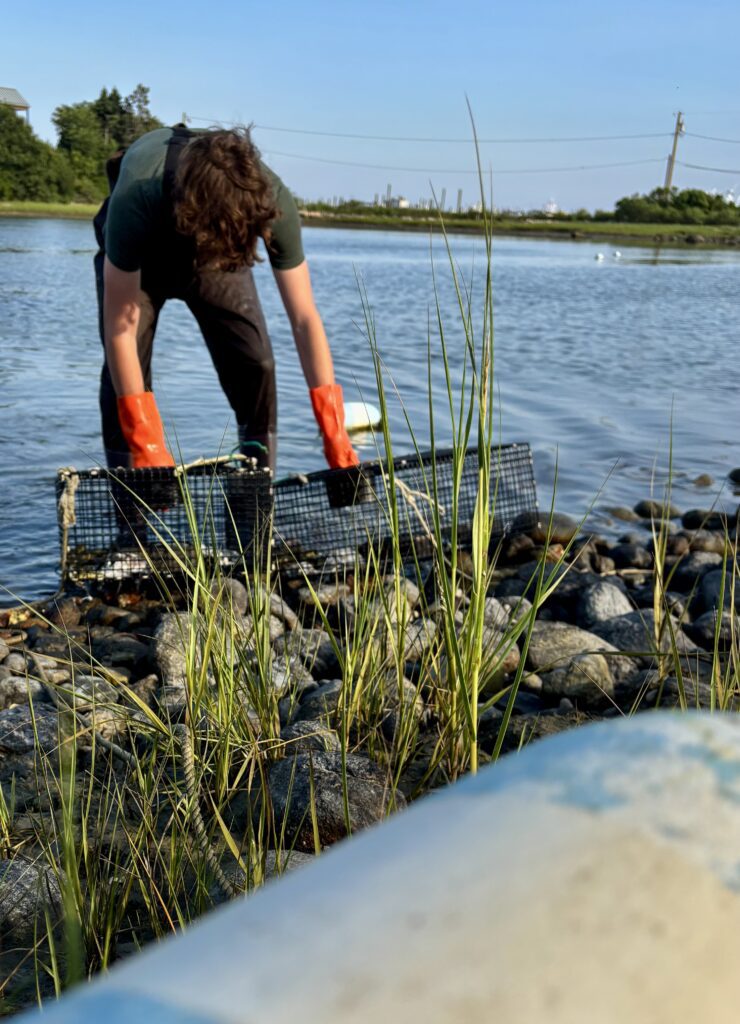
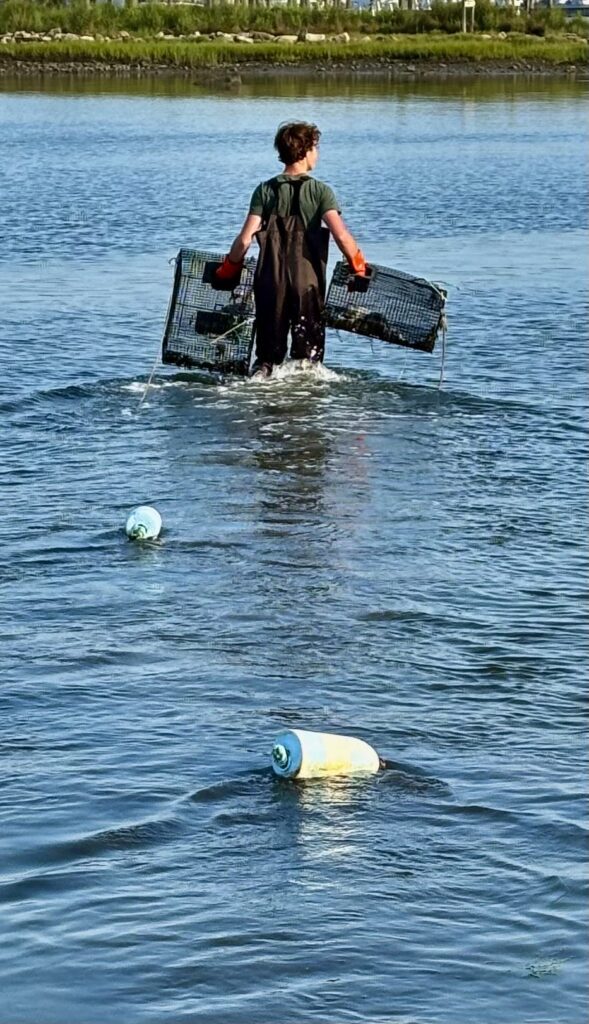
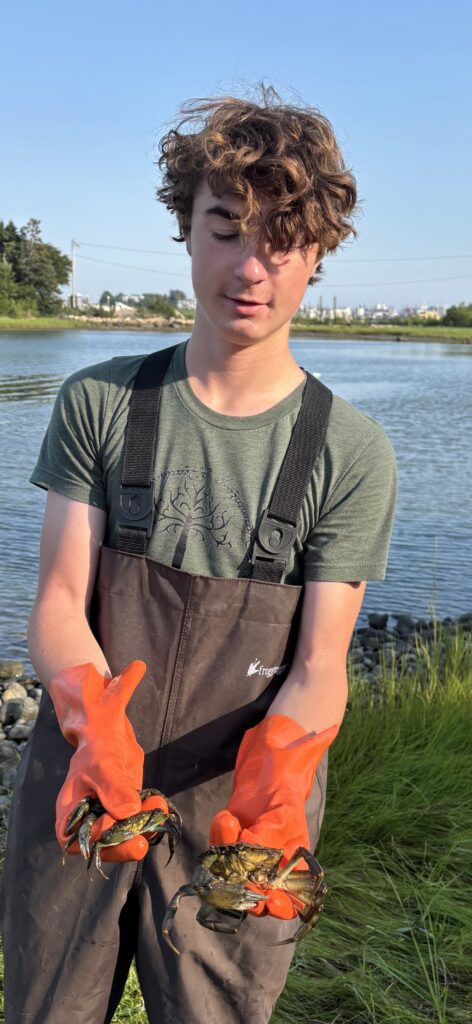
“I came back with my license and started selling them as bait, which was great, and I started to make a little bit of money, expand, and bought more traps,” Cromie said. “But the following summer, the bait shops told me, ‘We don’t want green crabs anymore.’ And that was a big blow to my bait dynasty dreams.”
As summer arrived and tautog (blackfish) season wound down — a fish commonly caught using green crabs as bait — demand for green crabs dropped sharply, forcing Cromie to pivot toward selling them as a viable food source instead.
“This is when I found Kate,” said Cromie, “who, within weeks, found eight or nine chefs who were interested in buying green crabs.”
Kate Masury is the executive director of Eating with the Ecosystem, a Rhode Island-based nonprofit focused on creating a more sustainable and ecologically aligned New England seafood system. Each year, Masury partners with GreenCrab.org’s Mary Parks to host Green Crab Week, which is held in June and features local chefs, wholesalers, harvesters, and processors. The event offers a place not only to celebrate New England’s diverse seafood system, but to “get people thinking differently about what’s edible and valuable,” Masury said.
“Green Crab Week isn’t just about one dish,” Parks said. “It’s about building a market, changing perception, and getting this species off our coasts and onto our plates.”

Part of achieving both Eating with the Ecosystem’s and GreenCrab.org’s missions is connecting small-scale fishers, like Cromie, with local restaurants, working to create market demand for underused, invasive species, including green crabs.
“Liam reached out to me, and I helped him navigate what licenses he needed to be able to sell to restaurants,” Masury said. “In Rhode Island, even with a commercial crustacean license, you still need a dockside dealer’s license to sell directly, which is an additional cost.”
The combined price for Rhode Island’s commercial crustacean endorsement and dockside dealer license totals around $250, which poses a significant barrier for young or small-scale fishers who want to harvest and sell green crabs.
After a summer spent selling green crabs to local chefs, Cromie came back to Eating with the Ecosystem with the idea for a green crab–only license that could lower the financial barriers to invasive species fishing, especially for young harvesters.
“Green crabs are not that lucrative.” Cromie said. “Having to put down a license fee every year was probably a big turnoff for a lot of people, specifically young people, who might have otherwise engaged in green crab fishing. I personally had to get help from my parents to buy my license before I could pay it off over the summer, and that just didn’t feel accessible.”
With the help of Masury, Cromie got in contact with Scott Olszewski, head of marine fisheries for the Rhode Island Department of Environmental Management, and his local state senator and representative to draft a bill for a $10 green crab-only commercial license.
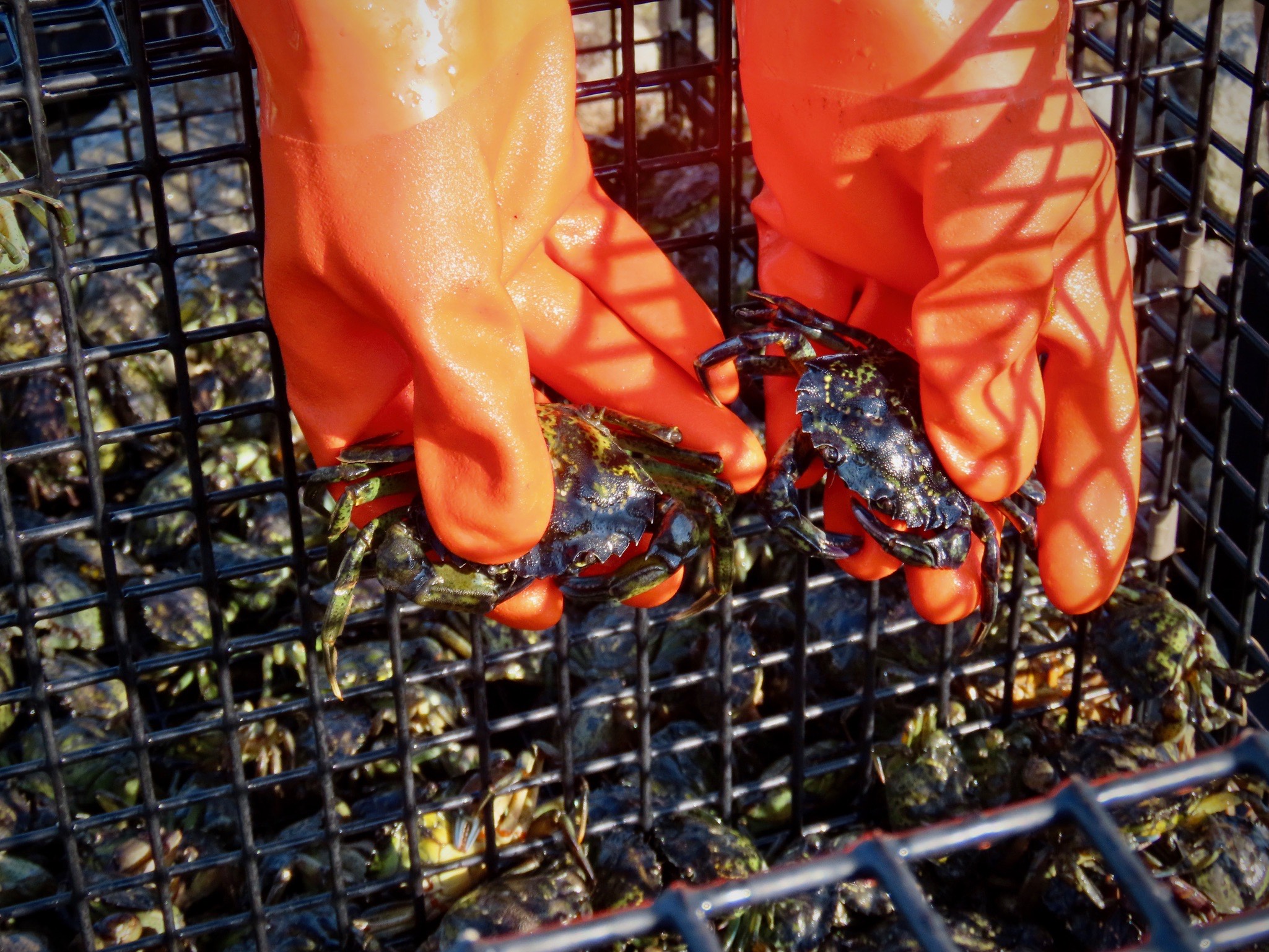
This past spring, Cromie testified before the Rhode Island Marine Fisheries Council and unconventionally organized a green crab tasting — with the assistance of chef Stacey Deets of Pawtucket’s The Hangry Kitchen — for council members to showcase the species’ culinary value.
Across the border in Connecticut, chef David Standridge has been advocating for similar reforms for fishers and restaurants alike.
Executive chef of the Shipwright’s Daughter restaurant in Mystic and recent recipient of the James Beard Award for “Best Chef: Northeast,” Standridge has been a longtime advocate for green crab fishing, not just because of its ecological benefits, but also because green crabs can be incorporated in fine dining, especially French cuisine.
Moving from New York City to Connecticut in 2019, Standridge struggled to find a fisherman who could sell him green crabs directly, as state license barriers required chefs themselves to obtain a bait dealer’s license to legally purchase them.
“Green crabs were legally classified as bait, which means we need a bait license, and harvesters need a bait dealer’s license to sell to anyone,” Standridge said. “I didn’t want to go on record as selling bait. I’m trying to convince people that this stuff isn’t bait.”
In 2023, Standridge drafted a bill in Connecticut to remove the bait license requirement for chefs, allowing them to buy and serve green crabs as food without needing to register as bait dealers. While he initially proposed a bill similar to Cromie’s — a low-cost harvest license specific to invasive species — the Connecticut Department of Energy and Environmental Protection claimed that “to create a new license, it would take two years to implement. We’d have to build all standards, harvesting rules, enforcement, and infrastructure,” and the bill failed to pass.
Still, Standridge successfully lobbied for the licensing change for chefs, helping shift the perception of green crabs from bait to a high-quality ingredient worthy of a place on the menu, not just the hook.
While Standridge’s Connecticut bill proposal failed to go through, in June, the Rhode Island General Assembly passed Cromie’s proposed bill, which was introduced in the Senate by Sen. Susan Sosnowski, D-South Kingstown, and in the House by Rep. Kathleen Fogarty, D-South Kingstown, and which will take effect in early 2026. It will make it much easier for entry-level harvesters to legally trap and sell green crabs for bait and food use.
“The beauty of Liam’s work is that he didn’t have to do any of it; the bill wasn’t for him. He already has his licenses, but he worked to make it easier for others, and that is incredibly selfless.”
— Kate Masury
While he succeeded in the Legislature, Cromie’s work to remove barriers to invasive species fishing doesn’t end with the reduced harvesting license. Toward the end of the 2025 school year, he presented his work and advocacy for green crab fishing to a group of seventh-graders, sparking interest from students eager to help and learn.
“That was when I realized I could be doing something bigger,” Cromie said, “something that kids would want to do.”
Receiving a grant through his school to buy and distribute green crab traps to students who would like to learn how to harvest them, Cromie is working to help engage youth in the fishing community and lower their equipment costs. Partnering with local troops of the Boy Scouts and Girl Scouts, as well as students around the state, Cromie is kick-starting a new generation of invasive species harvesters.
“It all comes down to money and access,” he said. “The bill and this grant are big steps, but now we have to keep thinking about how to make it even easier for youth to get involved to make a real impact on the ecosystem.”

Keep up the good work
Our planet’s future depends on youth like Liam to create solutions to pressing issues like this. Thank you for setting a great example of eco citizenship!