
Another Commission Created to Again Study Bottle Bill
July 6, 2025
Share


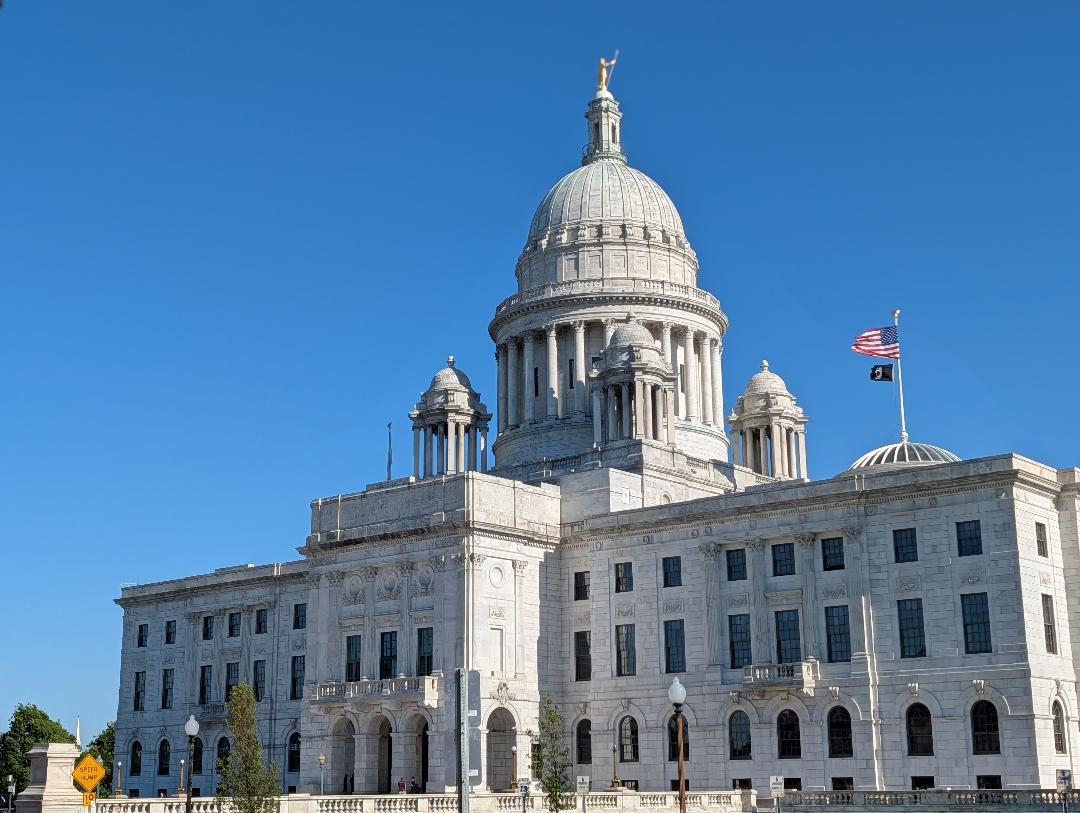
PROVIDENCE — The bottle bill is dead. Long live the bottle bill?
As lawmakers debated the budget that would bring the session to a close this year, General Assembly leaders pulled the plug on the bottle for the next 18 months.
Instead, House Speaker Joe Shekarchi, D-Warwick, and Senate President Valerie Lawson, D-East Providence, announced they favored a study on the legislation that was slated to create a joint bottle redemption and extended producer responsibility (EPR) for packaging programs.
The legislation, which was subbed into the main bottle bill/EPR legislation introduced in both chambers, mandates the Department of Environmental Management, Department of Administration, and the Rhode Island Resource Recovery Corporation to pursue “a statewide needs assessment to determine the infrastructure, policy, and programmatic requirements necessary to support a statewide redemption and recycling plan.”
In other words, more study, more kicking the can down the road from the General Assembly.
“There is still a great deal of conflicting data as to the implementation of best practices to address the problems of improving and disposing of our recyclable products, as well as enhancing our anti-littering efforts,” Shekarchi and Lawson said in a joint statement released June 16. “We believe it would be in the best interests of Rhode Islanders to conduct a needs assessment, as other states that have adopted programs have done. We have the full faith and confidence in DEM, Resource Recovery and other key stakeholders who will develop a report to inform us on the best approaches and costs to address this important environmental issue.”
By October, the state agencies are required to have procured a third-party consultant to perform a solid waste and recycling analysis, a new solid waste characterization study, and an analysis of contaminated recycling and litter rates, among other issue areas outlined in the legislation.
As part of the legislation, DEM also has to put together a new redemption and recycling advisory council, to be staffed by one representative from each county who works in a local public works department or waste management authority, representatives from the packaging industry, the materials recovery industry, the composting industry, a Rhode Island reuse or refill systems operator, and one academic expert on waste systems or the circular economy.
An interim report is due by April 1, 2026, with a final report, including findings and recommendations due by Dec. 1, 2026, notably after the next round of state and local elections. It also means the General Assembly is unlikely to provide a definitive answer on the legislation next year.
For environmental groups and waste advocates, bottle redemption systems and, by extension, EPR programs for recycling packaging are seen as key tools to tackle the state’s ever-growing waste problem. Countless pieces of plastic — wrappers, empty containers, tiny alcohol bottles known as nips — litter Rhode Island’s environment.
Recycling rates remain at an all-time low for most of the state’s 39 cities and towns. Meanwhile, the impact plastic is having on areas such as Narragansett Bay continue to be studied and discovered. A 2023 study from the University of Rhode Island estimated the top 2 inches of the bay’s seafloor contains more than 1,000 tons of microplastics, a buildup that occurred only in the past two decades.
Rep. Carol McEntee, D-South Kingstown, told members of the House Environment and Natural Resources Committee that her original bottle bill legislation required the same type of analysis anyway, and that the new legislation was a step in the right direction.
“We will get this analysis out of the way, if I put the bill in next year, which is very likely, I will have some of this behind me,” McEntee said at a June 18 committee meeting. “We won’t be starting from scratch again a year from now.”
The new legislation was passed by the House on June 20, with the Senate passing in concurrence.
It wasn’t the first time the bottle bill was delayed so lawmakers could study it more. In 2023, the General Assembly created a study commission on the issue, chaired by McEntee and Sen. Mark McKenney, D-Warwick. It examined the recycling of plastic, glass, aluminum, and other common materials handled by recycling systems.
The commission, which included members of the liquor store and beverage distribution industry, met 13 times over a year and a half, getting a yearlong extension to its work in 2024. It’s final report, released in April, made three recommendations to lawmakers: pass a joint bottle bill/EPR program or pass each program on its own, individually.
As a compromise, the new legislation pleases no one. Opponents of bottle bill legislation, led by the Stop the Rhode Island Bottle Tax campaign, said it left the door open to what it claims would be a new tax on beverages.
“Rhode Islanders deserve an innovative recycling system, like those adopted recently by other states, that raises recycling rates without raising the costs on hundreds of everyday beverages,” said Christopher Hunter, spokesperson for the campaign.
Meanwhile, environmental groups, led by Save The Bay, vow to continue fighting on Smith Hill for a bottle redemption program.
“We’ll certainly back the bottle bill again next session. We still have some work to do to educate both the public and lawmakers about the benefits of a bottle bill and how it would work, as well as dispelling the misinformation from opponents,” said Jed Thorp, the nonprofit’s director of advocacy. “That work will continue. And, if we pass a bill next year, the implementation analysis required by the revised bill will still provide helpful information before the bill takes effect.”
we all know container deposit laws work, see MA, OR etc. The problem is the opposition from the throwaway beverage container industries that care nothing about litter, waste of resources, water pollution and such, and they know how to lobby, so the legislative leaders cave to them every time. The latest delay is the latest trick to claim to do something but really leave the problem ongoing which also pertains to the Coastal Council, RIPTA funding, assault weapons, carbon emissions from buildings…
Despite this persistence sometimes pays off, legislative leaders change, and advocates will be back yet again
That the leadership of the legislature was unable to move on a bottle bill this year despite the results of the last sdtudy commission being a state of the art bill is totally pathetic.
Another commission?? I call BS on this! ME had a bottle redemption bill starting in 1978 which has now morphed into a program to recycld glass, metal and plastic. CT and MA have successful programs. Come on RI, youcan do this!!
Follow the money. Wholesalers and retailers are they guilty of filling the pockets of the key legislators? Maybe, maybe not.
In Maine, they even put a deposit on water bottles. It’s Rhode Island’s history of corruption that impedes this issue. We need someone in the press to expose the people behind the insidious problem.
Maybe when they have to shut down the landfill people will care? If Connecticut, Massachusetts and Maine can do it – so can Rhode Island.
It’s up to the press & environmental groups to find out if incentives were given to retailers to add machines and space to their operations in Maine, Connecticut and Massachusetts? How did other states initiate their bottle return programs? Are there independent companies who handle returns in these states?
How can we get retailers to “do the right” thing? If other states can do it, so can Rhode Island.
There’s big money out there to stop the process – expose it. Who’s getting benefit from that $$$$?
In Maine they even put a deposit on water bottles! Will it take closing the Johnston landfill to make people pay attention?