
Saving RIPTA, Decarbonizing Buildings Among Top Legislative Priorities for R.I. Environment Council
May 12, 2025
Share


PROVIDENCE — What are the 2025 legislative goals for environmental organizations this General Assembly session?
Bottle bills, decarbonizing buildings, and saving mass transit.
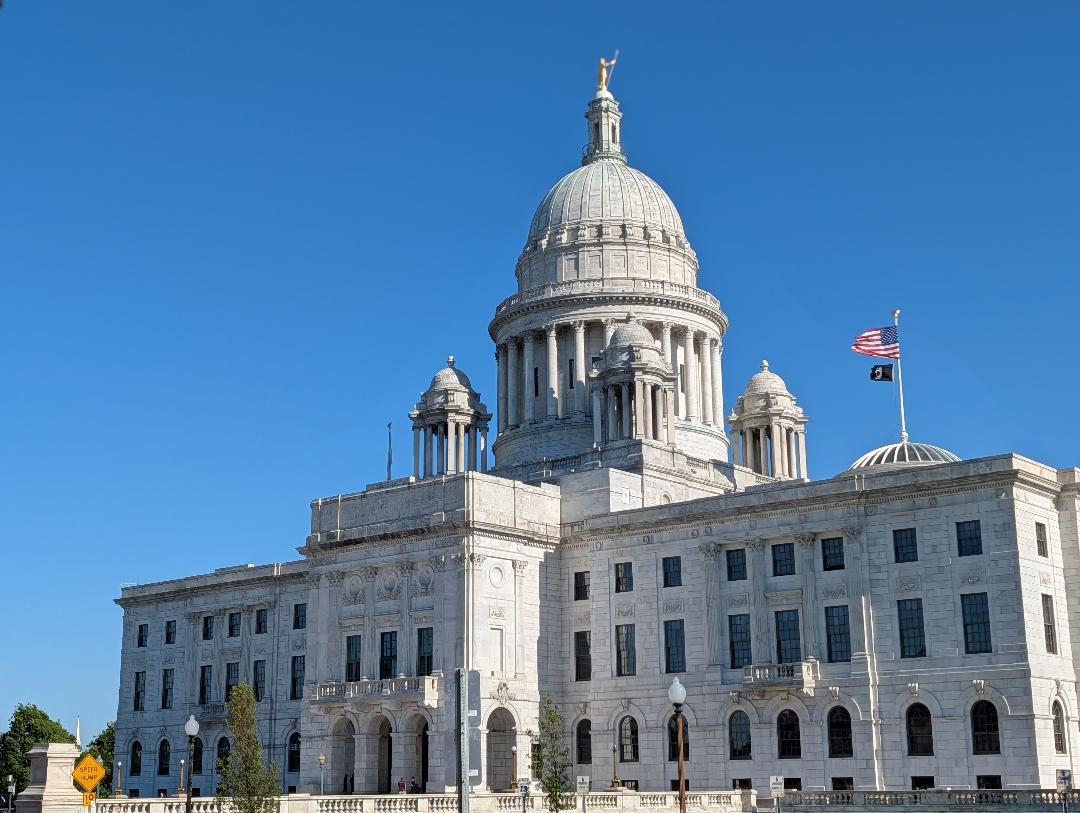
With just a few weeks left for lawmakers to pass new legislation, the Environment Council of Rhode Island (ECRI), the state’s coalition of more than 60 green-minded advocates and organizations, unveiled last week in an event on the second floor of the Statehouse the four pieces of legislation it wants moved past the finish line.
“We’ve been busy this year; there have been a lot of great environmental bills,” said Angela Tuoni, acting director of climate and government relations at The Nature Conservancy of Rhode Island, and co-vice president of policy for ECRI. “We wanted to narrow our focus and make sure we’re putting our energy into these top four pieces of legislation.”
Of ECRI’s four main policy pushes, two are left over from the 2024 session. In addition to its priority list, the council has backed dozens of other pieces of legislation, and opposed another eight.
Here’s what made the cut:
Building decarbonization. ECRI backing the pair of bills (S0091/H5493) introduced by Sen. Meghan Kallman, D-Pawtucket, and Rep. Rebecca Kislak, D-Providence, respectively. The legislation would require large buildings across the state to begin benchmarking, or measuring, their greenhouse gas (GHG) emissions, and in the long-term take steps to reduce their GHG contribution.
It’s the only holistic solution to curbing building emissions proposed in the General Assembly this year. Broadly, despite scattered rebate and incentive programs to get homeowners and businesses to electrify their heating and cooling, a state plan to reduce building emissions remains elusive.
Buildings, whether homes, businesses or industrial facilities, account for more than a third of all GHG emissions produced in Rhode Island. Coming up with a plan to reduce their contributions is going to be key for the state to reach the goals of the Act on Climate law, which requires the state to reach net-zero emissions by 2050, with a benchmark goal of a 45% reduction compared to 1990 levels by the end of this decade.
The bills under consideration would also require new construction to be built electric-ready.
Bottle bill. Probably the hottest topic in the Legislature this session, implementing a bottle bill has been a long-standing ask by the state’s environmental groups and plenty of residents who are tired of the plastic litter infesting the state’s public green spaces.
The joint study commission on the bottle bill, co-chaired by Rep. Carol McEntee, D-South Kingstown, and Sen. Mark McKenney, D-Warwick, concluded nearly two years of work earlier this year by recommending the state pass a bottle bill and an extended producer responsibility bill in tandem.
The business lobby has traditionally hated bottle bill legislation, always viewing it, despite the inclusion of liquor stores and beverage wholesalers in the study commission, as an extreme non-starter. Their argument? Take your pick. Their list of issues include the 10-cent fee is an onerous tax; bottle bills will make border businesses less competitive than those along the Massachusetts border (despite both of Rhode Island’s neighbors having bottle bills in force); and businesses won’t have the space to host redemption centers required to make the collection program work.
The anti-bottle bill lobby got a boost last week ahead of a Senate hearing. A voter survey, conducted between March 31 and April 3, found that only 50% of voters were supportive of the legislation, a number which fell to 34% after hearing “messaging from both sides” according to the memo, written by pollster David Binder Research.
A spokesperson for Stop the Rhode Island Bottle Tax, the group which commissioned the poll, didn’t respond to ecoRI News questions for more information on the messaging used in the poll.
It’s far from the last word on what Rhode Island voters think about bottle bill legislation. In March, Save The Bay announced it had commissioned its own poll, which found that 58% of surveyed voters were likely to support bottle bill legislation, and 57% said they would be likely to participate in a bottle bill system and return their empty beverage containers.
Save RIPTA legislation. The other piece of legislation endorsed by ECRI as a top priority last year is actually a suite of seven different bills, including a $32.6 million allocation to close the Rhode Island Public Transit Authority’s budget gap, aimed at boosting the state’s flagging transit agency.
If left unaddressed, RIPTA’s budget deficit is likely to seriously harm Rhode Island’s only transit system: its bus network. Without a fresh allocation of funds, RIPTA will lay off bus drivers and cut service routes, possibly putting the agency in a spiral from which it will be hard to pull out.
Offshore wind procurement. It’s not been the easiest couple of years for offshore wind. Projects in the region have been plagued by inflated supply chain costs and buffeted by deeply uncertain political winds.
The Trump administration since assuming office in January has staunchly opposed all offshore wind development, and in recent months has done what it can to roll the clock back on the industry, in favor of an energy industry more reliant on natural gas and coal.
In response to these headwinds, Sen. Sam Zurier, D-Providence, and Rep. Art Handy, D-Cranston, introduced legislation requiring the state to procure another 1,200 megawatts of electricity from offshore wind by 2029.
Not counting the 200 megawatts Rhode Island is slated to get from an agreement it signed with Massachusetts, the legislation would almost double the amount of renewable energy in the state’s portfolio. Rhode Island sources around 1,366 megawatts of its electricity from renewable energy sources, 430 of which come from offshore wind alone, according to the state Office of Energy Resources.
ECRI priorities seem just with buildings and transportation as major sources of pollution. Disappointing but not surprising the throwaway beverage container industries, despite all the outreach to them, continue to be in effect pro-litter, pro-waste, anti-recycling
The solar siting bill protecting our “Core” forest environments was a big win last year and the ECRI, Audubon, Save the Bay, etc. deserve our continuing thanks for their successful advocacy of that bill. Tragically, however, the General Assembly’s drive, at the same time, to eviscerate local municipal Comprehensive Planning authority in pursuit of housing growth threatens to cancel the achievement. .
Time and again, in the pages of this journal, we lament the demise of the Natural Heritage Program at DEM, and yet have done nothing to reestablish it. This economical program kept inventory of our species “Of Concern, Threatened, and Endangered,” and had outlined their habitats on maps useful to local planning authorities. The Program’s data and its director could be called upon in making species protective land planning decisions. But with the program long gone and the organizations most politically capable of reviving it uninterested in doing so, those “State Listed Species” are screwed.
I know. I’ve spent a lifetime trying to protect a few of them. I’ve also worn comprehensive town planning shoes and understand in tragic detail how that whole concept is being trashed by the GA. It is past time that well-resourced leading members of the ECRI wake up and get this issue on their agendas.
I have been involved in litter issues for more than 20 years in RI, served on the litter task force before the bottlers torpedoed it in the distant past. The bottlers (platic industry, right wing businewss lobbies, oil companies) have said no to returnable bottles for 50 years,. They lose every time it comes up for a citizen vote all over the country. But they have bottled it up in RI forever, saying we will solve the problem, but they have NEVER done anything to reduce the negative impacts of throw away bottles in RI, and never will. It is time to pass a bottle bill and for the legislators to throw the moneylenders out of the temple.
RIPTA needs 32 million dollars for this year coming up but it’s for the New transportation hub and their special staff unheard of Pensions that this year in 2025 The RIPTA Pension Board in 2025 stopped publicly posting on their own pensions info for the employees wages and information that should e public information and not information that has to be a public record request because RIPTA gave a Union President an unheard amount of $14,952 a month that’s over $179,000 a year for a city bus driver who has never made that amount in a year at RIPTA so how can he get that amount when he retireds and no one from the State House fiancé committee doesn’t even look into and then fully fund RIPTA with tax payers money from RI I don’t think so!!!!!!
Anti bottle bill speakers claim that “businesses won’t have the space to host redemption centers required to make the collection program work.”
Massachusetts made it work. New York made it work. Vermont made it work. Maine made it work. These are the states I have personal experience with, expecially MA and NY. I lived in each of them for years, and I supported both independent bottling recyclers and non-profit bottling recyclers, specifically the recycling center at the Fernald School Developmental Center. This was in the 1980s and 1990s and yes, I know, the Center has had terrible problems since. But I took my recycling cans and bottles there regularly and became friends with some of the people there.
Try reading the bill. It addresses a lot of the long-standing and long-disproved arguments against bottle bills. A lot of work went into researching and creating the bill. It might still have wrinkles. Then, like MA, maybe RI will have to pass a revised bottle bill to address these issues. But maybe not, as we’ll already be way ahead of all the states the commission studied and learned from.