
CRMC Receives Passing Grade in NOAA Evaluation
April 21, 2025
Share


WAKEFIELD, R.I. — The state’s coastal regulatory agency has received a passing grade from the federal government.
Federal officials from the Office of Coastal Management in the National Oceanic and Atmospheric Administration have deemed the Coastal Resources Management Council to have successfully achieved many of the mandated actions required by the agency’s previous evaluation in 2019.
This means the state won’t see a decrease in or withholding of funds as a result of the evaluation alone. Thirty-four states, including Rhode Island, are allowed to regulate development via a federal law and policy known as the National Coastal Zone Management Program.
Coastal agencies in participating states receive federal funding to help run their coastal programs, providing both a carrot and a stick for states to ensure they meet federal requirements. CRMC receives around half its total budget, somewhere between $2.5 million and $3.5 million, from federal allocations.
The 2025 evaluation lists eight separate accomplishments deemed satisfactory by NOAA officials, ranging from navigating through a series of retirements, to updating penalties for coastal violations, to designating more rights of way.
It’s not all rosy for the agency, however; included with the final evaluation report is a list of four mandated actions CRMC is expected to accomplish by its next evaluation (likely to be in 2029), and eight additional recommendations to improve the coastal program, which are not required.
NOAA’s recommendations include privatizing the establishment of a dedicated federal consistency coordinator position; adjusting the aquaculture program so promotion and permitting remain separate to avoid conflicts of interest; ensure staff “have the timely and in-person support needed to address the breadth of activities and high volume of work they conduct”; and modernizing and updating its permitting database.
“Despite the hiring of new staff, the Program’s workload and responsibilities have increased significantly with the need to respond to the growth of the offshore wind energy and aquaculture industries, address impacts from increased erosion and sea level rise, and manage issues that arise from increased demand for public access, among others,” Jeffrey L. Payne, director of NOAA’s Office for Coastal Management, wrote in the evaluation. “Many of these needs will continue to increase.”
CRMC’s workload has vastly increased since the pandemic even as its staffing officials has not. As the designated lead agency in the coastal zone program, it’s up to the agency’s 32 full-time staff members to provide oversight, advice, and put stipulations onto the bevy of offshore wind projects that are under construction off New England’s coastal waters or undergoing the permitting process. It’s a big ask for an agency that, in its day-to-day work, mostly handles docks, boat lifts, development, and aquaculture within its jurisdiction.
Notably absent from NOAA’s report is any recommendations or actions on agency structure, despite hours of oral testimony and hundreds of pages of written comments from residents and advocates to NOAA on the ineffectiveness of CRMC’s 10-member politically appointed decision-making council.
The federal agency’s sole recommendation regarding CRMC’s structure is requiring CRMC to be more proactive with finding new, qualified council members.
“The purpose of this evaluation is to ensure the state is implementing its federally approved program, including its currently approved structure, consistent with the Coastal Zone Management Act,” according to the NOAA report.
The report was issued just days after members of the House State Government and Elections Committee took testimony on a slew of different bills aimed at changing CRMC’s 10-member council in some way.
The marquee CRMC bill in the House this year is H5706, backed by Attorney General Peter Neronha and a number of different environmental and coastal conservation groups. That legislation, heard weeks prior in the Senate, would overhaul CRMC into a more traditional state agency, like the Department of Environmental Management, with an executive director in charge instead of a council.
It’s not the only reform bill in contention this year. Also in play is H5453, introduced by Rep. Jay Edwards, D-Tiverton, that would have DEM absorb CRMC as one of its divisions. H6126, introduced by Rep. Alex Finkelman, D-Jamestown, would reduce the total number of agency council members to seven.
Still, even with a passing grade from NOAA in hand, it could still be a bumpy year for CRMC in terms of federal funding. Since the inauguration of President Donald Trump in January, the usually reliable spigot of federal funding has been known to sputter, if not shut off, at the whims of the new administration.
Republicans, in the White House and Congress, are pushing for deep, deep cuts into all aspects of federal spending, save maybe the budget for the Department of Defense. Agencies like CRMC and DEM have nearly half their budget and a third of their budget respectively come from different federal sources.
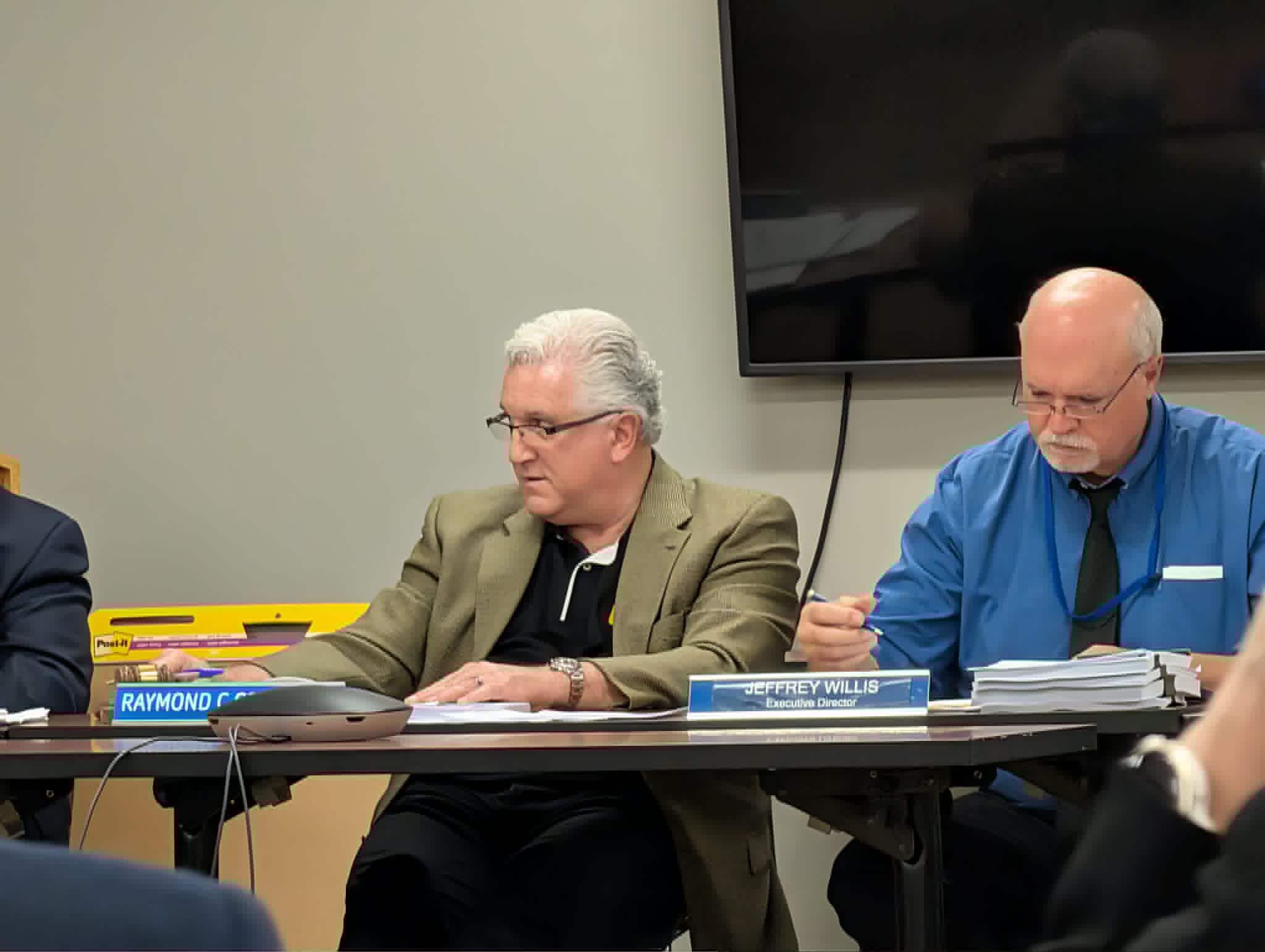
CRMC could be facing a $170,000 cut, around 10%, according to executive director Jeff Willis, who relayed what he learned at a national meeting in Washington, D.C., between the state coastal programs and NOAA officials at CRMC’s semi-monthly regular meeting on April 8.
“That’s significant for this agency,” Willis told council members. “All of our operating expenses come out of the federal account and not the state account, [so] we’d have to find a way to find where that $170,000 comes from.”
Categories
Join the Discussion
View Comments
Your support keeps our reporters on the environmental beat.
Reader support is at the core of our nonprofit news model. Together, we can keep the environment in the headlines.