
Study Commission Recommends R.I. Implement Both Bottle Bill and Extended Producer Responsibility Program
April 11, 2025
Share


PROVIDENCE — After 18 months of study, more than a dozen meetings, and hundreds of pieces of testimony, evidence, and presentations, Rhode Island’s joint study commission on plastic waste released its report, which revealed, unsurprisingly, that legislation in support of a bottle bill faces steep opposition.
The bottle bill is one of those pieces of environmental legislation that remain stuck in a state of political limbo. Advocates and pro-bottle bill lawmakers every year lobby heavily for the state to adopt a bottle deposit system, where consumers can turn in empty plastic bottles and other containers in exchange for a small refund, but the legislation rarely escapes committee.
It’s popular with environmental groups and residents who say they are sick of finding alcohol nips and other plastic waste littering parking lots, waterways, roadsides, and parks. But the legislation has always been extremely unpopular with the state’s beverage distributors and liquor stores.
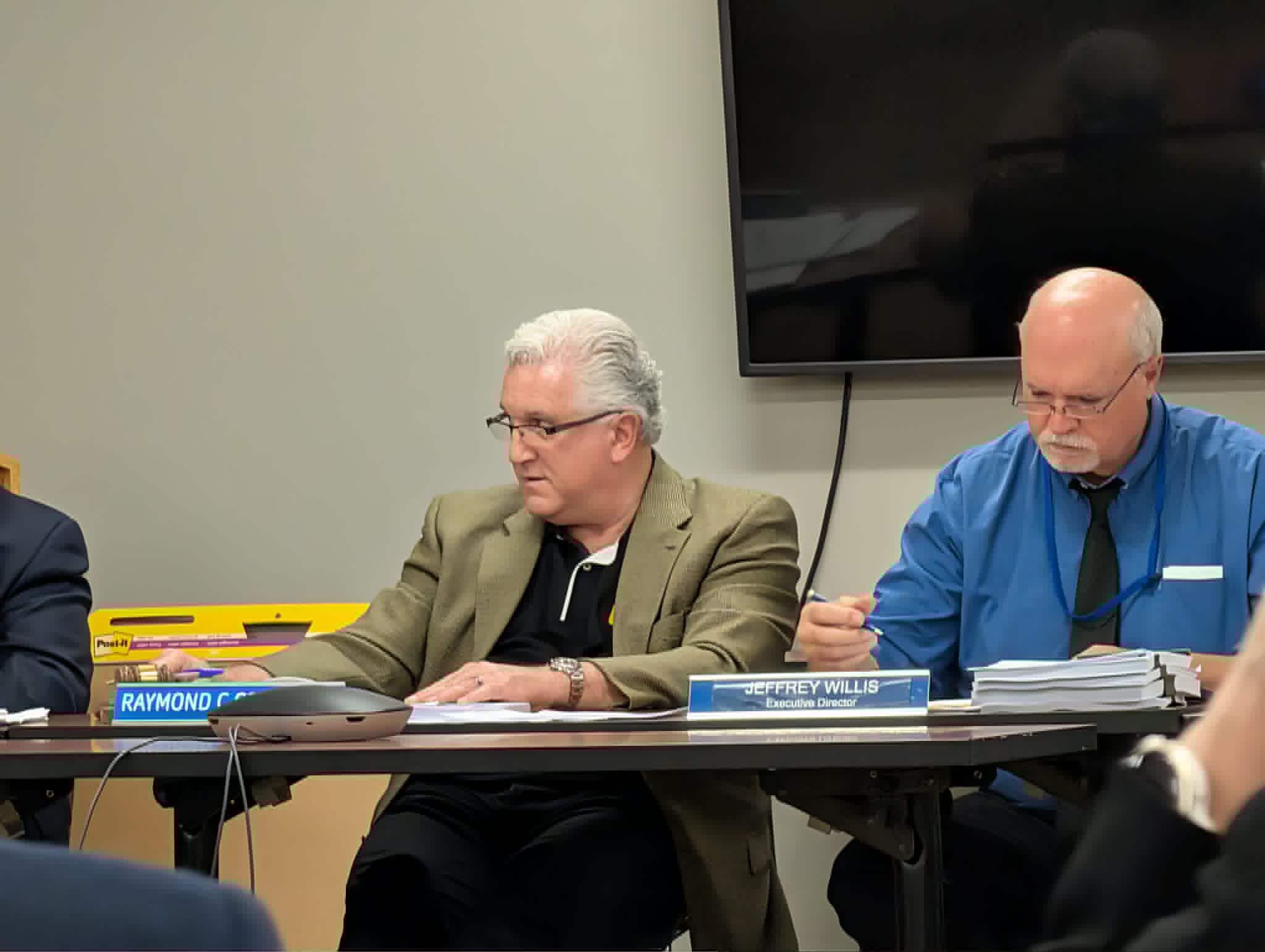
The bottle bill commission, led by Rep. Carol McEntee, D-South Kingstown, a longstanding sponsor of such legislation, and Sen. Mark McKenney, D-Warwick, was an attempt to study the issue more thoroughly and hopefully reach some kind of compromise between bottle bill advocates and opponents.
For McEntee and McKenney, the stakes of the commission were clear. “The recycling system in Rhode Island is not working well,” the lawmakers wrote in a letter prefacing the commission’s final report released Tuesday. “Too much recyclable packaging is ending up in the landfill, as well as the streets and waterways. Anti-litter initiatives … are certainly worthwhile and would be enhanced by the recommendations being made by this commission.”
The two lawmakers noted the commission was shown no evidence that anti-litter programs boost the state’s recycling rates.
Perhaps, unsurprisingly, compromise on the issue remains elusive. The report contains three recommendations, the first of which is for the General Assembly is to pass both a deposit return system (DRS) and an extended producer responsibility (EPR) bill, which makes paper and packaging producers accountable for the entire life cycle of their materials, including recycling. The bottle bill legislation proposed this year would create a 10-cent deposit for the system, double what Massachusetts charges.
Both are programs that lawmakers have proposed separately in recent years, but the chief finding of the study commission is that the systems work better in tandem, and the commission recommended that the programs be run by a producer responsibility organization (PRO) made up of the producers of plastic bottles.
“Testimony indicated, though, that EPR for packaging, without a DRS, would not have any appreciable benefit in terms of litter reduction,” the commission wrote.
The other two recommendations from the commission were merely that each program be implemented individually.
At least one study commission member, Rhode Island Beverage Association representative Margaret Hogan Sweeney, went on record to support only an EPR system, citing the increased cost of doing business when implementing a bottle deposit system.
“Attempting to establish both programs simultaneously is a staggering proposition in terms of investment, regulatory burden on the state, and costs to businesses,” Sweeney wrote in a letter to the commission dated March 14.
Meanwhile, the Rhode Island Liquor Operators Collaborative, Rhode Island Food Dealers, Colbea Enterprises, National Beer Wholesalers, and the Rhode Island Beverage Distributors, the other industry groups represented on the study commission, wrote in a separate March 14 letter that they supported none of the recommendations being put forward by the commission.
Their concerns were familiar and common catechisms like the cost to businesses, taxpayers, and government, as well as cross-border fraud stemming from the higher proposed deposit fee in Rhode Island.
“If Rhode Island were to implement a 10-cent deposit, there would without a doubt be cross-border fraud, with Rhode Island paying out additional funds to Massachusetts residents,” wrote the industry groups.
The environmental groups on the commission — Save The Bay, Clean Water Action, Audubon Society of Rhode Island, and Just Zero — supported the combined recommendations and the option to create only a bottle bill system.
“The study commission did great work, hearing from experts from across the country on which policies and programs have been effective at reducing litter and improving recycling,” Save The Bay’s Jed Thorp told ecoRI News. “The General Assembly should now follow the recommendations in the report and pass legislation to create a ‘bottle bill’ system for beverage containers and a producer responsibility system for packaging.”
It’s no secret the state has a plastic litter problem. ecoRI News has long reported on the problem of nips and other plastic waste polluting the state’s environment. Municipal recycling rates remain dismal. While 80% of Rhode Island households have access to recycling, the state’s overall recycling rate is 26%. The Central Landfill, which is approaching its fifth decade in service, is expected to reach capacity in the next 20 years.
So, finding solutions to take waste out of the state’s landfill system is more important than ever. The 2023 R.I. Coastal Cleanup Report issued by Save The Bay reported that volunteers collected 22,480 pounds of trash from the state’s shorelines, including 43,858 drinking items — plastic bottles, glass bottles, straws, cans, caps, and stirrers. A 2020 study from Keep America Beautiful estimated that states without bottle bill programs have more litter per capita than states with bottle bill programs by a 2-to-1 ratio.
Legislation based on each recommendation has already been introduced in the House. H6207 would create a joint bottle bill and EPR collection system. It is expected to receive support from a broad coalition of environmental organizations and some industry groups. H6206 would create a bottle bill system in Rhode Island, and H6205 would create an EPR system.
In a statement to ecoRI News, House Speaker Joe Shekarchi said he hadn’t had a chance to review the commission’s final report, but had asked former state Department of Environmental Management director Janet Coit, who is advising House leadership on environmental issues, to evaluate it.
“I look forward to hearing her analysis as well as discussing the issues further with the commission chairs,” Shekarchi wrote.
A spokesperson for Senate President Dominick Ruggerio told ecoRI News Ruggerio would be reviewing the report and discussing it with McKenney in the coming weeks.


I recycle everything I can but I have to bring my recycling home to throw in my bin because everywhere you go the there’s no recycling just trash I doubt a lot of people at McDonald’s or D’Angelo are going to bring their recycling home and throw it in the trash because there is no option for recycling
As for a bottle bill it’s just not a viable solution it’s a fell good law that does nothing but create more costs and hassle for a separate branch of facilities and administration to oversee I see plenty of trash in ct and mass and all it does is make bottle
collectors walk the highway collecting trash and being in dangerous places we may just be seeing less recycle because of lack of public education and the limits on what is recyclable vs what is labeled as recyclable if it has a recycling symbol it should be able to be recycled and how much of our bottles are being brought out of state for deposits near our borders i would support a nips deposit that would be returned to the liquor stores this are the real problem but every bottle
I really think this bill is basically worthless and just more bureaucratic chaos. It belies the real problem….that we need to stop manufacturing the tremendous mind boggling amounts of plastic. We are on track to double or possibly triple manufacturing of plastic in the next 15 or 20 years. Recycling plastic bottles is a drop in the sea and not even part of a solution. I also have zero confidence that things we recycle, actually get recycled. And eventually -even if those bottles do get “recycled”- at some point that plastic is no longer viable and does end up as trash…..somewhere.
I vote no.
It’s interesting that MA and Ct have viable bottle deposit laws and RI can’t manage to promulgate something. Ct has redemption centers which are private businesses meaning that if RI had a bottle bill, for profit entities would likely step up.
i m sick of all the excuses by the liquor industry about why a bottle bill is ill advised. They don’t have any problem selling the containers. I’m also sick of seeing those GD plastic nips all over hell. They should be forced to use glass containers. if i had my way I’d ban them as they’re nothing more than the cheapest way to facilitate alcohol abuse.
While we’re on the subject, the state’s recycle program sucks. i can only put a limited number of items in the recycle bin. I bring anything i can to the commercial recycle facility on Devil’s Foot Rd in NK where I not only get paid for it but they turn a profit also. Makes you wonder.
agree with Richard it is about time we passed deposit legislation that we know works. It is sad the throwaway container industry and their allies are still in effect pro-litter, pro-waste of resources
The beverage companies and stores have been sticks in the mud for 50 yeaqrs and have never offered up a solution to the waste they generate. I lived in a state with a bottle bill for 25 years. Worked great. The bottlers tried to throw it out with a referendum but got crushed by more than 3 to 1. They work and people come to like them. After 50 years of more trash, time to try something that works almost everywhere it is used. Returnable bottles and cans.
Maybe we try getting rid of the open container law? It is redundant to existing laws on the books and incentivizes people throwing alcoholic containers out of their cars. Seems like a no-cost compromise, unlike a deposit system.
This report is 3 pages and unsurprisingly doesn’t bring up that law or many other alternate ways to address the problem. Talking to stakeholders with their vested interests is nice, but at some point you actually have to do objective research. This report isn’t that.