
As Electric and Gas Prices Soar, State’s Poorest Are Hit Hardest
February 13, 2025
Share


PROVIDENCE — Susan Kelly describes herself as one of the state’s “invisible old people,” a segment of the population that is frequently forgotten or overlooked.
She’s retired, and like many of Rhode Island’s growing elderly population, lives on a fixed income. Kelly receives $2,000 a month from Social Security, or around $24,000 a year, to pay for all the necessities in life; food, housing, utility bills, the works.
That income puts her well below the state’s poverty line, and also means Kelly is one of those hit hardest by inflation. When prices or bills go up, Kelly and others like her have less and less money to pay the bills.
“Societally,” said Kelly “the homeless, the sick, the poor, the elderly, are effectively invisible until they end up on someone else’s perfectly manicured lawn.”
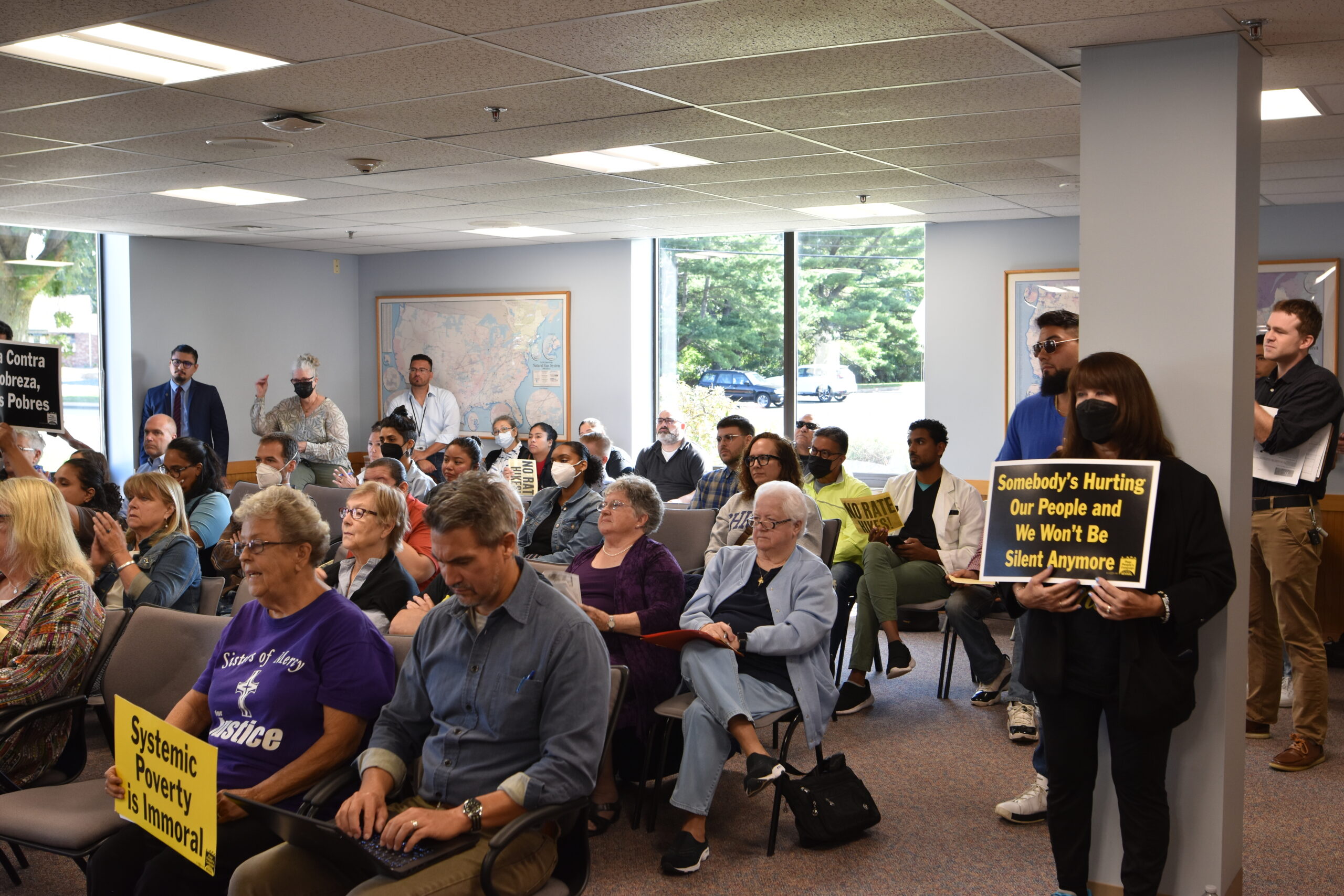
Kelly shared her story on a cold night in January at a rally in the Bell Room of the Statehouse that included immigrants, the homeless, and other groups who feel the cost-of-living crisis and inflation is eroding their quality of life.
Kelly and others, including advocates from the George Wiley Center, Black Lives Matter Rhode Island PAC, and the Party for Socialism and Liberation, wanted to deliver that message while Gov. Dan McKee gave his State of the State speech in the same building.
Their chief concern was the epidemic of homelessness that had largely gone unaddressed. The long-promised ECHO Village pallet shelter had yet to open despite months of development, and the cost of food, housing and energy for heating homes were sky-high for the third winter in a row.
Between 2020 and 2024, homelessness in Rhode Island skyrocketed by 394%, according to Crossroads Rhode Island, the state’s leading nonprofit for housing and homeless services. A federal report released last month from the U.S. Department of Housing and Urban Development’s point-in-time count found between 2023 and 2024 alone, homelessness rose by nearly 35% — 2,442 people in Rhode Island did not have a home in January 2024.
Higher costs of living mean residents like Kelly on fixed incomes get pushed deeper into poverty, and sometimes into homelessness. Every time the prices for food, rent or utilities get raised, explained Kelly, “I am personally that much closer to losing the security of a roof over my head.”
Utility justice for all
Electric and natural gas rates remain at historic highs in Rhode Island, driven in part by the rising price of natural gas, which is increasingly the state’s chief source of electrical power and, in some homes, a source of heat.

The average utility bill, pegged at a that uses 500 kilowatt-hours (kWh) a month, exceeds $150 a month for electricity. In 2021, prior to the historic rate hikes, the average bill for the same usage was around $110. In 2017, it was even lower, coming in at around just $100 a month. A kilowatt-hour measures the energy an appliance uses in kilowatts per hour. For example, if you clean your floors with a 1,000-watt vacuum cleaner for one hour, you consume 1 kWh of energy. Kilowatt-hour consumption factors in how many watts the appliances in a home use and how often they are used.
Energy costs skyrocketed in 2022, when the state Public Utilities Commission, which oversees electric and natural gas rates in Rhode Island, approved a requested 47% rate hike from Rhode Island Energy, the primary utility company in Rhode Island.
Rhode Island Energy, which is owned by the Pennsylvania-based PPL Corp., cited growing worldwide demand for natural gas, as well as the Russian invasion of Ukraine, as the chief reason for the increase. (By state law, the company can’t profit off the base rate charged to Rhode Islanders; it can only pass on the costs from procuring electricity.)
Rhode Island does have a utility shutoff moratorium for the winter. Last year lawmakers extended the period by two weeks, from April 15 to May 1, making it one of the longest moratorium periods among the states that have them. From November to the beginning of May, utility companies cannot shut off residents’ utilities for any reason.
In the 2021 winter season, the electricity rate was around 11 cents per kWh. The following year it rose sharply to 18 cents per kWh, and despite small dips, the rates have not dropped to pre-2022 levels. Natural gas rates have not been far behind.
“We know that everyone in our community should have access to electricity services, and gas services,” said Rep. David Morales, who successfully sponsored last year’s bill to extend the winter shutoff moratorium, “especially in combination with the ongoing cost of living crisis and all the expenses our neighbors have to live with.”
The state’s residents with the lowest incomes feel the rate hikes most acutely. Rhode Island Energy’s income-eligible ratepayer program has around 33,000 households enrolled. Those households get a 25% discount from the company if they meet income guidelines attached to the federal Low Income Home Energy Assistance Program (LIHEAP) or are enrolled in Supplemental Security Income, Medicaid, SNAP, Rhode Island Works or general public assistance.
According to the state Division of Public Utilities and Carriers, ratepayers spent $17.4 million for electric utility discounts to low-income residents, and another $8.3 million for low-income gas customers in 2023.
But for many residents, that’s not enough. Many remain at risk for utility shutoffs, and some, like Kelly, are worried rising energy costs give them that final push into homelessness.
‘Infuriating’ utility bills
A month after the rally in the Bell Room of the Statehouse, it’s another cold winter day in Pawtucket, and the wind is blowing strong for the second day in a row. The high temperature will peak at 26 degrees, well below freezing, and the low will go down to around 17 degrees at night.
It’s quiet inside the George Wiley Center’s offices on East Avenue, with only a couple of organizers, volunteers and one intern still in the building.
“We had this family come in yesterday that were switching their service from one address to another, and they had already had problems in the past with the bureaucracy of Rhode Island Energy because of the language barrier and some other difficulties with the company itself,” said Daisy Paz, a utility justice advocate with the George Wiley Center. “They ended up having to pay for a whole month’s worth of utilities that would not belong to them necessarily, which was super unfair.”

“That was infuriating,” she said. “They couldn’t wait because they had a baby under 3. They preferred to pay for the service bill even if it wasn’t theirs.”
At the George Wiley Center, helping families navigate the complex and arcane world of utility company bureaucracy is part of the job. Since it was founded in 1981, the center has made utility justice one of its core missions. It provides free services to families having difficulty paying their utility bills or other issues with Rhode Island Energy, and before that, National Grid.
The center has almost always had a steady stream of people visiting its Pawtucket offices for help with their utilities, but the shutoff crisis has exacerbated the issue. In the winter of 2022 the PUC approved a 47% rate hike, and rates have not returned to pre-pandemic lows since. Even summer rates, which are typically lower than the winter rates, remain far above their pre-2020 average.
“I can only speak about the rate increase from last year,” Paz said. “But definitely more people have started showing up with an immediate crisis, more people with shutoffs, or they would just call us, asking why had this happened, and Rhode Island Energy never gave them a notification.”
“A lot of people are on fixed incomes,” said Lyndia Peoples, another Wiley advocate. “They can’t afford these high rates.”
Part of the center’s utility justice mission includes pushing for new programs and legislation at the General Assembly. In the nearly 4½ decades of its existence, the Wiley Center has secured hard-fought victories, including expanding protections from utility terminations, extending the winter moratorium, and winning discounted rates for low-income households.
For the last decade or so, the center has introduced the same two pieces of legislation into the General Assembly designed to make utility costs easier for individuals and families. The first bill (S0185/H5245) would revive a long-dormant state program known as the Percentage Income Payment Plan, or PIPP for short.
The plan as proposed by the center would allow low-income families to pay a percentage of their income to satisfy their utility bill, instead of a rate based on the household’s usage. Those bills would be capped at between 3% and 6% of a household’s income, far less than what most families across the state are paying.
For Rhode Islanders living under the poverty line — an income of $32,150 or less for a family of four — who pay up to 44% of their income to utilities, a PIPP program would go a long way.
PIPP originally existed as a pilot program back in the late 1980s and early ‘90s in Rhode Island. Such plans grew in popularity across the country following the gas crisis and stagflation of the 1970s, when state governments were looking for ways to help residents literally keep the lights on.
PIPPs still exist today in over a dozen states, including New Jersey, Maine, Illinois, and Ohio, which actually has the nation’s longest-running PIPP program.
Camilo Viveiros, executive director of the George Wiley Center, has been central in pushing for PIPP since he joined the center over a decade ago. For Viveiros, the plan makes sense. It costs money to shut off utilities, and those costs are ultimately passed on to ratepayers.
“There are going to be people who have their utilities shut off and go for weeks, months, and sometimes years not being able to afford anything,” Viveiros said. “People are going to subsidize that truck that goes and shuts somebody’s utilities off.”
In PIPP states like Illinois, noted Viveiros, the program has been shown to lower the heating bills of elderly customers by 90%.
Viveiros also explained that, thanks to the stronger wintertime protections, the majority of utility shutoffs happen between May and October.
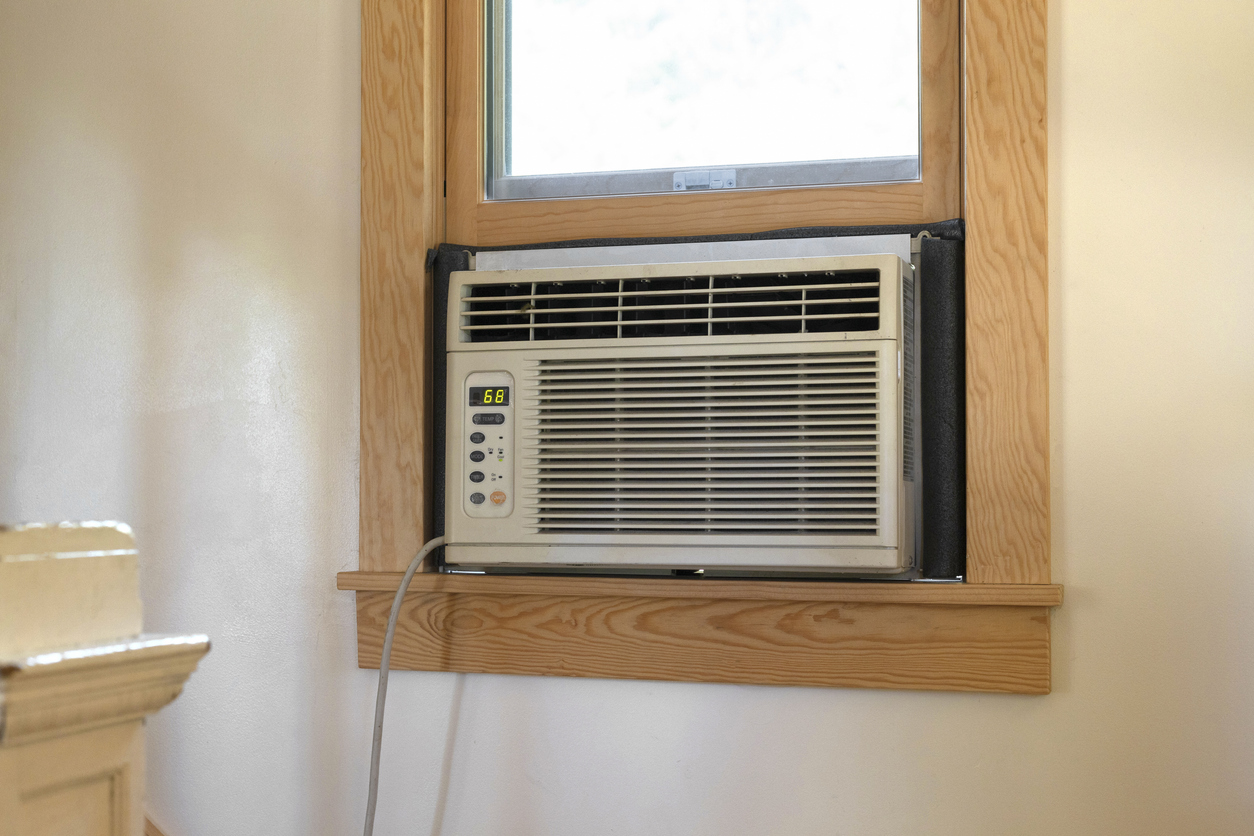
As a result of a warming climate and the state’s aging housing stock, low-income residents struggle in the summer heat. For the first time last year, said Viveiros, the George Wiley Center opened its doors as a cooling center.
“What happens now is some folks who don’t have access to cooling are in danger of a stroke or similar medical event,” explained Viveiros, “or an asthma attack. We’re seeing the intersection of increased climate change impacts in Rhode Island, and we’ve got one of the fastest rising heat indexes in the country. It’s a public health issue.”
The parent company of Rhode Island Energy, PPL Corp., has previous experience with PIPP programs. Pennsylvania has five different utility companies, and since the early 1990s each one has been required to implement a PIPP program for its low-income customers.
Neither Rhode Island Energy nor PPL Corp. publicly opposed last year’s versions of the PIPP bill in either legislative chamber, although both were ultimately held for further study. Nicholas Ucci, director of government affairs for Rhode Island Energy, said the company was “committed to working with policymakers, regulators, and other valued stakeholders to explore viable policy and regulatory pathways that support energy affordability for all customers.”
Serious illness protection
The second piece of legislation (S0086/H5068) the George Wiley Center is advocating for this year would strengthen the state’s serious illness protection program (SIPP). Under current state law, the program protects residents’ utilities from shutoffs so long as they have signed paperwork from a doctor giving them protected medical status, meaning utility shutoffs would worsen their illness or seriously endanger their lives.
But that protection lasts only three weeks at a time. Then a doctor must re-sign the paperwork to keep the protection in place for another three weeks, and so on.
“It’s hard when people are seriously ill. My mother is seriously ill,” said Peoples, of the Wiley Center. “Do you go to the doctor’s every 21 days? Usually it’s once a year, right? How are you supposed to go see your doctor every 21 days to have this form re-signed again? And does your doctor remember? Or do you have to keep calling them and pestering them to do it? And not everyone has a regular doctor.”
The legislation currently in the General Assembly would extend the default shutoff protections for a minimum of three months, so long as a doctor does not specify a different time frame. It would make Rhode Island’s SIPP program comparable to Massachusetts’, and would apply to a wide range of medical equipment, from oxygen tanks to dialysis machines to nebulizers.
“We had a woman who called in and said they shut her mom off,” Peoples said. “Her mom’s on a nebulizer, so she has to have that machine, she has to have her electricity. But did they knock on her door to find out if she has serious illness protection? They just shut her off from the street, so she had to call immediately and tell them that her mother’s got serious illness protection.”
Despite yearly introduction in the General Assembly, and repeated testimony from members of the George Wiley Center and utility justice advocates, both the PIPP and SIPP bills get quietly buried in committee every year. There’s no up or down votes; rather, the bills, like many pieces of legislation that do not get passed, are held for further study by committee, where they rarely re-emerge in successive years.
Viveiros said with the new administration in Washington, it’s more important than ever for the General Assembly to pass a new PIPP program.
“We need these bills to be passed this session; we don’t know if the new administration is going to threaten or disrupt funds next fall,” said Viveiros. “And what’s going to happen if they cut different government programs? We know how disruptive it is when people don’t have access to life-saving energy.”
“The stakes are high, we’ve been doing this awhile, and our patience has run out,” he added. “Our members time and time again have taken the time to share their stories, educate their representatives and senators, and I think we’re beyond excuses for the lack of action on legislation.”
None of the utility justice bills had been scheduled for hearings as of Feb. 20.

I’m still waiting to hear about all the solar panels in the state. There must be thousands by now as I see them in all locations in the state, however the “solar electricity” hasn’t shown up in my electric bill yet. I’m still paying astronomical amounts each month. Where is all of the new electricity going? Someone else must be benefitting from the panels as I’m sure not.
The way the math works for me, as a LIHEAP recipient, it wouldn’t be beneficial to pay 6% household income to utilities through PIPP vs the current LIHEAP discount. I think that would actually drive people who are teetering on the poverty line into poverty.
I’m confused by this quote: “Electric and natural gas rates remain at historic highs in Rhode Island, driven in part by the rising price of natural gas, which is increasingly the state’s chief source of electrical power and, in some homes, a source of heat.”
How does that work? I don’t understand how our electrical power comes from natural gas. As someone opposed to fracking, I am considering replacing my old gas hot water heater with an electric one, but if it all comes from gas anyway, what’s the point?
Correct. Most electricity comes from plants that burn fossil fuels like coal, gas, etc. Very little electricity is generated from sources like solar and wind. Also, wind turbines have limited lifespans, become hazardous waste that clutters landfills when they reach the end of their life, and require large amounts of fossil fuels to keep them lubricated and running. Large amounts of fossil fuels are also needed for production of the turbines. If it’s made with plastic, its made from fossil fuels. Selling electricity as “clean” energy is a huge scam. Natural gas is actually cleaner than electricity if you factor in everything, and nuclear is probably the cleanest energy source.