Building Decarbonization Mandates, Sludge Incinerator Moratorium Among Environmental Wins in 2026 Legislature
Climate Superfund Act, utility income percentage payment plan among the losses
June 15, 2026
Share


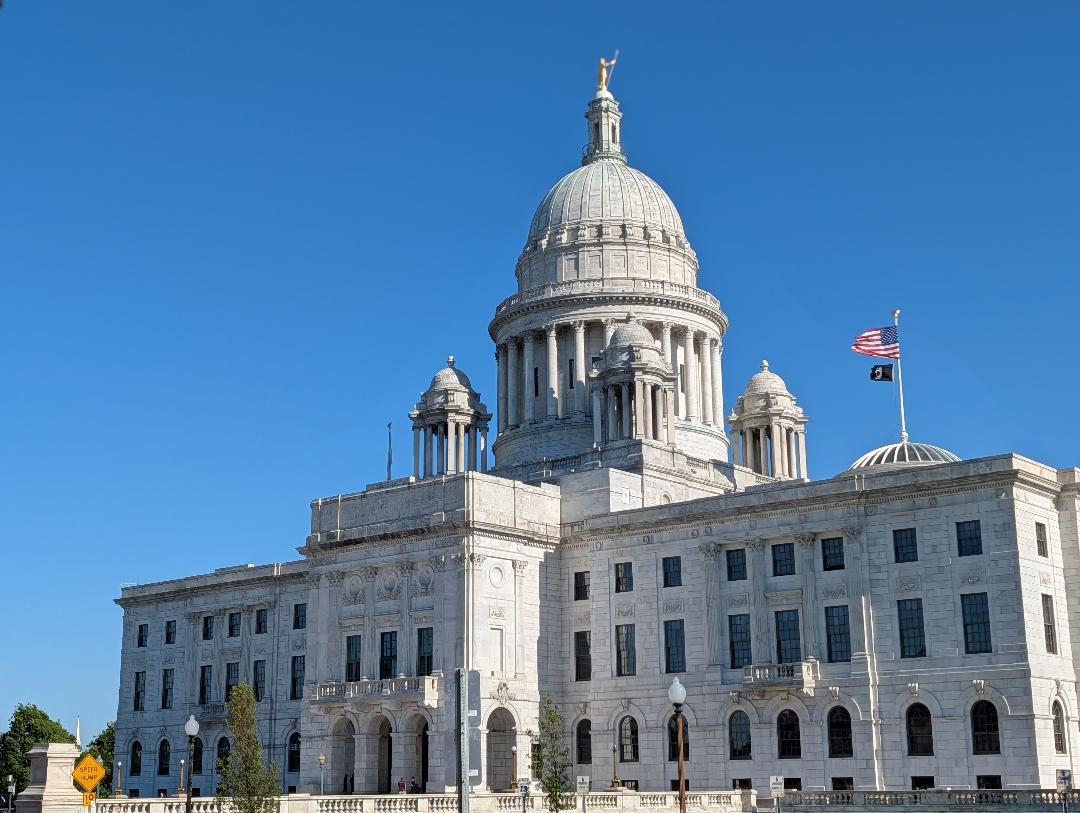
PROVIDENCE — No more pencils, no more books, no more speaker’s dirty looks: lawmakers last week bid farewell to Smith Hill for the year Thursday night, when this year’s legislative session concluded.
It was a roller-coaster ride for environmental advocates, who spent most of the session playing defense. Gov. Dan McKee had proposed rolling back the renewable energy standard and slashing solar financing programs and energy efficiency initiatives as part of an affordability agenda to reduce electric and gas bills by any means necessary.
McKee wasn’t the only politician in New England proposing cuts to such programs. Lawmakers in the Massachusetts House passed a bill in February cutting $1 billion from their energy efficiency programs, more commonly known as Mass Save.
But ultimately, in the version of the Rhode Island budget signed into law by McKee on June 12, most of Rhode Island’s climate programs will remain intact. The only changes will be to virtual net metering, which will introduce a voluntary opt-in rate, and reduce the total cap of future solar projects eligible for the program to just 175 megawatts.
Environmental advocates also notched another set of small wins in the budget: the director of the state Department of Transportation was removed as chair of the board of directors for the Rhode Island Public Transit Authority, and lawmakers allocated the embattled transit agency with enough funds to close its deficit.
Here’s some of what else lived, died or stalled:
First the big news: building decarbonization lives, from a certain point of view.
Previous sessions saw lawmakers attempt to pass a single bill that would require buildings in Rhode Island to track, benchmark, and reduce their greenhouse gas emissions. That single bill always died in committee, so this year advocates tried a more traditional tack, the tried-and-true General Assembly two-step.
They spun off the more unpopular elements of building benchmarking — the emission mandates — from the main bill that pushes large buildings owners to start tracking emissions. Advocates acknowledged just starting a benchmarking program for all buildings in the state would require years of lead time to draw up regulations and spur adoption.
The two-step worked, and lawmakers passed H7813/S2260 in concurrence Thursday night. Starting in 2028, property owners with buildings larger than 50,000 square feet will have to track and report their emissions for the previous year. Buildings larger than 25,000 square feet start tracking in 2030.
“Rhode Island has set some very ambitious, very necessary goals for reducing our carbon emissions, but we are not keeping pace in terms of making the changes we need to accomplish them,” Sen. Meghan Kallman, D-Pawtucket, said in a statement.
Reducing emissions is the keystone for meeting the mandates of the Act on Climate law. Emissions from homes, apartment buildings, and businesses account for more than a third of Rhode Island’s greenhouse gas emissions inventory. The state had no other policy or program to reduce these emissions before now.
Surprisingly, sludge took up a bigger portion of the legislative diet this year than most would have guessed. Controversy surrounding a proposed sludge pyrolysis plant in the Quonset Business Park in North Kingstown spurred lawmakers to pass a series of bills to examine the state’s sludge output.
Sludge is whatever solid is left over from wastewater treatment processes. Historically, most of the state sends sludge to an incinerator in Woonsocket, but in recent years that city has expressed deep concerns about smells emanating from the site, and wants it closed down entirely.
It’s that context that spurred the proposal in Quonset for a sludge incinerator plant, which has promised none of the offensive odors associated with the Woonsocket plant. It’s not stopped the project, or a nearby asphalt plant, from being heavily criticized by abutters and residents.
S3224 implemented a one-year moratorium on the operation of any “thermal waste conversion facility” within Quonset.
S3225/H7532 were two bills aimed at creating commissions to study the state’s wastewater and sludge issues. Originally for each chamber of the House, late amendments combined them into a single, joint study commission that will report back with recommendations by April.
Related to emissions, the General Assembly passed the Thermal Energy Network and Jobs Act, which directs Rhode Island Energy to conduct a feasibility study on thermal energy networks, which circulate water as a primary method for removing or adding heat to buildings on a neighborhood-wide scale.
If the study shows it to be economical, it is to be followed by a pilot program designed by Rhode Island Energy.
Rhode Island’s food waste ban for educational institutions received some of its first “baby teeth.” Current state law requires schools within 15 miles of a composter or anaerobic digester to divert their food waste from the landfill.
S2438 puts reporting requirements on schools and vendors following the food waste ban, requiring a waste audit to be submitted to the Department of Education (RIDE) every three years starting in 2027. It also makes it the policy of RIDE to work with vendors who recycle or divert food waste.
Lawmakers also passed the state’s first ban on the sale of invasive plant species. H7071 directs the Department of Environmental Management to create and publish regulations prohibiting a list of nonnative plants.
This year also marked the first time lawmakers passed a ban on first-generation rodenticides. The legislation prohibits the sale of rodenticides with three specific chemical ingredients, which prevent blood from clotting in rodents, mice, and any mammal that ingests the poison.
The ban was a longtime ask from animal conservationists because, while the pesticides killed rodents, the poisons had the knock-on effect of also killing anything that ate an infected rodent.
Now the bad news. Legislative sessions are sharpened not on what they pass, but what lawmakers fail to pass.
First, some ecoRI News main highlights: reform efforts aimed at the Coastal Resources Management Council failed to pass, as did legislation passing new extended producer responsibility programs for packaging and beverage containers (also known as a bottle bill).
Efforts to extend protections for people with illnesses from utility shutoffs or create a new percentage income payment plan both failed to escape out of committee again this year.
Similar legislation that would have compensated groups for intervening in utility rate cases also failed to escape containment.
Lawmakers also failed to pass the Climate Superfund Act, which would have allowed the state to fine fossil fuel companies that knowingly contributed to climate change and sea level rise and put that money toward climate adaptation and resilience projects.
Bills that would have allowed plug-in solar for homeowners and renters and allowed them to reap the benefits of solar energy also failed to pass, after a promising start.
The Solar Coast Reduction Act, which would have streamlined state and local permitting for solar projects, did not make it through the Senate this year.