Composting 101: With Stewart Martin of Providence Gardenworks
September 12, 2025
Share


This story was originally published in The Providence Eye, a nonprofit newsroom covering events and issues of concern in Providence. Read more at pvdeye.org.
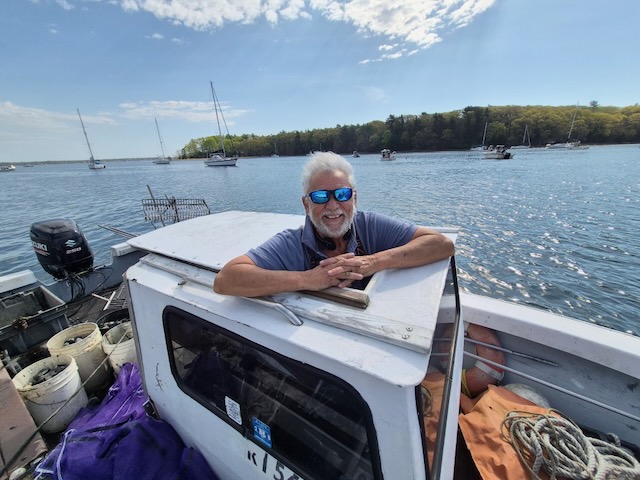
Stewart Martin of Providence Gardenworks is a one-man operation, supplying everything one might need to transform food scraps into compost, and he’s on call for any questions you might have about the process.
In Providence, composting food scraps is an activity that can have one of the greatest impacts on the community. Almost a third of the city’s waste that goes to the Central Landfill (which is expected to reach capacity by 2046) can be used to make compost. Services like the one Martin provides are integral to reducing the amount of trash created.
Almost 60% of all methane released from landfills comes from rotting food scraps, making Martin’s work even more impactful from a climate change perspective. However, learning how to start composting can be tricky if you have never done it before.
Since early 2016, Martin has been teaching his neighbors how to dispose of their food scraps responsibly to create soil-enriching compost for their garden, and – all the while – dispelling falsehoods about the process that have pervaded the public consciousness.
“Refuting myths about what composting is and what it isn’t has been the hardest part,” said Martin. He then reads off a laundry list of examples of common composting myths: the vessel has to be in the sun; composting will attract rats; you can’t compost citrus, dairy and meat. He said, “All of these are simply not true.”
For students and clients of his like Mary Cloos, Martin’s help has been an invaluable resource as she began to learn more about composting.
“I bought a compost bin from RI Resource Recovery and it came with a little pamphlet that talked about your ‘browns’ and your ‘greens’ with no mention of aeration or anything,” said Cloos. “Then I met Stewart after he gave a presentation at the Mount Pleasant library. That presentation was a gift that keeps on giving because it ignited something within me.”
After discussing composting with Martin, he came by her house one week later to set up a rodent-proof composting vessel complete with all the materials she would need: an aerator tool, a stainless steel food scrap pail with carbon filters (to minimize any odors), and 30 gallons of shredded leaves to mix in with her food scraps.
Since Cloos started composting on her own, she frequently contacts Martin for his advice and he’s always quick to respond.
“Every now and then I’ll send a picture of the system to Stewart and he’ll let me know that he’s out and can pop on over for a ‘compost check.’ He’ll usually add a bunch of leaves and then we’ll take turns mixing and mixing until everything is light and fluffy,” Cloos said.
Another client, Chris Mendonca, remembers being impressed with Martin’s system at his house on the East Side.
“I met him in person because he was so kind and then he opened up his compost bin,” she remembered. “There was no smell. He said, ‘Look, touch!’ and there was no ‘ick’ factor so I thought to myself, ‘I could do this.’” Before she started composting, Mendonca was convinced that composting was just a matter of digging a hole and putting your food scraps into it. Now, with Martin’s careful guidance and years of experience, she has a finely tuned system for transforming all her food waste.
“I think if more people realized how truly easy it is, that we would have more buy-in,” she said.
Over the course of about a year — from May 2024 to August 2025 — 24,046 pounds of food scraps (more than 20 tons!) were diverted from the waste stream by 60 Providence residents. That averages out to about seven pounds of food scrap per person a week that would have otherwise gone to the landfill.
For Martin, who moved to Providence 23 years ago, his interests may seem varied at first glance; aside from composting, he has been a photographer for 35 years, specializing in photographing eyes. He is also a professional printer, barbeque judge, and a computer specialist “for seniors and technophobes.”
As Martin describes it, “I realized one day that I’m attracted to the intersection of art and science: whether it be the culinary arts, gardening, photography, or composting.” What really shines through when you speak with him is his deep knowledge and interest about seemingly every subject, and his patience to make sure his audience understands the message.
Last year, the U.S. Department of Agriculture awarded $255,850 to several partners in Providence to increase the city’s capacity for composting, including Providence Gardenworks. With the specific funds he was allocated, Martin was able to provide compost bins, supplies, and mentorship to 60 new clients in the city. Martin ensured that every compost bin was personally reinforced to ensure that they were robust and animal-proof.
“I love Stewart and his practical approach to home scale backyard composting,” said Carla Doughty, executive director of Zero Waste Providence, a local group that works on sustainability and zero waste initiatives at the local and state levels. “It’s been vital having the city’s buy-in for this component of landfill reduction and local self-reliance.”
Of electric food composters like Lomi or Mill, machines into which users can deposit their food scraps to be turned into “nutrient-rich, soil-like material ready for plants” (as their advertisements describe), Martin said, “All those machines do is grind and dehydrate the food. Think about the amount of energy that went into designing the product, engineering the product, packaging the product, and then selling the product to people who are just going to eventually throw the whole machine away. If you want to compost and you don’t want to do it in your backyard, there are pickup services. There are drop-off services. But what do those machines make? It’s not compost. Making compost takes time, attention, and commitment. It’s a biological and scientific process. I’m doubtful there are any shortcuts.”
As Martin likes to explain, we already have the knowledge, tools and people to divert food scraps from the landfill. “It’s not that hard to do,” said Martin. “Now we just need the political will as citizens and neighbors to make this happen.”
“As a city we are ripe for this. We’re overripe in fact. We’re starting to smell, literally.”

Tyson Birch is a compost hauler with Harvest Cycle Compost and resident of Elmwood.
Stewart Martin is one of four composting experts speaking at ecoRI News’ Compost Convos event Nov. 6 from 6-7:30 p.m. at Innovate Newport, 513 Broadway, Newport, R.I. Click here to sign up for the free event.