Let It Burn: EPA Eager to Ignite Dumpster Fire
Increased, less regulated incineration poses public health threat
June 8, 2026
Share


Tucked nonchalantly in a request to redefine pyrolysis under the Clean Air Act, the D.C. regime has proposed rolling back the already-limited rules governing air curtain incinerators. The proposal would allow such incinerators to operate without a federal air permit. They are ignited by diesel fuel or kerosene.
These incinerators force air across a combustion chamber to raise the temperature and trap certain emissions, possibly. They are typically used to burn wood, lumber, and yard waste. The regime’s Environmental Plundering Agency has also indicated it would like to expand their use to include burning natural disaster debris.
“After hurricanes and floods, local residents are exhausted, physically run down, and often dealing with mold inside their homes,” according to Judith Enck, president of Beyond Plastics. “The last thing they need is to breathe in particulate matter and the wide range of toxins that can be emitted when treated wood is burned.”
Environmental groups, including Vermont-based Beyond Plastics, have urged that air curtain incinerators receive stronger regulation or, better yet, be banned.
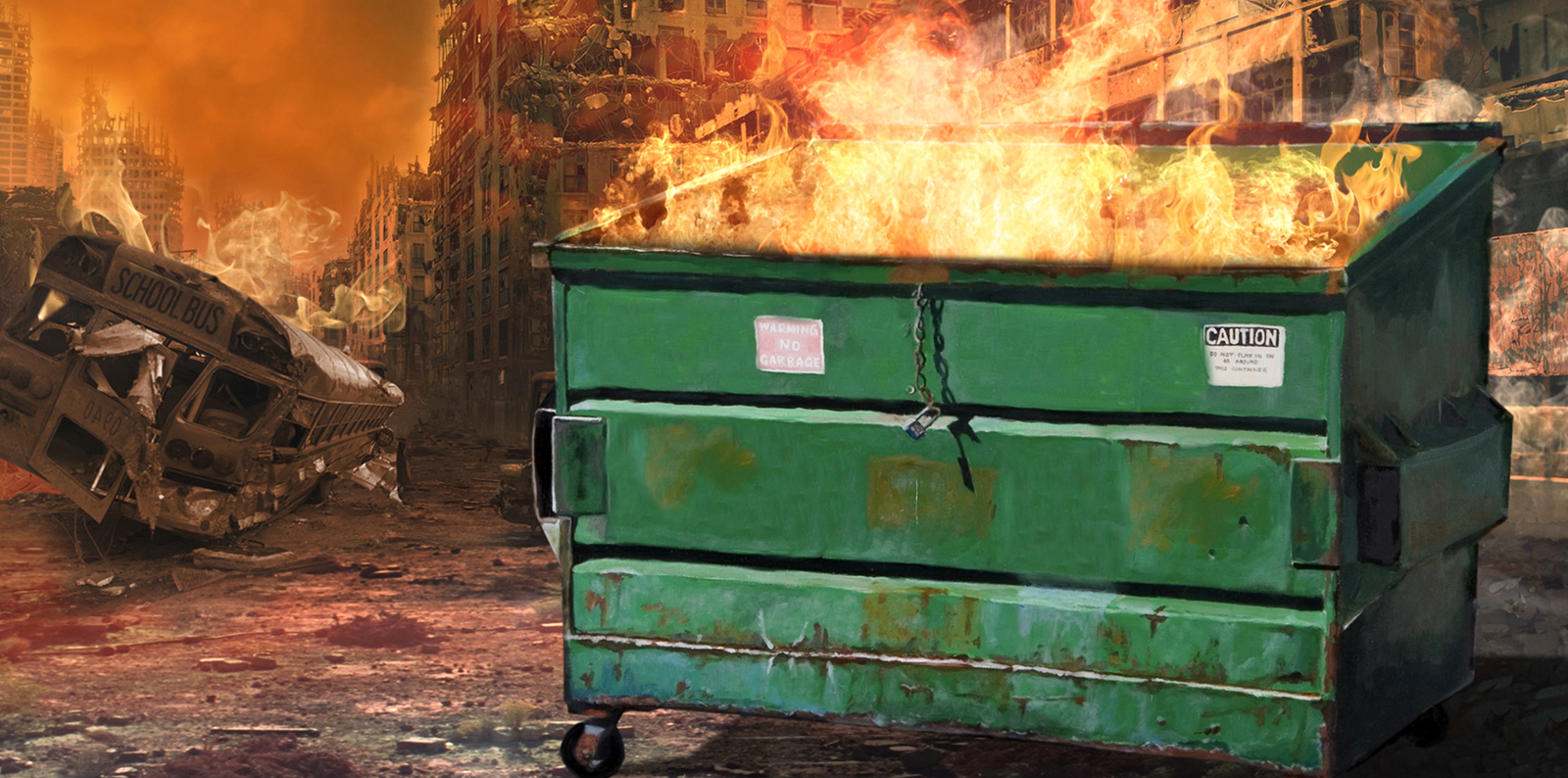
“These proposed regulations are a dumpster fire — both literally and figuratively. Air curtain incinerators are giant metal dumpsters with forced air and no effective pollution controls,” Enck, a former EPA regional administrator, wrote in testimony against the proposed changes. “They should be banned, not deregulated.”
She noted the EPA is proposing to walk away from regulating them entirely and using them after disasters to burn debris that could release arsenic, chromium, dioxins, and polycyclic aromatic hydrocarbons (PAHs).
She called these incinerators “a primitive approach to waste management.”
The EPA’s docket memorandum concedes emissions could increase under the proposal in ways the agency “is unable to quantify.” In a fact sheet released in March, the EPA acknowledged the proposal could cause the total amount of emissions released by air curtain incinerators nationwide to increase.
Nearly half of the children in the United States are already breathing dangerous levels of air pollution, according to a recent report. The American Lung Association found that 33.5 million children — 46% of those younger than 18 — live in areas that received a failing grade for at least one measure of air pollution. The 163-page report also found that 7 million children, or 10% of all children in the United States, live in communities that failed all three measures.
Clinging to its vile script of relentless lying, however, the regime hides the adverse impacts that will erode public and environmental health, claiming the proposal will “harmonize existing Clean Air Act regulations and cut red tape for incinerators to help state, local, and Tribal governments prevent and respond to natural disasters.”
The proposed changes would also allegedly “end decades of confusion” and “ultimately save lives without having to worry about burdensome permitting red tape,” according to the EPA’s fossil fuel-friendly administrator.
Regulations kill and pollution is profitable in the foul MAGAverse. Its minions even have an unofficial motto for their selfishness, courtesy of the Third Wife of a Mob Boss: “I really don’t care. Do U?”
The rule change would also redefine pyrolysis — a move that would deregulate plastic “chemical recycling” facilities. A 2023 report by Beyond Plastics and the International Pollutants Elimination Network (IPEN) found pyrolysis facilities emit benzene, dioxins, formaldehyde, PAHs, and heavy metals, and that three of the eight U.S. plastics pyrolysis plants studied have since shut down.
“The petrochemical and plastics industries have been aggressively working across America to pass state laws that reclassify chemical recycling facilities as manufacturing rather than waste facilities, which reduces regulation of these polluting plants and allows the companies to grab more public subsidies,” according to Beyond Plastics and IPEN. “As of this report’s release, 24 states have passed such laws. Just like mechanical recycling, chemical recycling is an industry marketing tactic to distract from the real solution to the plastic problem: reducing how much plastic is produced in the first place.”
In her testimony, Enck also wrote that “redefining pyrolysis and thereby deregulating pyrolysis facilities is in no way clearly connected to the proposed rule on air curtain incinerators, except perhaps insofar as both actions pose serious dangers to the health of American communities and ecosystems.”
The National Caucus of Environmental Legislators, on behalf of 119 lawmakers from 30 states, noted the proposal would weaken public health protections by removing pyrolysis from the definition of combustion units in Section 129 of the Clean Air Act.
“As state lawmakers, we support a wide range of actions to address the life cycle of plastic in our environment and economy, but we do not support EPA’s proposed action to remove federal baseline clean air protections,” they wrote.
The industry has heralded pyrolysis by calling it an “advanced” type of recycling. In reality, it’s just another Big Oil fairytale solution to the mass production of petroleum-based materials, most of the single-use variety.
A 2024 story by ProPublica found: most of the old plastic that goes into pyrolysis doesn’t actually become new plastic; the plastic that comes out of pyrolysis contains little recycled material; and the industry uses mathematical acrobatics to make pyrolysis look like a success.
No matter how the regime spins it, burning waste that can release toxic emissions without 21st-century controls is low IQ.
Note: The testimony filed in opposition to the EPA changes by the National Caucus of Environmental Legislators was signed by Connecticut Reps. Lucy Dathan, John-Michael Parke, and Mary Mushinsky; Massachusetts Reps. Mindy Domb, Steven Owens, and Angelo Puppolo and Sens. James Eldridge and Dylan Fernandes; and Rhode Island Reps. Edith Ajello, David Bennett, Jennifer Boylan, Lauren Carson, Julie Casimiro, Terri Cortvriend, Cherie Cruz, Susan Donovan, Jenni Furtado, Rebecca Kislak, Michelle McGaw, June Speakman, Jennifer Stewart, and Teresa Tanzi and Sens. Dawn Euer, Linda Ujifusa, Bridget Valverde, and Samuel Zurier.
Frank Carini can be reached at [email protected]. His opinions don’t reflect those of ecoRI News.