PPS, Biolithic Builds, Local Residents Come Together for Plastering Workshop in New Federal Hill Straw Bale Home
June 1, 2026
Share


Note: This story was originally published by the Providence Preservation Society, a nonprofit historic preservation organization.
PROVIDENCE — Jeffrey Yoo Warren and Aisha Jandosova’s home on Vernon Street may be new construction, but building it is an act of preservation. The pair opted to use straw bale panels and plaster for the walls of the house, as opposed to modern building materials.
“Aisha and I both do a lot of work with ancestral technologies and practices,” Yoo Warren explained. “We’re really interested in building on [and] reconnecting with those sorts of skills and techniques.”
Yoo Warren, who is Korean-American, and Jandosova, who is Qazaq, see the use of straw and plaster as the preservation of a building practice that Central and East Asian cultures have utilized for hundreds of years.
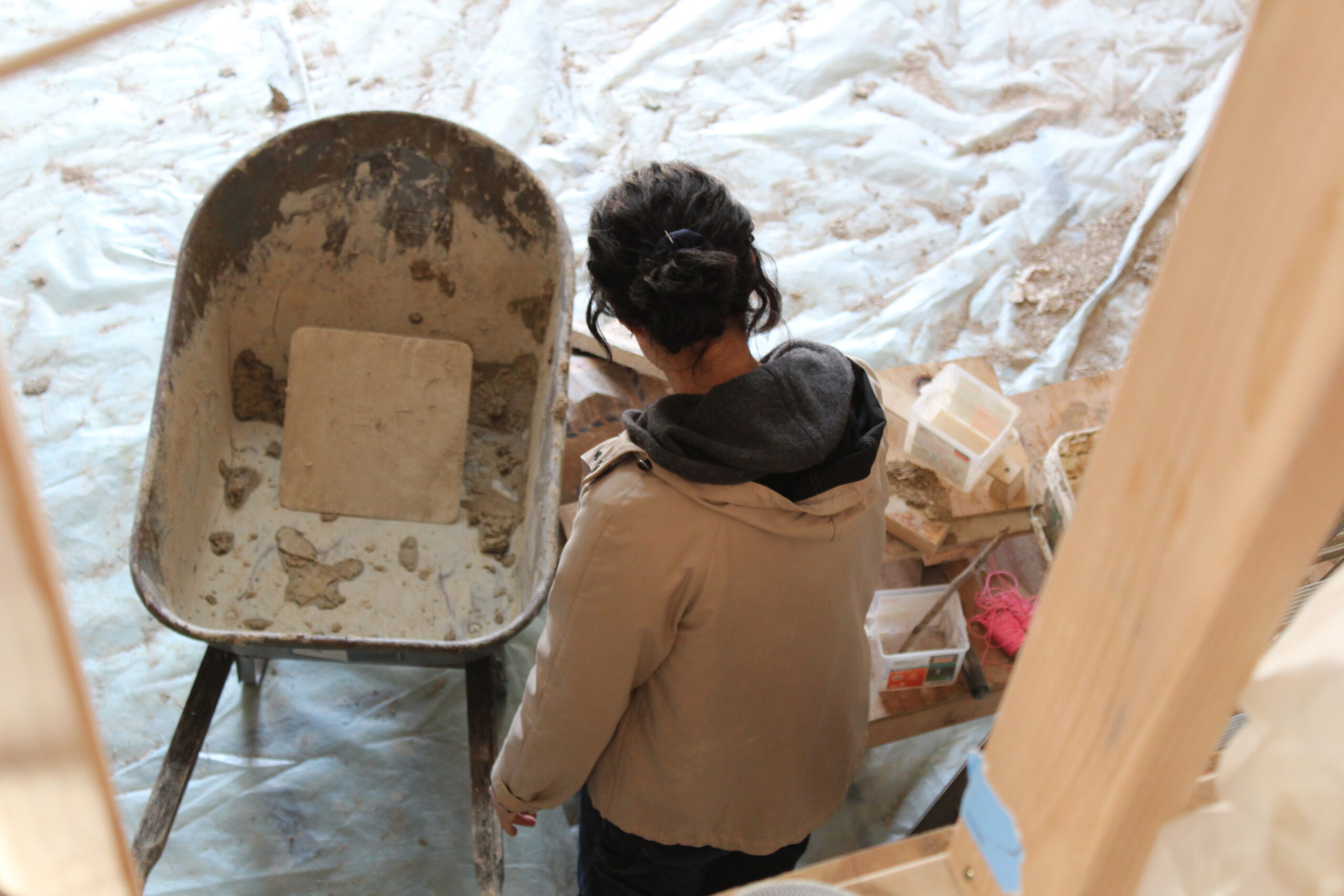
Yoo Warren stood in his backyard on a perfect April day while people shuffled all around their property in Federal Hill, the back doors of the home open to the spring air. The couple partnered with the Providence Preservation Society (PPS) and Emily Wang, who heads natural building company Biolithic Builds, to host a pair of plastering workshops over two weekends in April. Participants learned about the science behind straw bale homes, how to make the plaster applied to the interior walls, and what materials are necessary for the process. The participants then put these lessons into practice by mixing the plaster and applying it to the walls of Yoo Warren and Jandosova’s home themselves.
“During the first workshop, we calculated that we put up 5,000 pounds of clay plaster,” Yoo Warren said.
“It’s something impossible to do as just two people,” Jandosova followed up. “It just makes sense to do it collaboratively.”
The plastering workshop with PPS and Biolithic Builds was not the only collaborative part of constructing the house on Vernon Street. Yoo Warren said that when the straw panels for the walls were initially delivered, they had around 15 people over to help install them.
When the pair first set out to build their home, they were interested in natural materials, but didn’t know exactly what they wanted to do. Jenna Yu, an architect and designer who lives in South Elmwood, steered them in the direction of straw bales and plaster. Yu herself completed a straw bale addition on her home in 2023.
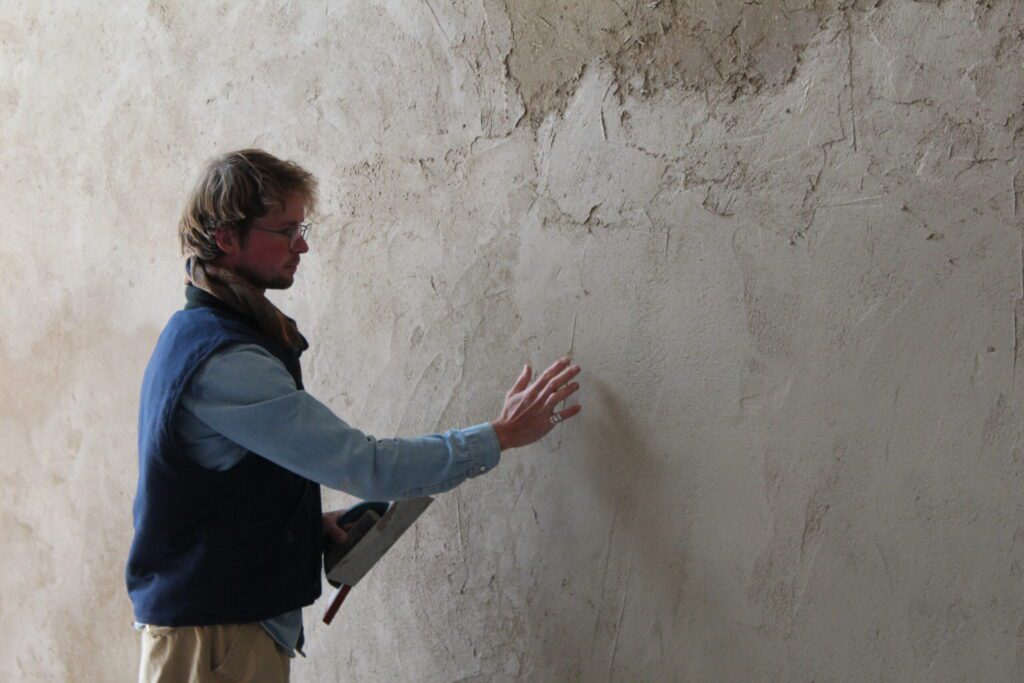
“I remember visiting somewhere and staying in a straw bale house — how cool it is in the summertime, how warm it is in the winter… And the idea of knowing what your walls are made of,” is part of why they ultimately decided to go with Yu’s suggestion, Jandosova said.
Yu connected the couple with Wang from Biolithic Builds, and the rest is history. As for Wang, she said that her interest in starting a natural building construction company spurred from a desire to pursue a climate-conscious career.
“After a long time of trying to think of the most helpful thing I could do for the planet, [it seemed] less so working on quick fixes and silver bullets, and more working on fundamental beliefs about what it means to live well and be able to provide for ourselves without hurting others,” Wang said.
She explained that three coats of plaster are applied on top of the straw bale panels: a wet slip coat, a thicker base coat, and a smooth finishing coat. The first workshop involved brushing on the slip coat and troweling on the base coat. After two weeks of drying time, the second workshop picked up where the last one left off and participants plastered the finishing coat. Throughout the series, participants mixed the plaster on a tarp with their own two feet.
“We basically combine the dry ingredients — the clay and sand — mix them together, and then add water. Mix that into a nice mush by stomping on it with our feet, then using the tarp to flip the pile over,” Wang explained. She said they then add fiber — straw during the first two coats, and cattail fibers and wheat paste during the last coat to lessen cracking — and mix it all together one last time. Then, the plaster is ready to be applied.
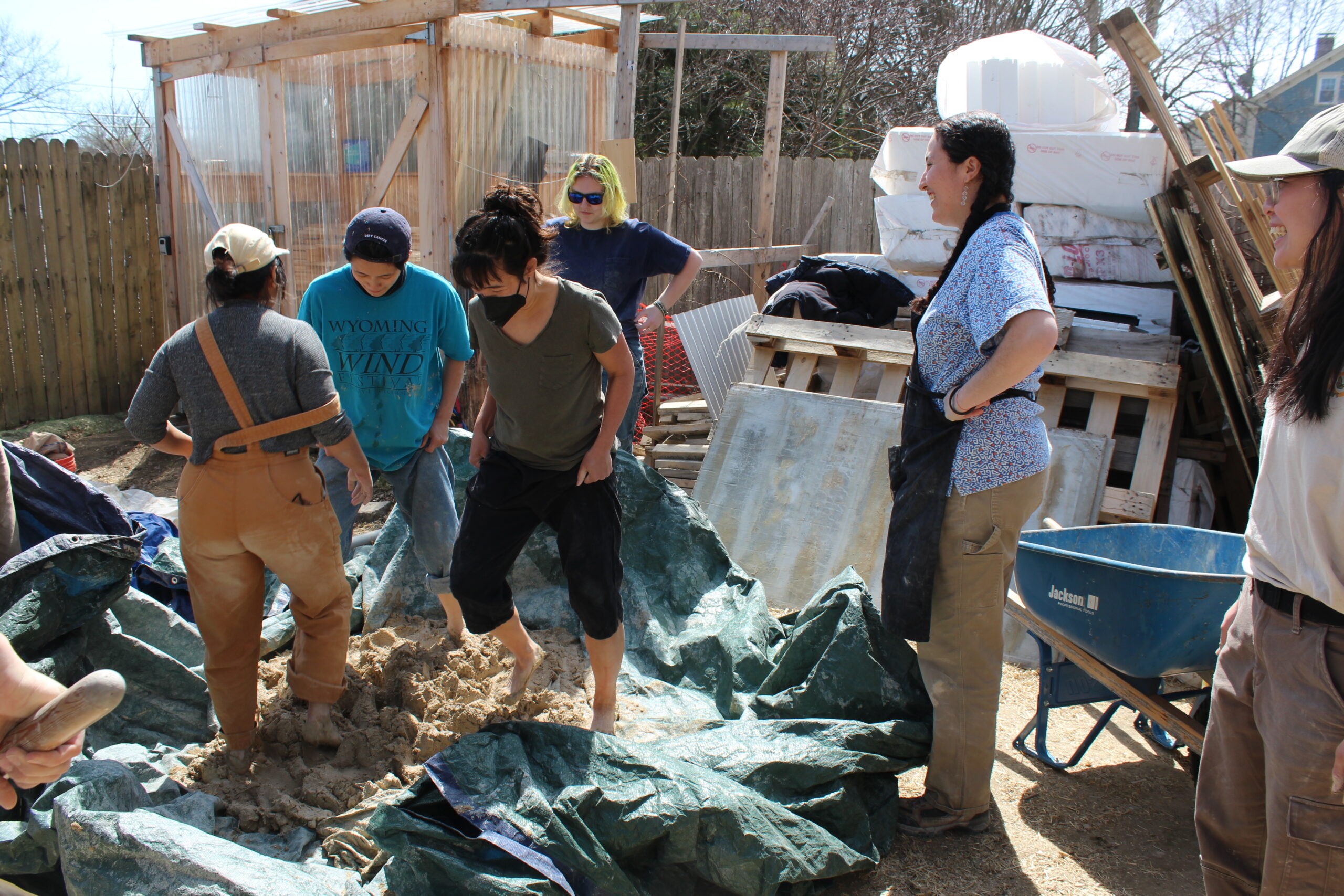
“With these workshops, often [participants] are like, ‘I haven’t done this since I was eight years old playing in the mud,’ and it’s so much fun,” Wang said. “And it’s completely opposite to the conventional idea that building is work, and it’s nasty and hard and hazardous. It doesn’t have to be that way.” She said that people in her workshops have even brought their kids by before to learn about the process and play with the plaster.
The straw in the actual straw bale panels is a byproduct of agriculture. By utilizing that byproduct as a building material within the walls of a home, builders capture carbon that otherwise would have been released into the atmosphere, thus limiting the further accumulation of greenhouse gases and warming of the planet. The panels are great insulators, letting hot air escape in the summer, and trapping it inside during the winter, as Jandosova mentioned. The clay plaster applied to the panels is also exceptionally fire resistant.
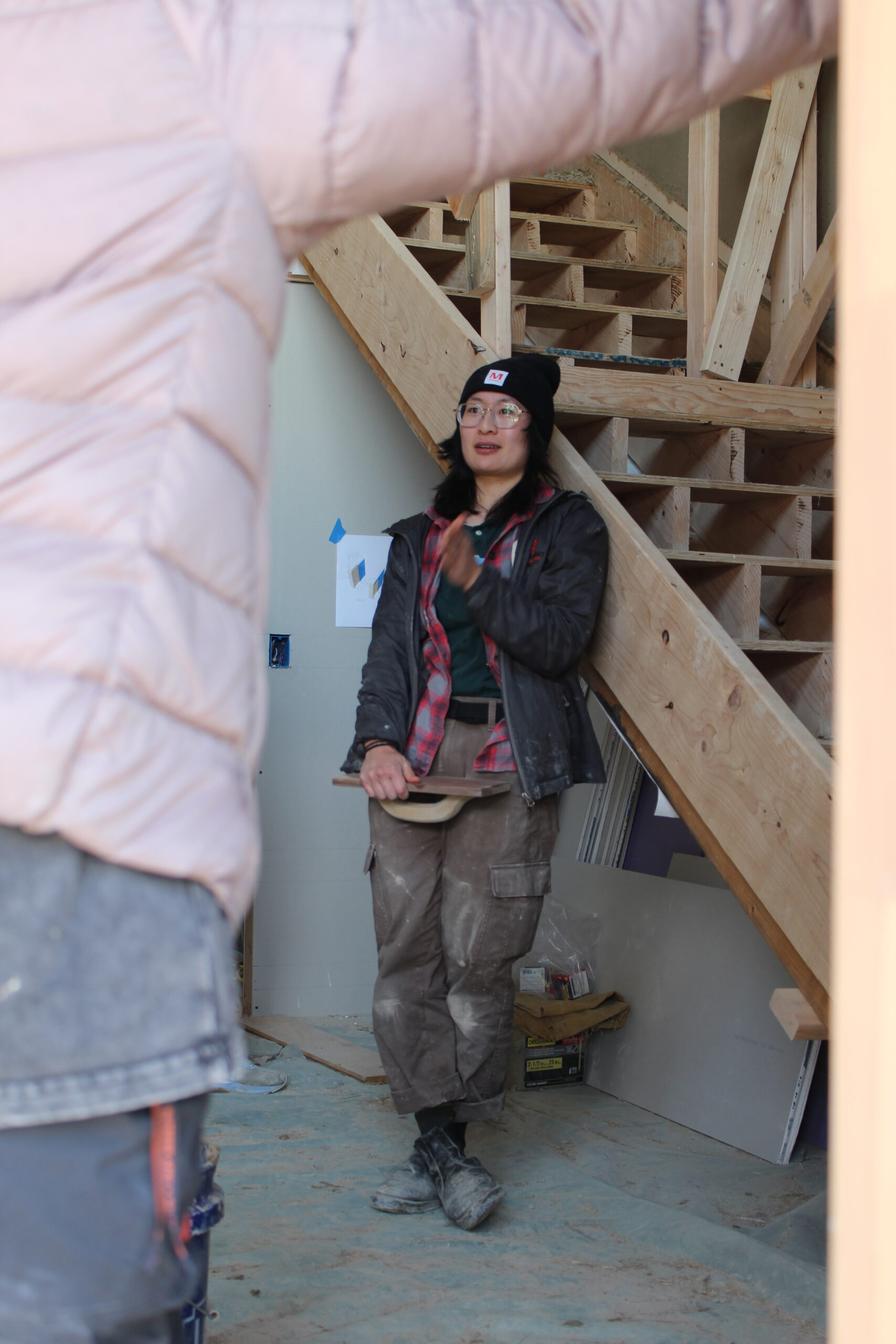
“I just want everyone to get into natural building. I really feel like there’s some aspect for everyone,” Wang said. “Even at this workshop, some people are more into the mixing, some people are more into the plastering. Some people are more interested in the design and the building science. Building is just so fundamental to being human, and natural building reintroduces us to that [process].”
Towards the end of the last workshop, Yoo Warren reflected once again on the process of building with straw and plaster as a part of his preservation practice. He mentioned that much of the architecture we see being preserved across the city today utilize European building techniques brought here from other parts of the world. Why not, then, expand our practice of preserving building techniques to those originating from Central and East Asia?
“My mom was born in a home with natural clay plaster walls. Korean folks have lived in homes like that for hundreds of years. So it’s very special to be able to build a house like that,” Yoo Warren said.